Classic Four Prong Diamond Tennis Necklace in 18K White Gold
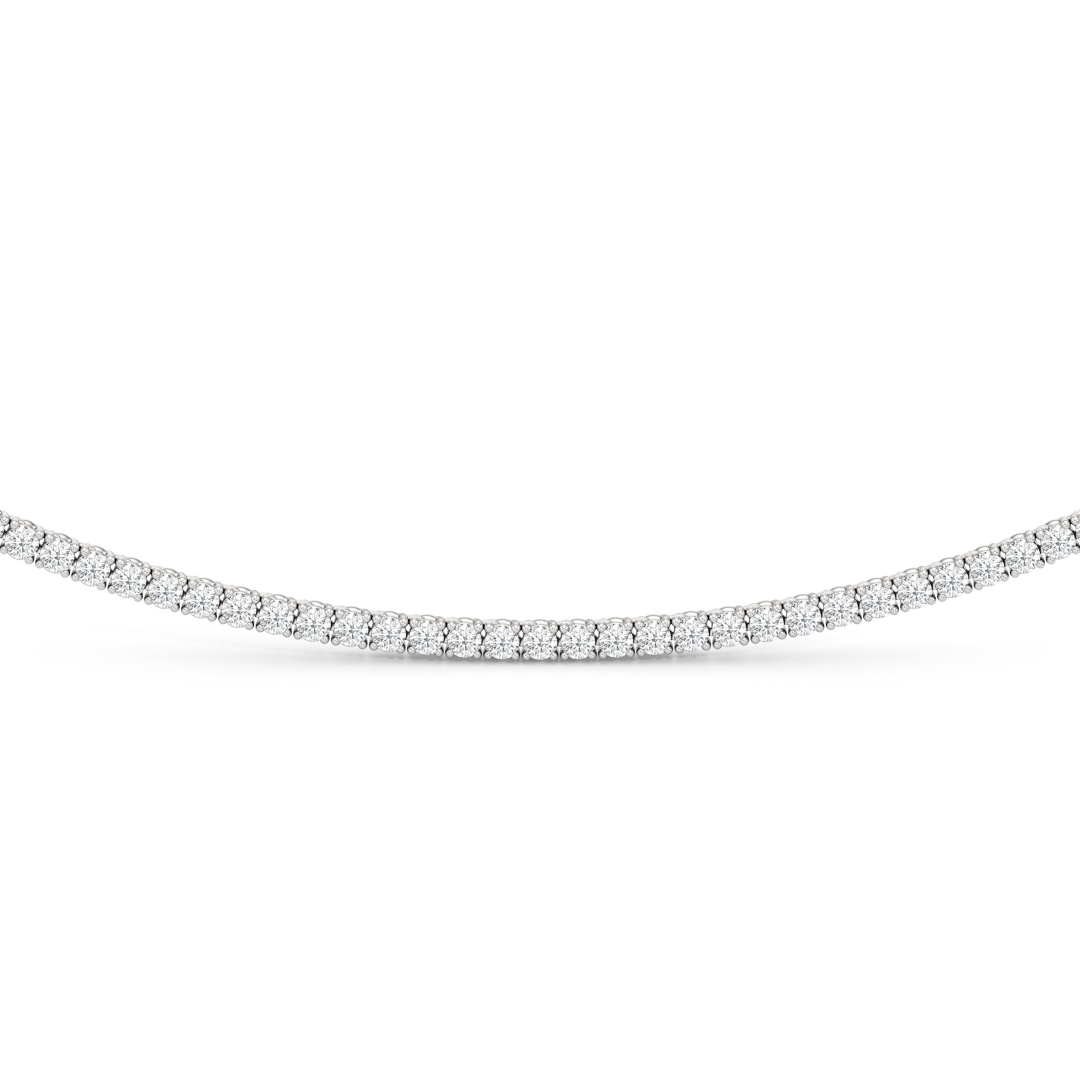
165 round diamonds, each in its own four-prong basket, each basket linked independently. The drape comes from the structure.
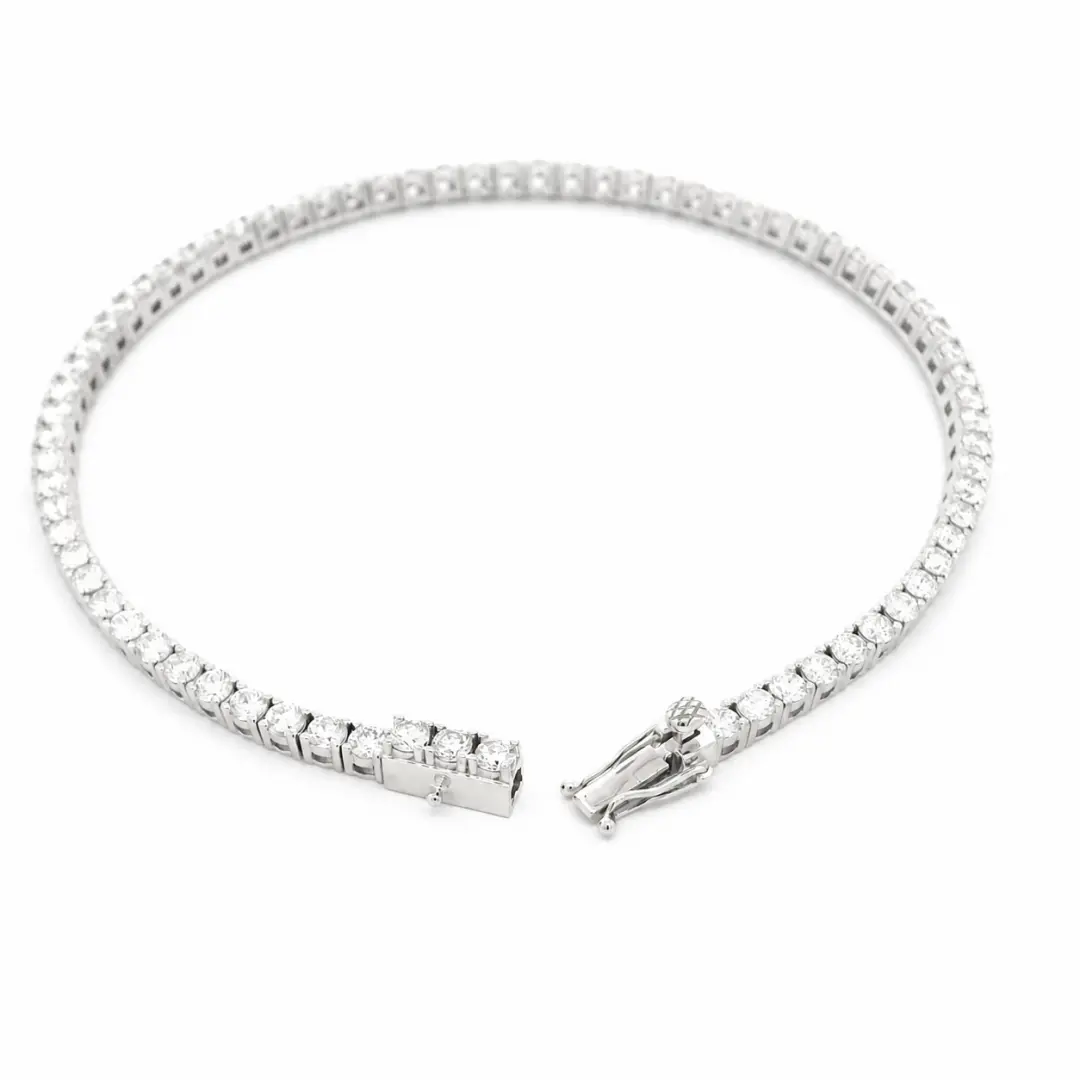
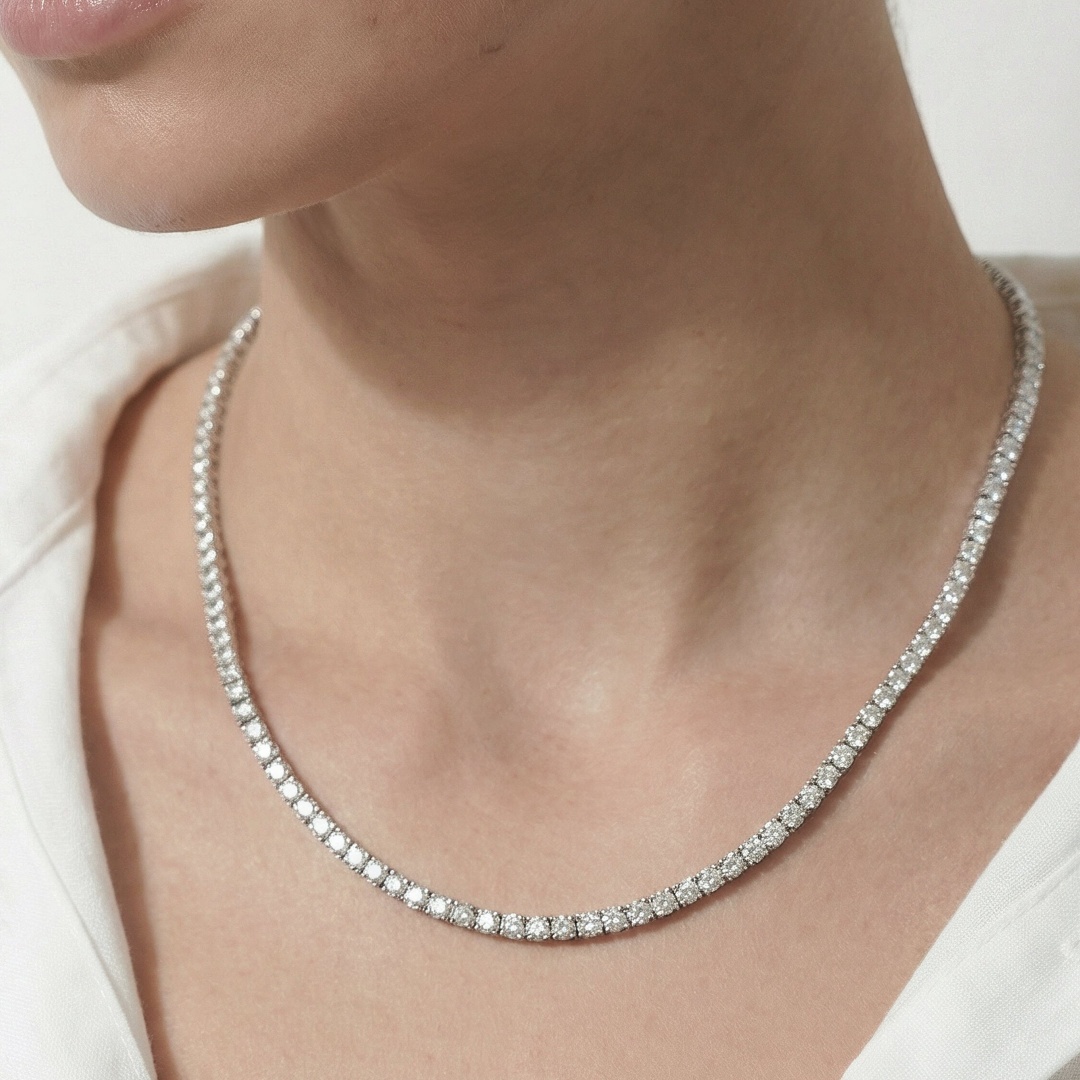
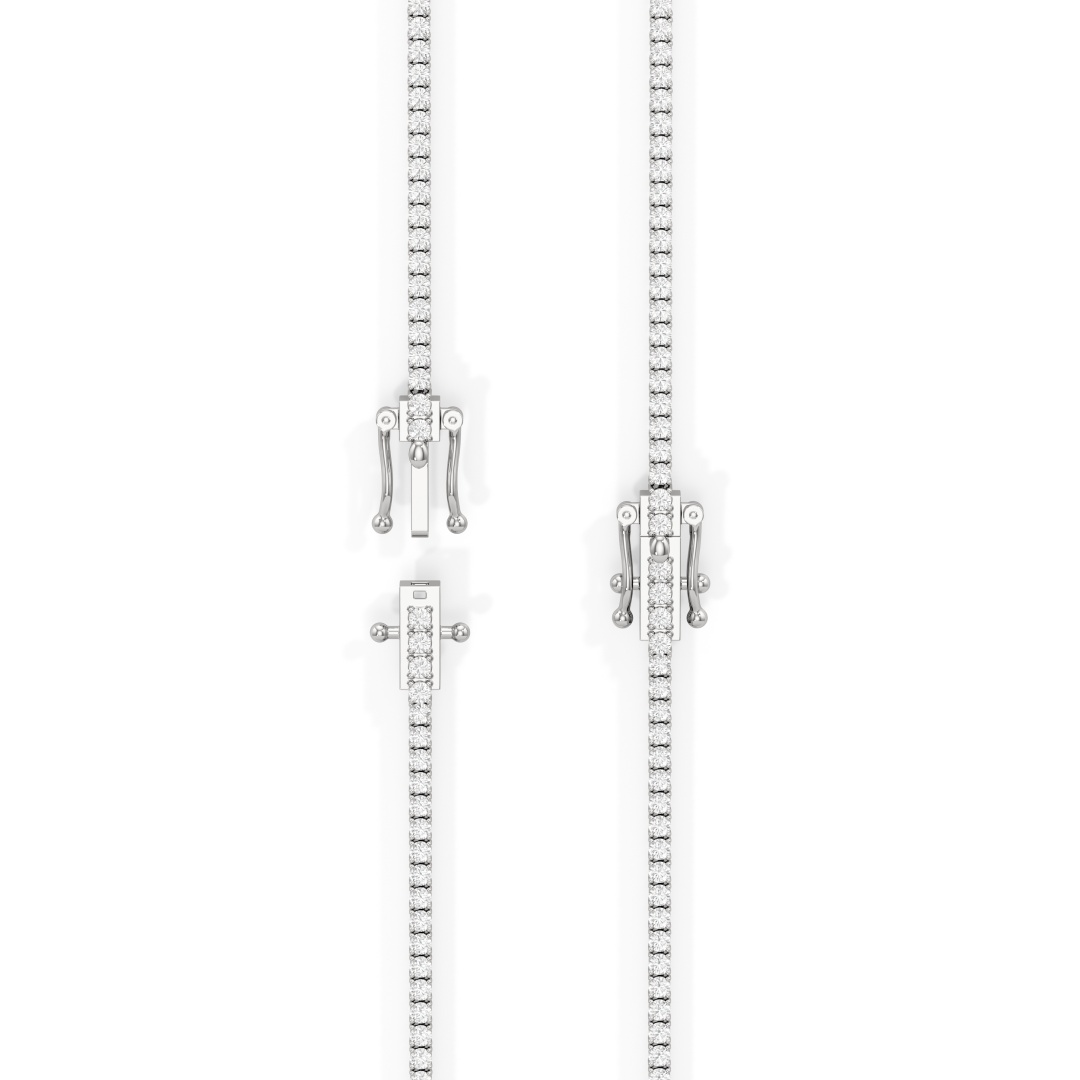
18K white gold tennis necklace, 165 round lab diamonds in symmetrical four-prong baskets linked by articulated joints, hidden box clasp with safety lock.
165 Lab Diamonds
Four-Prong Baskets
Articulated Links
Box Clasp + Safety
Available in 14K or 18K gold, white, yellow, or rose. Chain length, total carat weight, individual stone size, and stone type can be specified before production.
165 Independent Baskets, Articulated Joints: This Is Why It Drapes
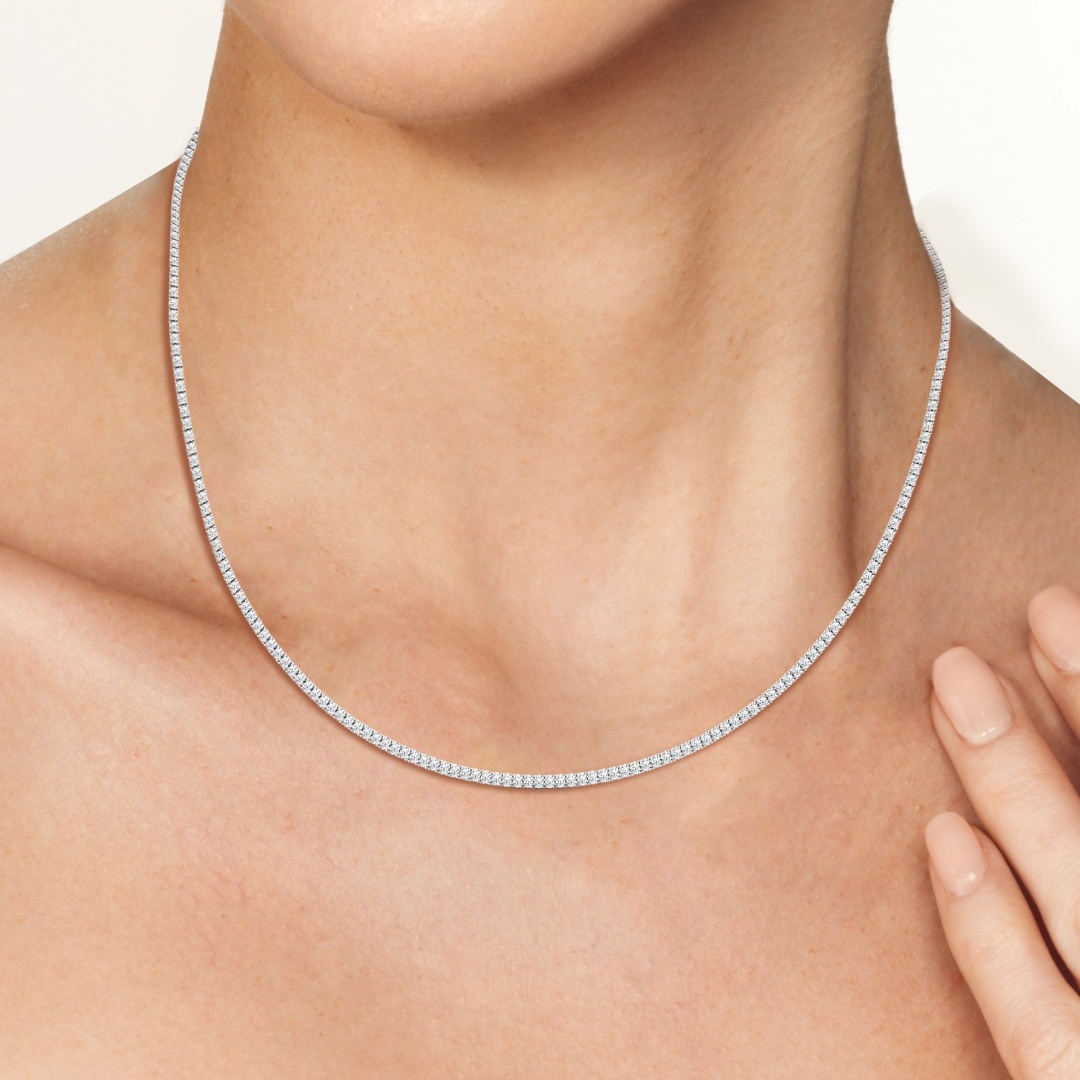
Mass-market diamond necklaces often use a rigid wire backbone with stone clusters attached. A diamond tennis necklace built correctly uses no backbone at all. Each of the 165 diamonds sits in its own four-prong basket, and each basket connects to the next through an articulated joint that pivots freely. The drape against the neck is not a styling result, it is a structural one. When 165 independently linked baskets hang from the collarbone, gravity pulls each joint to the position that follows the neck’s curve. A rigid construction would hold a fixed arc regardless of the wearer’s anatomy.
- Product type
- Diamond tennis necklace with four-prong articulated basket construction
- Metal
- Solid 18K white gold throughout, including baskets, links, and clasp
- Stones
- 165 round lab grown diamonds, individually four-prong set
- Link construction
- Articulated joints between each basket, pivoting freely to follow the neck’s curve
- Clasp
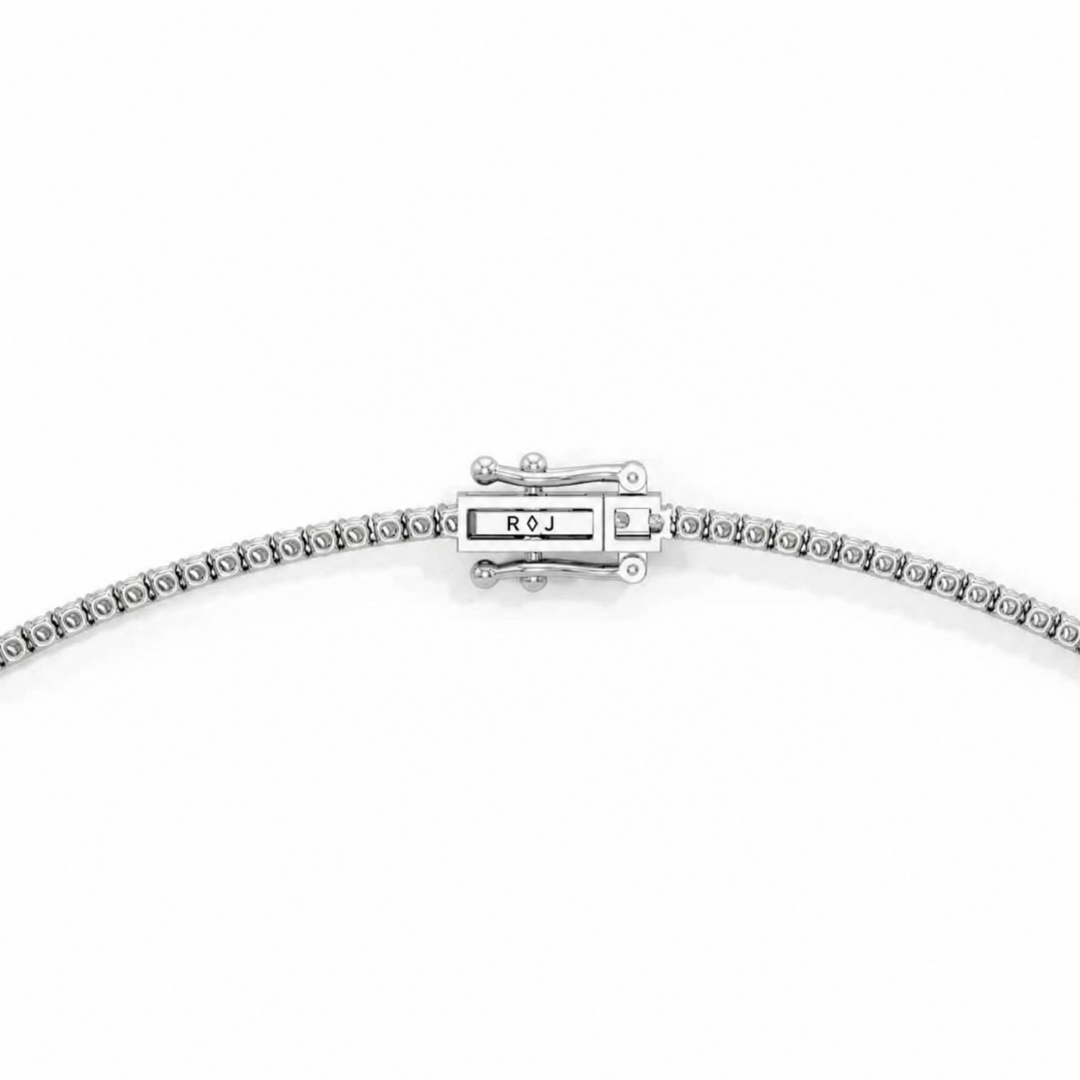
- Hidden box clasp with separate safety lock, sized to disappear into the diamond line
- Standard length
- 17 inch (collarbone), available from 16 inch to longer
- Stone matching
- 165 diamonds graded as a matched set before setting, not individually afterward
- Customization
- Chain length, gold karat and color, stone size and total carat weight, stone type
The necklace works three ways: as the evening statement piece worn alone, as the foundation of a layered look with a shorter pendant positioned above it, or as the sustained-wear luxury piece for someone who wants diamonds at the collarbone daily. Within our diamond necklaces collection, this is the piece built for buyers who know the term tennis necklace specifically.
Why Four Prongs per Stone and Why the Clasp Disappears
The four-prong basket lifts each diamond by its corners and leaves the crown and most of the pavilion fully exposed to light. A bezel at this stone size would wrap the girdle with a metal rim, reducing the exposed crown area by roughly 30 percent and dimming the stone’s return. A shared-prong setting would reduce metal between stones but require adjacent stones to share prong positions, which constrains the spacing and makes matched-lot grading harder. Four independent prongs per stone is the configuration that maximizes each diamond’s individual light performance while keeping the setting symmetrical across all 165 positions.
The clasp is sized to match the basket width exactly, not wider. On lesser tennis necklaces, the clasp is larger than the baskets and creates a visible interruption in the diamond line. The hidden box clasp on this design is fabricated to the same profile as the baskets, so it reads as part of the diamond sequence rather than an obvious closure. The safety lock is integrated into the clasp face rather than added as an external chain.
Solid 18K White Gold and 165 Stones Matched Before Setting Begins
The necklace is solid 18K white gold throughout, including the prong baskets, the link joints, and the clasp body. 18K is denser than 14K, which gives the white gold its bright mirror-finish tone and helps the rhodium plating hold longer through repeated skin contact. The 165 stones are lab grown diamonds, graded and matched as a complete set before any stone enters a basket. In a single-stone piece, one slightly off-color stone is invisible. In a 165-stone tennis necklace worn around the neck at eye level, one stone that breaks the color consistency is immediately visible to anyone looking at the wearer. The matching happens before setting, not after.
- ◆ Solid 18K white gold, all baskets, links, and clasp from the same alloy batch
- ◆ 165 lab diamonds matched for size, color, and cut as a complete set before setting begins
- ◆ Each articulated link tension-tested for pivot range and security before the necklace is closed
- ◆ Hidden box clasp fabricated to basket width, safety lock integrated into the clasp face
- ◆ Final inspection: prong security, link articulation, clasp engagement, and safety lock function
Length, Stone Size, Gold Color, and Setting Style
This necklace is built to order. Chain length is the decision that changes how it drapes most, and stone size is the decision that changes how it reads at distance.
- ◆ Chain length: 16 inch (choker, sits at the base of the throat), 17 inch (collarbone, shown), 18 inch, or longer; length also affects the total stone count
- ◆ Gold karat: 14K or 18K, with 18K offering richer white tone and slower rhodium wear at skin contact points
- ◆ Gold color: white as shown, yellow, or rose
- ◆ Individual stone size and total carat weight: larger stones increase the visual weight of each basket and push the necklace from delicate to bolder presence
- ◆ Stone type: lab grown diamond as standard, natural diamond available on request
- ◆ Setting style: four-prong as shown, shared-prong or bezel alternatives available for a different rhythm if requested
Chain length determines where the necklace sits on the body and how it drapes at that position, send that first (16, 17, or 18 inch, or measure from the base of your throat to where you want the necklace to fall). Add your preferred gold karat and color, your target stone size or total carat weight, and your diamond type (lab or natural). If you plan to layer this necklace with a pendant, mention the pendant length so the production team can advise on stone size for visual balance.
Made to order
This design is a starting point
Every piece is produced to order at our Shenzhen manufacturing facility, so the version you receive can differ from the one on this page.
Change the specifications
Metal and karat, stone type, carat weight, setting style, and finished dimensions.
Or send your own design
A sketch, a reference photo, or an AI generated image. Our team builds the CAD from it and tells you what has to change to make it wearable.
Free engraving
Included on every piece. Your own text and your choice of font, at no added cost.
Send your image, preferred metal, size, and any changes. You receive a CAD render to approve before production starts. Production runs 5 to 15 days depending on complexity, then 2 to 5 days in transit with FedEx, DHL, or UPS.
Send your design