Emerald Princess Cut Diamond Tennis Bracelet in 18K White Gold
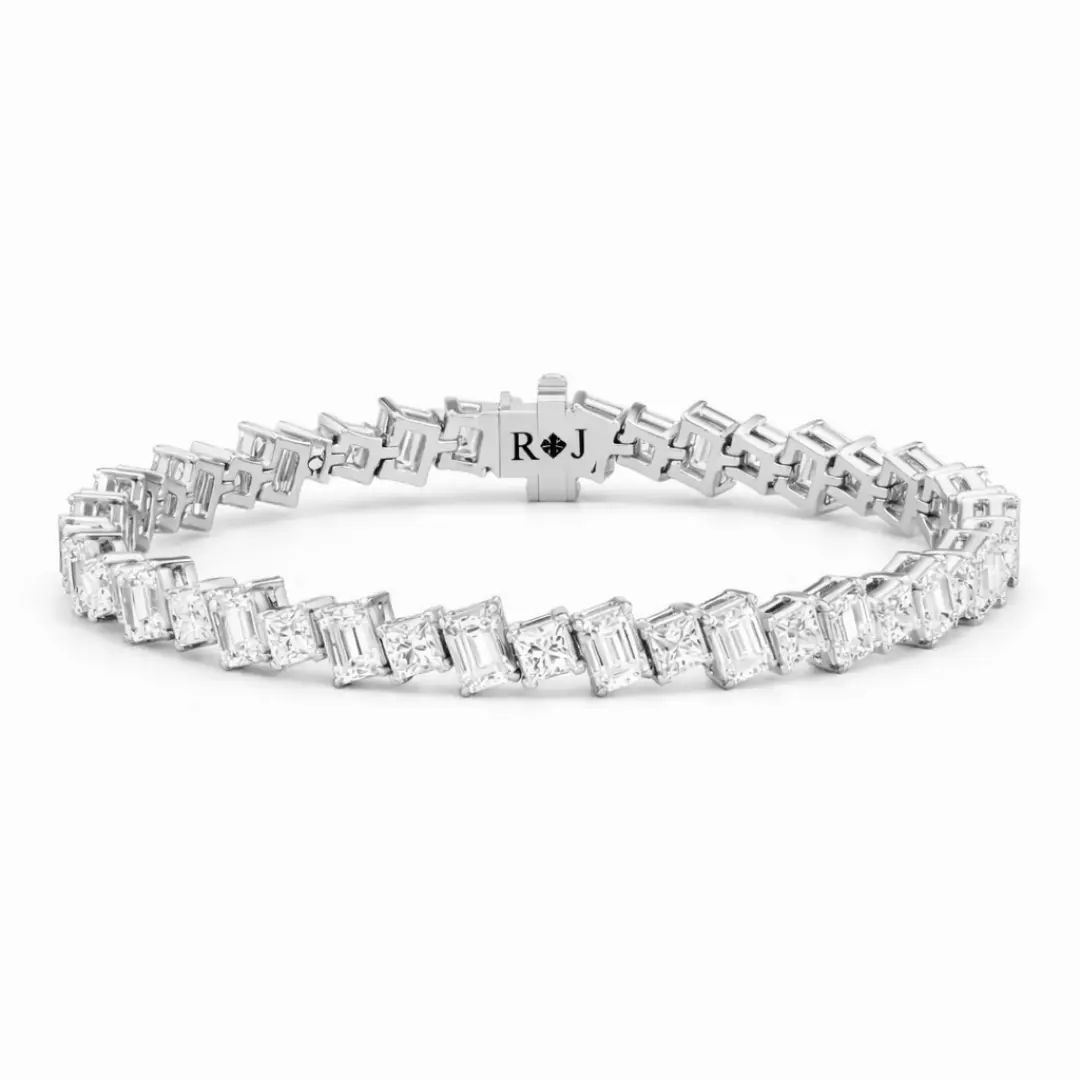
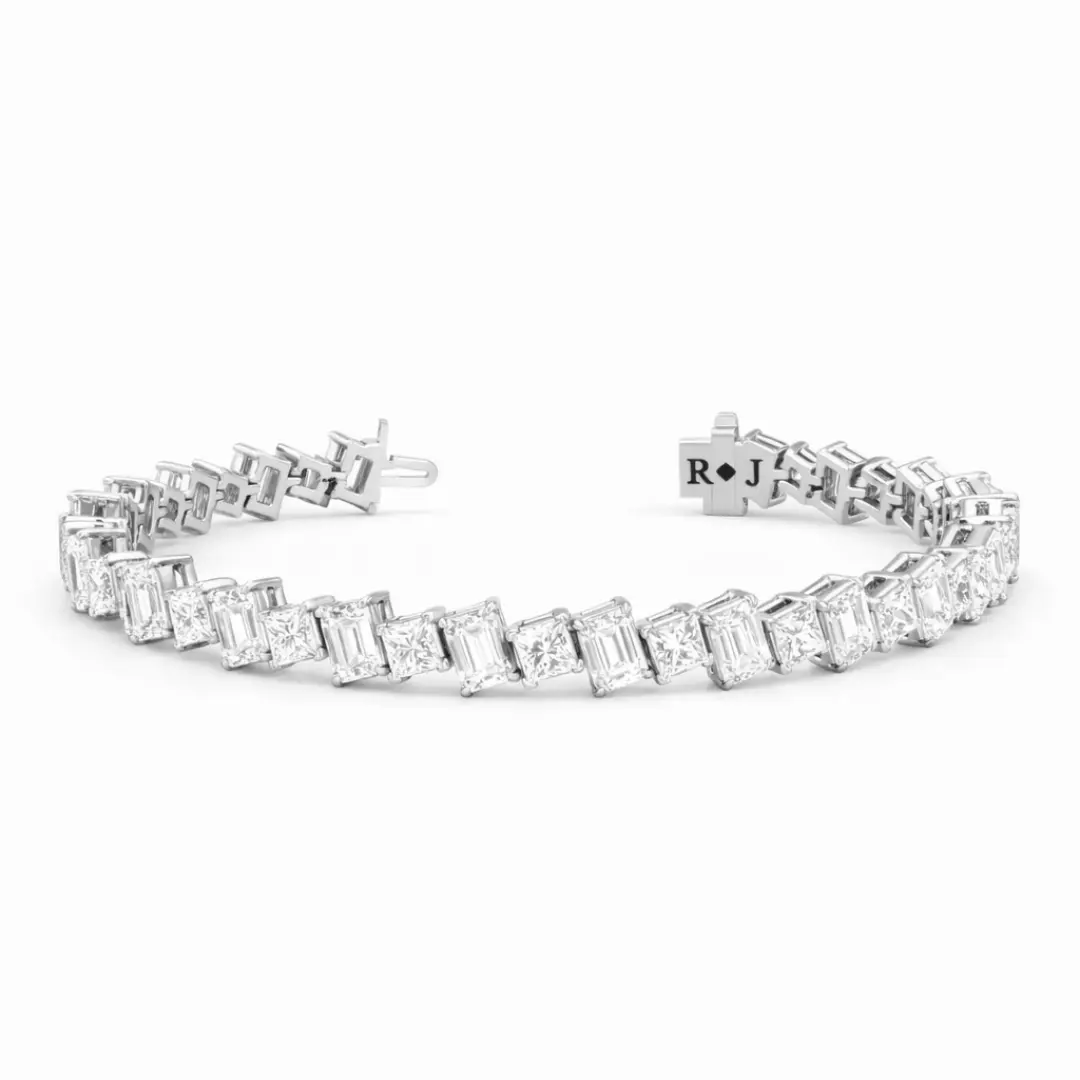
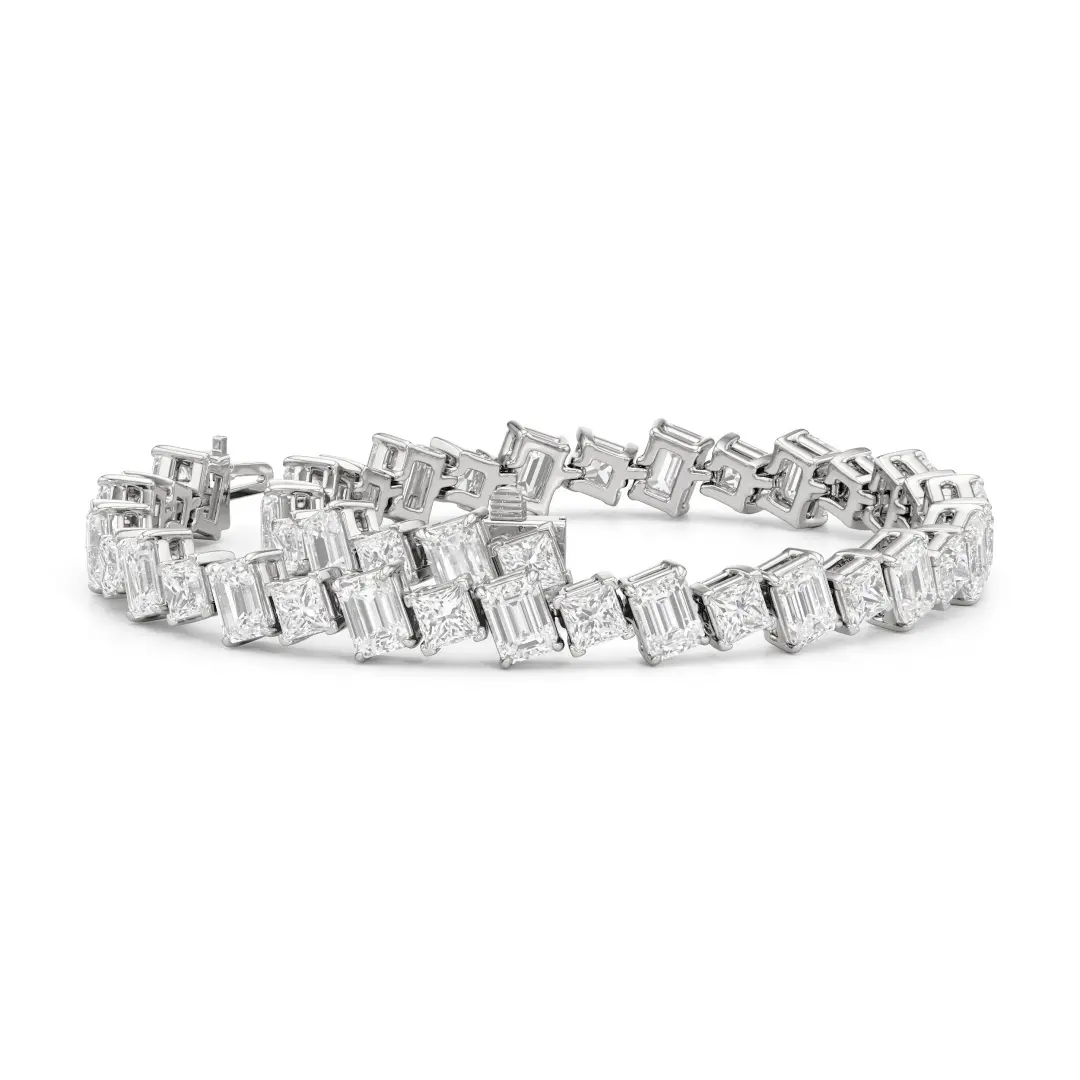
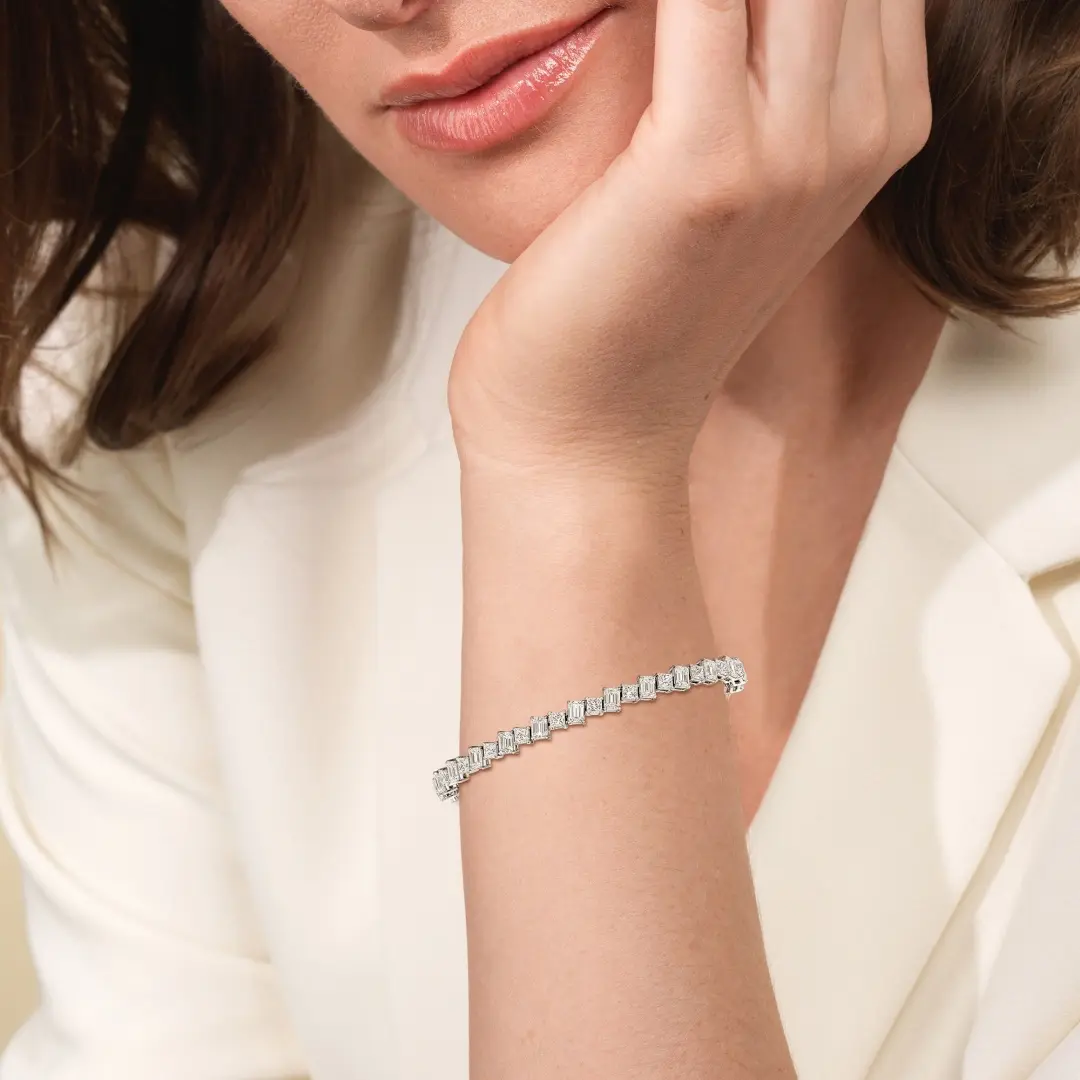
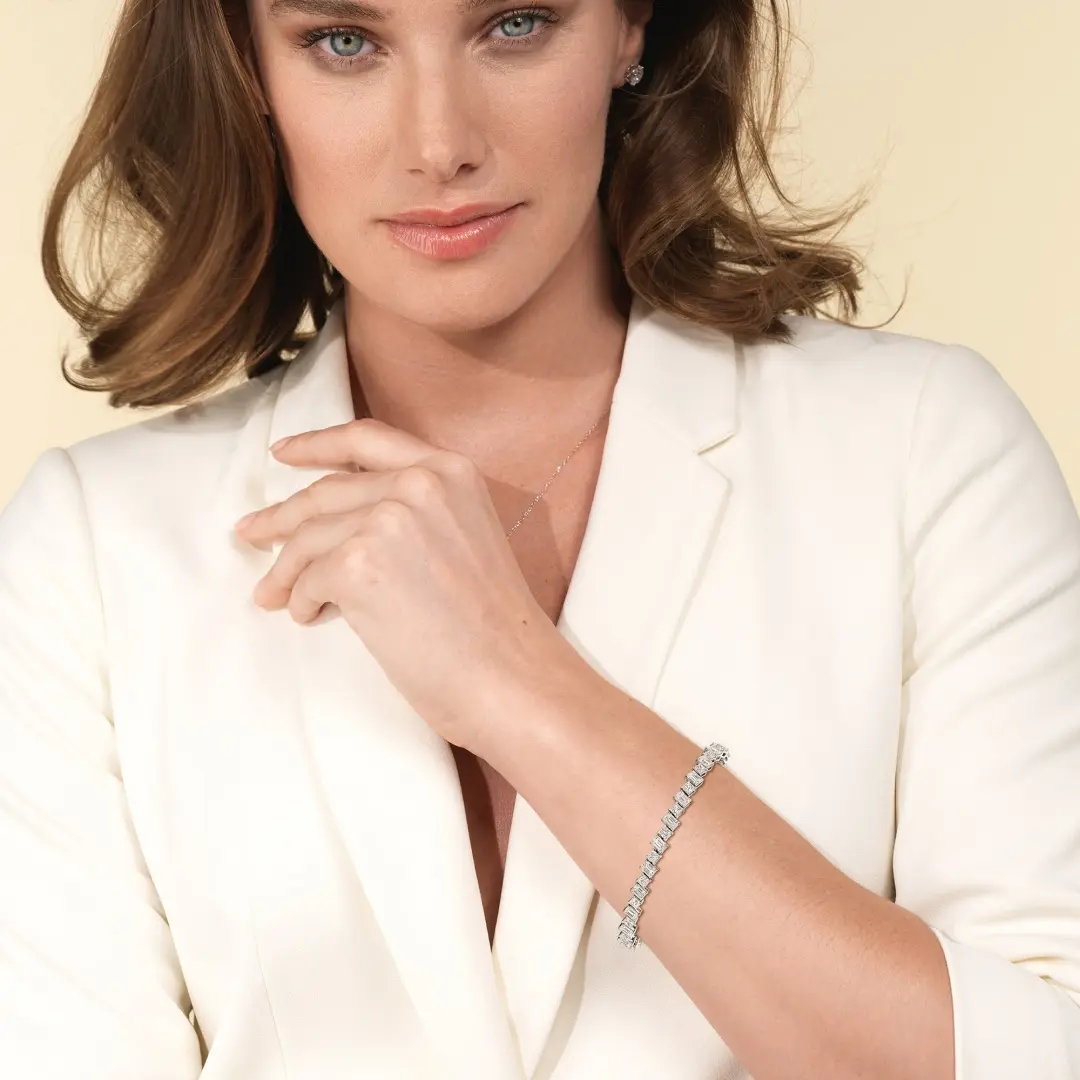
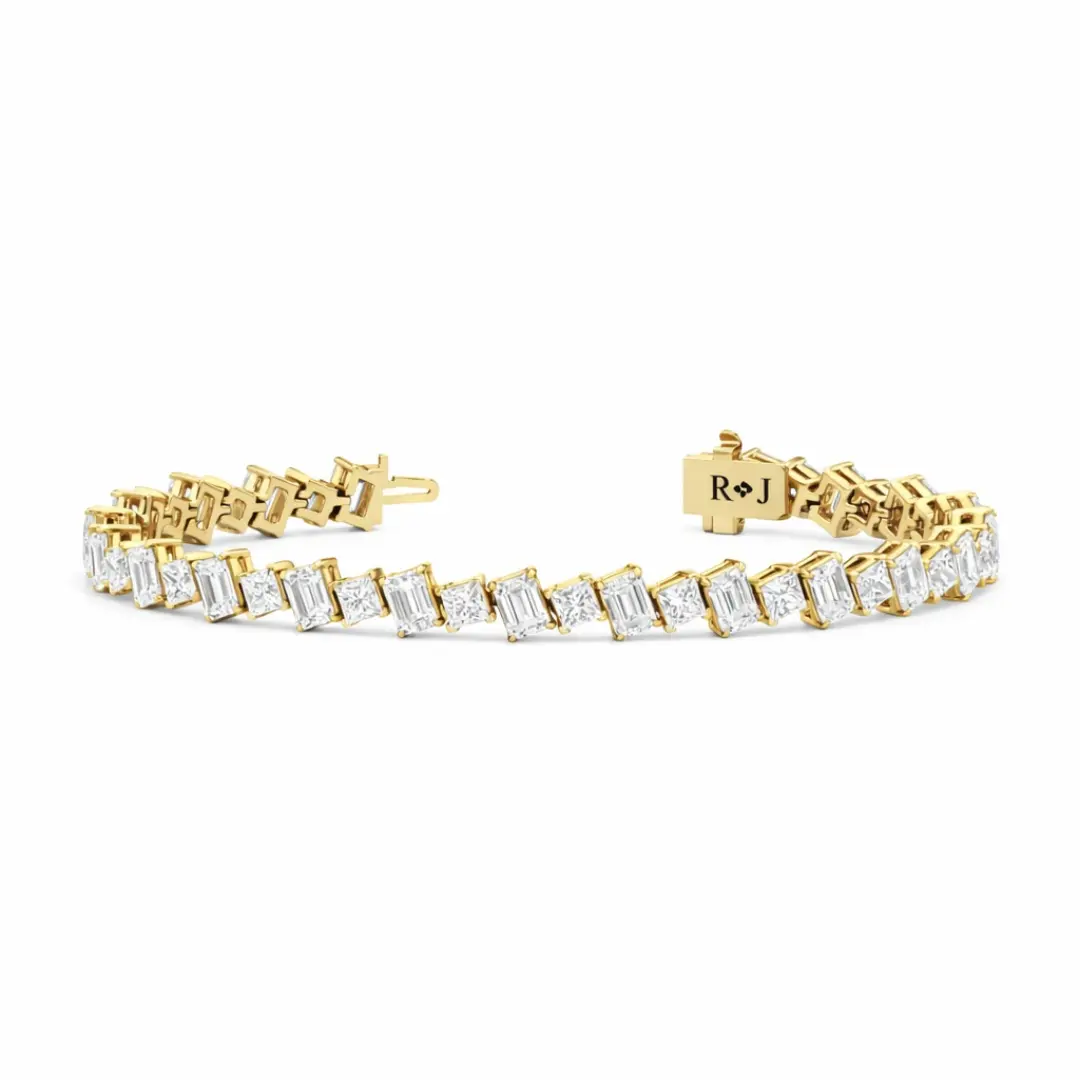
A herringbone tennis bracelet built on a geometric premise: rectangular and square diamonds sharing corners along a diagonal line.
18K white gold tennis bracelet with alternating emerald cut and princess cut lab grown diamonds in diagonal prong setting, box clasp with safety, 7 inch length.
Emerald + Princess
Lab Diamond
Diagonal Prong
7 inch / Box Clasp
Test Certificate
Available in 14K or 18K gold, white, yellow, or rose. Bracelet length, total carat weight, and stone type can be specified before production.
The Diagonal Is Not Decorative. It Is the Only Way This Works.
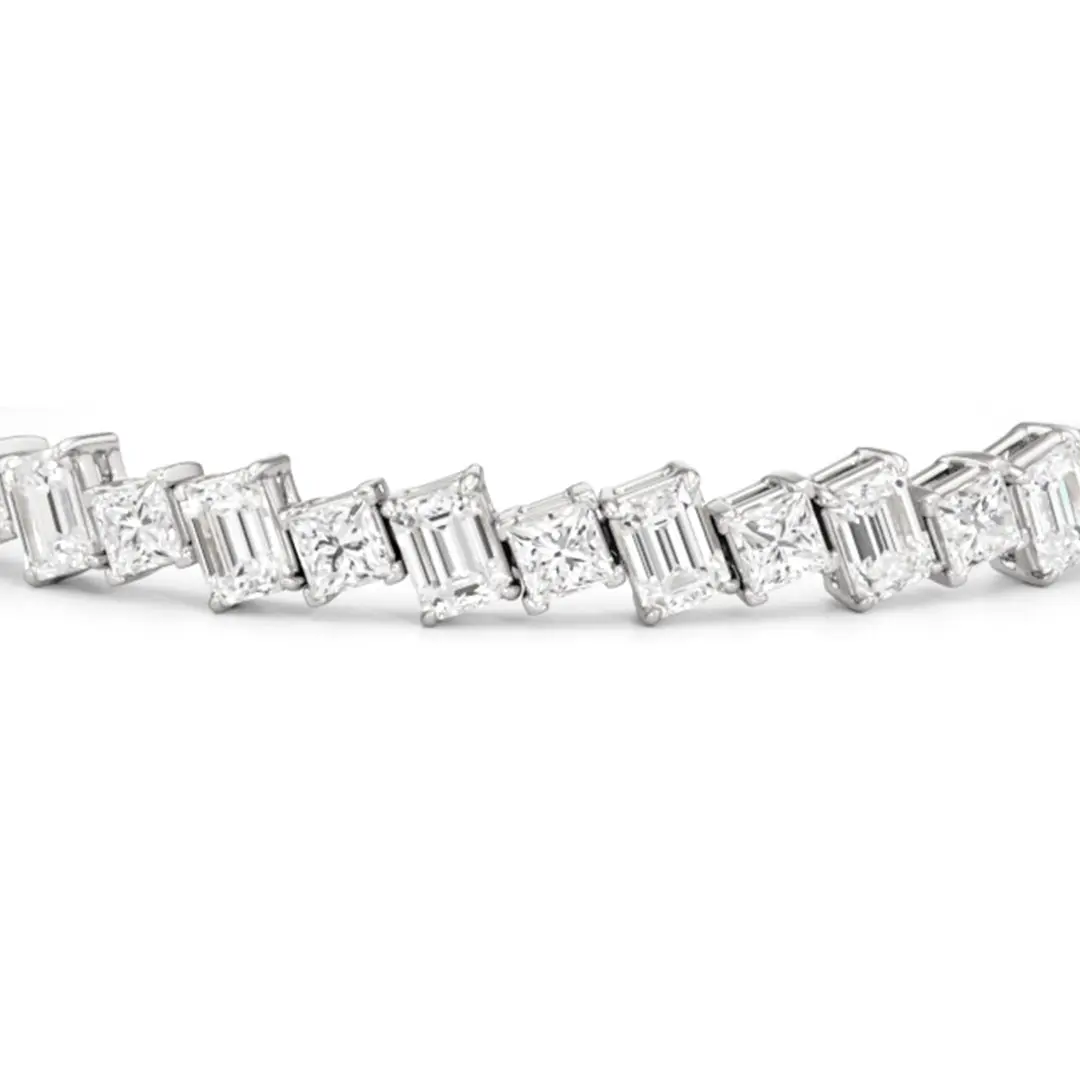
Most tennis bracelets use one stone shape repeated end to end. This one alternates emerald cuts (rectangular) and princess cuts (square) along a diagonal line, which is not a stylistic choice but a geometric one. Because the two stones have different shapes, their corners align cleanly at each junction when rotated 45 degrees, and the bracelet maintains a constant width along its full length. Try the same diagonal with two stones of the same shape and the pattern reads as arbitrary. This emerald princess cut diamond tennis bracelet only exists because the two cuts make the herringbone math possible.
- Product type
- Diamond tennis bracelet with alternating-cut herringbone pattern
- Metal
- Solid 18K white gold, palladium alloy, rhodium-plated at the surface
- Stones
- Alternating emerald cut and princess cut lab grown diamonds in diagonal orientation
- Setting
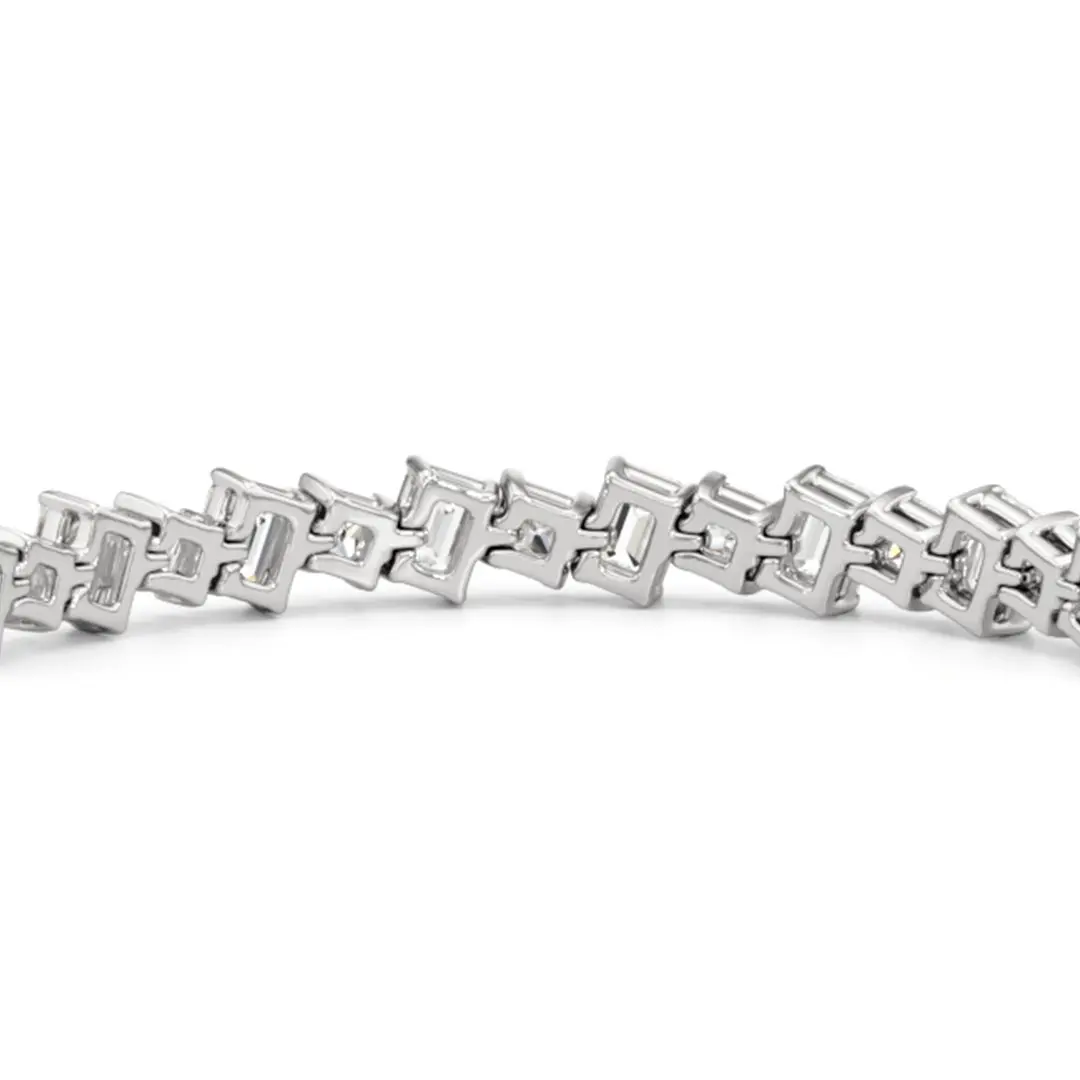
- Four-prong per stone, prongs positioned at the shared corner junctions
- Length
- 7 inch standard, 6.5 to 7.5 inch sizing range
- Light return
- Broad step-facet flashes from emerald cuts paired with smaller scatter brilliance from princess cuts
- Clasp
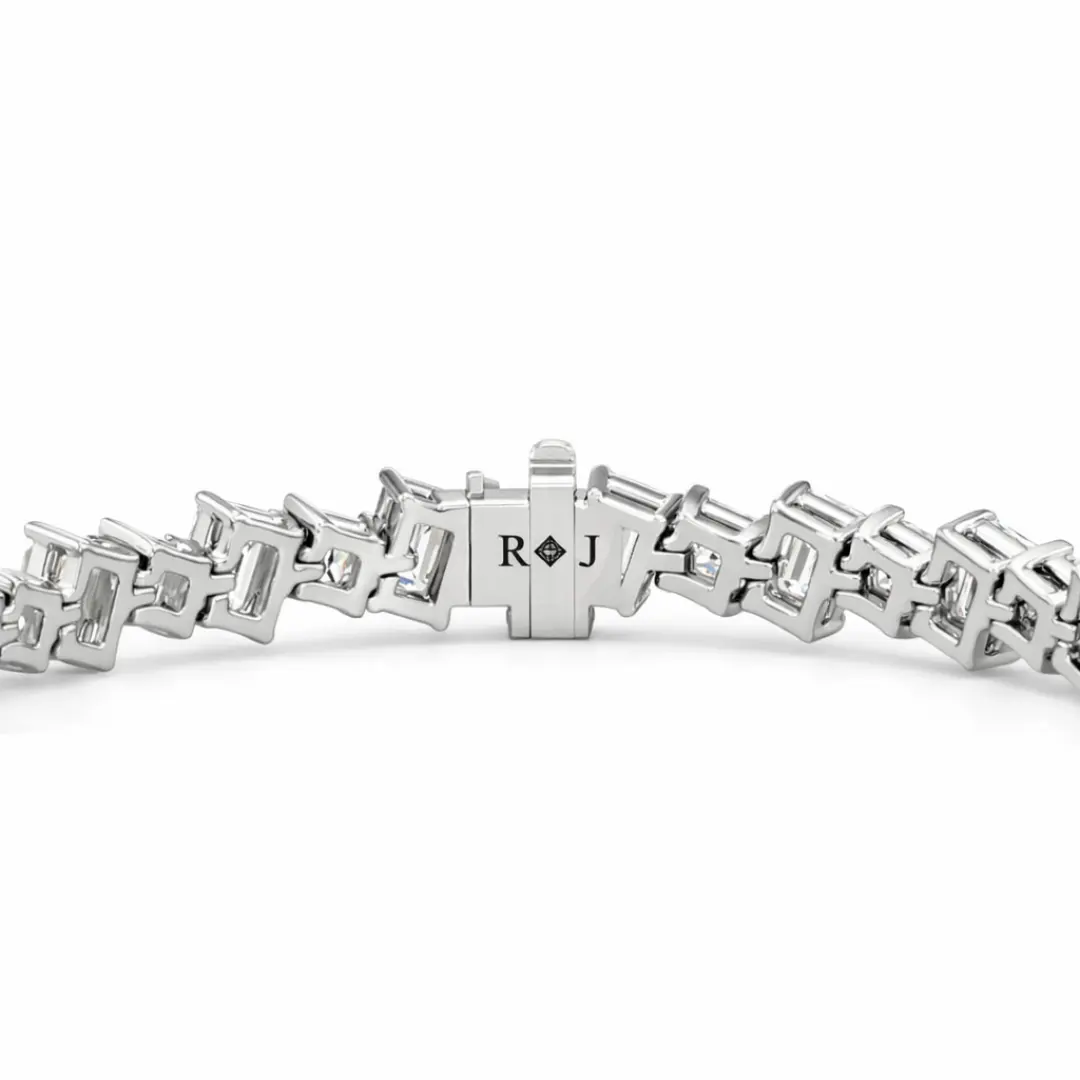
- Box clasp width-matched to the bracelet body, safety mechanism standard
- Customization
- Length, gold karat and color, total carat weight, stone type
On the wrist, the surface reads differently as the arm moves: the emerald cuts return long calm flashes through their step facets, the princess cuts return smaller scattered brilliance. The bracelet shifts between two qualities of light depending on angle. Within our tennis bracelets collection, this is the pair built for buyers who already own a classic single-cut tennis line and want a second piece with geometric character.
Why the Prongs Sit at the Corners and Why the Clasp Is Width-Matched
Four-prong settings on alternating-shape bracelets have one correct position: the corners. Emerald cuts and princess cuts both have their structurally strongest points at the corners, that is where the metal can grip the stone without compromising the crown or pavilion. Prong placement at the corners has a second consequence, the prongs are absorbed into the visual edge where stones meet rather than sticking up between stones. From more than an arm’s length away, the bracelet reads as a continuous diamond surface, the prongs disappear into the herringbone seam.
The box clasp is fabricated to match the bracelet body width exactly, not wider, not narrower. On standard tennis bracelets, the clasp is often wider than the link body and creates a visible step in the line at the wrist underside. On a geometry-driven design, that step would break the diagonal pattern, the herringbone would simply stop at the clasp. Width-matching the clasp keeps the diamond line and the diagonal logic uninterrupted from one end to the other. The safety mechanism is integrated into the clasp face rather than added as an external chain, no visible secondary hardware on the bracelet body.
18K White Gold and Stones Lot-Matched Across Two Cuts
The bracelet body is 18K solid gold (Au750) in a palladium-dominant alloy, rhodium-plated as a final step after setting and polishing for a clean neutral white finish. The rhodium coat sits over an already-inspected surface so coverage stays even across the outer link face and the prong tips. Stone matching is the bench step that distinguishes this build from a single-cut tennis bracelet, the same E color grade reads differently across emerald and princess cuts because step facets and brilliant facets return light at different intensities. Our setting team in Shenzhen grades all stones as one lot before setting begins, so the two cuts read consistent in face-up tone when worn together. Both natural and lab grown diamonds follow the same grading workflow.
- ◆ 18K white gold (Au750) palladium alloy, rhodium-plated after setting and polishing
- ◆ Emerald cuts and princess cuts lot-matched as one set for face-up tone consistency
- ◆ Four-prong setting per stone, prongs positioned at corners for structural security
- ◆ Box clasp width-matched to bracelet body, integrated safety mechanism
- ◆ Final inspection covers stone security, clasp function, and pattern alignment
Length, Total Carat Weight, Gold Color, and Stone Type
This bracelet is built to order. Length is the decision that matters most for fit, total carat weight is the decision that matters most for visual scale on the wrist. Confirm both before specifying the rest.
- ◆ Length: 6.5 to 7.5 inch as standard sizing range; provide wrist circumference and the production team can recommend
- ◆ Total carat weight: confirmed at inquiry based on preferred stone size and length, larger stones increase visual scale and shift bracelet width
- ◆ Gold karat: 14K or 18K, with 18K offering a denser, richer base tone
- ◆ Gold color: white as shown with rhodium plating, yellow or rose available (yellow changes contrast with the step-cut emerald stones noticeably)
- ◆ Stone type: lab grown diamond as standard, with natural diamond available on request at the same grade
Send your wrist circumference and the production team will recommend the correct length within the 6.5 to 7.5 inch range. Add your target total carat weight (or describe the visual scale you want and the team will quote stone size options), your preferred gold karat and color, and your diamond type (lab or natural). If you already own a single-cut tennis bracelet you plan to stack this with, mention the width so the two pieces sit together correctly.
Made to order
This design is a starting point
Every piece is produced to order at our Shenzhen manufacturing facility, so the version you receive can differ from the one on this page.
Change the specifications
Metal and karat, stone type, carat weight, setting style, and finished dimensions.
Or send your own design
A sketch, a reference photo, or an AI generated image. Our team builds the CAD from it and tells you what has to change to make it wearable.
Free engraving
Included on every piece. Your own text and your choice of font, at no added cost.
Send your image, preferred metal, size, and any changes. You receive a CAD render to approve before production starts. Production runs 5 to 15 days depending on complexity, then 2 to 5 days in transit with FedEx, DHL, or UPS.
Send your design