What Is a Wedding Band?
A wedding band is the ring exchanged during a marriage ceremony and worn afterward as a daily symbol of commitment. It is different from an engagement ring, which is usually given at the proposal. In everyday use, “wedding band” and “wedding ring” often mean the same thing, but “band” usually suggests a lower-profile ring designed for continuous wear.
That simple definition is useful, but it does not answer the real buying question: which wedding band will feel right beside an engagement ring, hold up to daily wear, and still look appropriate years later? That is where metal, width, profile, setting style, and manufacturing quality matter.
Wedding Band vs. Engagement Ring
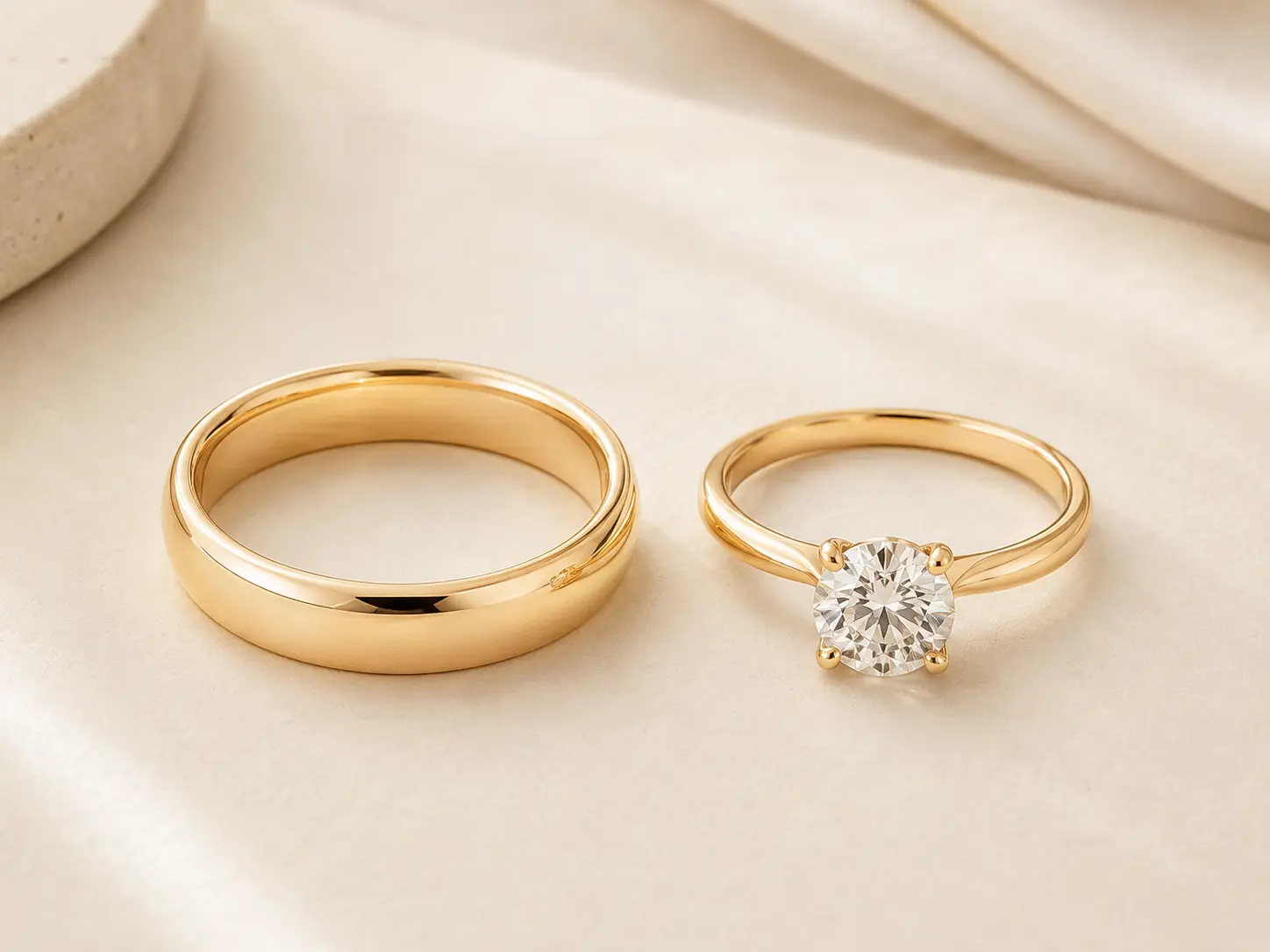
The main difference between a wedding band and an engagement ring is timing and purpose. An engagement ring is given during the proposal and usually centers on a diamond or gemstone. A wedding band is exchanged at the wedding ceremony and is meant to be worn as the everyday symbol of marriage.
Design also differs. Engagement rings often have height, a center stone, prongs, halos, or side stones. Wedding bands are usually simpler, lower, and more practical. A good band should not snag easily, rotate uncomfortably, or fight against the engagement ring beside it.
Cost is structured differently as well. An engagement ring price is often driven by the center stone. A wedding band price depends more on metal weight, width, finish, stone count if any, and the quality of casting, polishing, engraving, and stone setting.
Some couples choose a matched bridal set, where the engagement ring and wedding band are designed together. Others buy the band later and choose something that complements the existing ring. Both approaches work. The practical goal is the same: the two rings should sit together comfortably and look intentional.
Common Wedding Band Styles
Most wedding bands fall into a few practical categories. Knowing the difference helps you shop with clearer expectations.
| Style | Best for | Trade-off to consider |
|---|---|---|
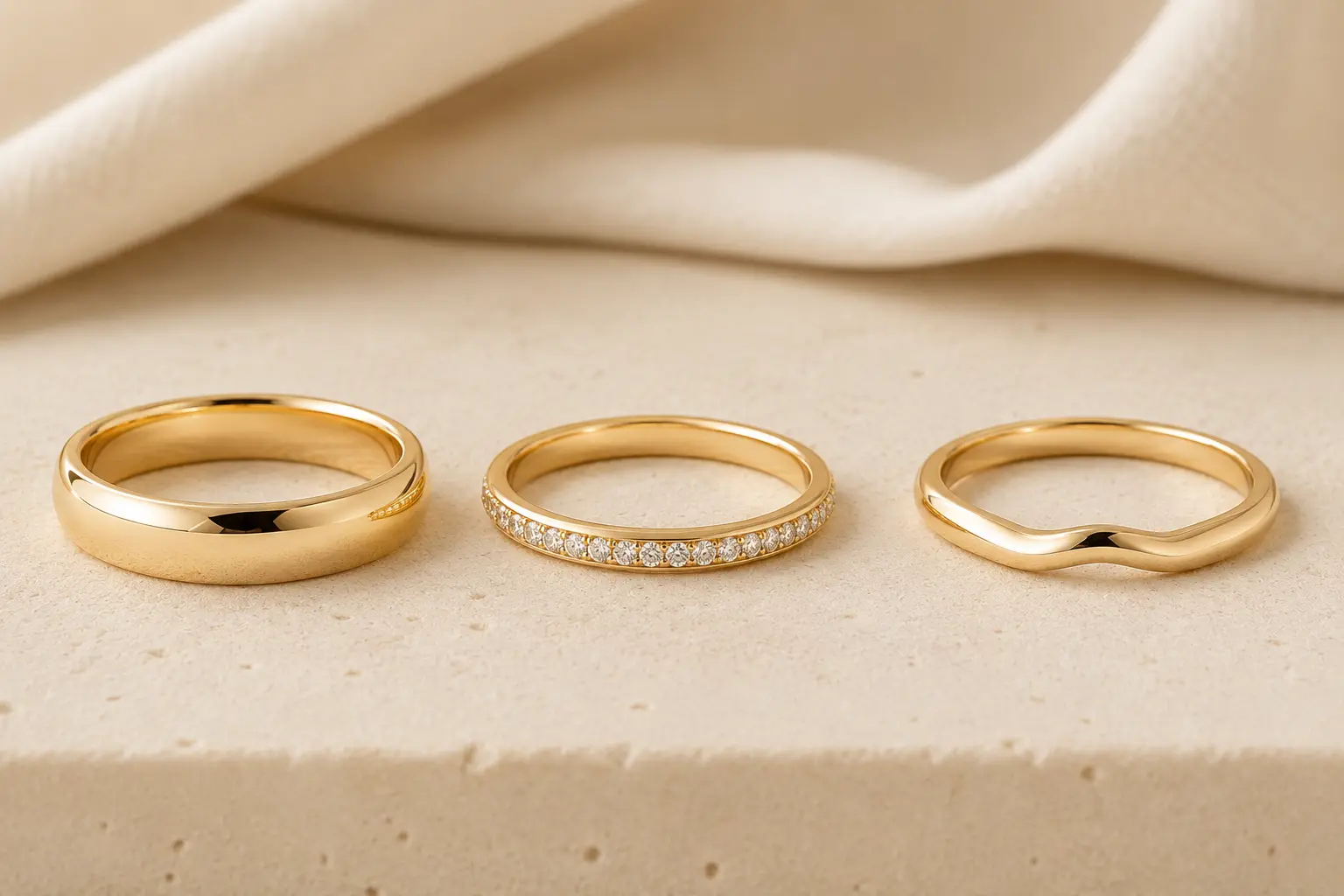
| Plain metal band | Classic daily wear, low maintenance, easy resizing | Less sparkle, but often the most durable and versatile option |
| Pavé diamond band | Fine sparkle and delicate visual detail | Small stones and prongs need careful setting and periodic checks |
| Channel-set band | Diamond detail with a smoother, more protected profile | Less exposed sparkle than pavé, but more practical for daily wear |
| Half-eternity band | Diamonds across the visible top of the finger | Usually easier to resize than a full eternity band |
| Full eternity band | Continuous diamonds all around the ring | Often difficult or impossible to resize cleanly |
| Curved or contoured band | Pairing closely with a specific engagement ring shape | Less versatile if worn alone or paired with a different ring later |
Plain metal bands
Plain bands are the most traditional wedding bands. They can be polished, brushed, satin-finished, hammered, or edged with milgrain. They are practical because there are no stones to loosen and fewer details to complicate future resizing.
Width changes the look dramatically. A 2 mm band feels delicate and works well beside a prominent engagement ring. A 4 mm band has more presence while still feeling wearable for many buyers. A 6 mm or wider band reads as substantial and is common for men’s wedding bands or for anyone who wants the band to stand on its own, such as our satin brushed block men’s band.
Diamond wedding bands
Diamond wedding bands add sparkle without the height of an engagement ring. Pavé bands use small diamonds set close together. Channel-set bands place stones between two metal walls for more protection. Half-eternity bands carry diamonds across the visible top, while full eternity bands continue diamonds around the entire ring.
If you want diamonds, setting quality matters. Tiny prongs must be formed cleanly and consistently. Stones should sit level, not tilted or crowded. This is one reason detailed close-up images and production inspection are important before approval.
Curved and contoured bands
A curved band is shaped to sit around the outline of an engagement ring. This can solve the visible gap that appears when a straight band sits beside a halo, low basket, or prominent side-stone design.
The trade-off is flexibility. A curved band usually looks best with the specific engagement ring it was made for. If you later change the engagement ring, the contour may no longer match. Our marquise curved vine wedding band is an example of a contour shaped to nest against a curved or pointed ring.
How to Choose Metal, Width, and Profile
A wedding band is usually worn more consistently than almost any other piece of jewelry. The metal, width, and profile should match the wearer’s hands, lifestyle, and tolerance for maintenance.
Gold alloys
Gold jewelry is alloyed with other metals for strength. 18k gold has a richer gold content and a warmer, more luxurious feel. 14k gold is slightly harder and more scratch-resistant, which can make it more practical for active daily wear.
Yellow gold needs relatively little color maintenance. White gold is usually rhodium-plated to create its bright white look, and that plating wears over time. Rose gold gets its color from copper in the alloy and can be a strong everyday option for buyers who like a warmer tone.
Platinum
Platinum is dense, naturally white, hypoallergenic, and durable. It does not need rhodium plating. Instead of losing material quickly when scratched, platinum tends to develop a soft patina over time. Some wearers love that texture; others prefer to polish it periodically.
The main trade-off is cost. Platinum bands are usually priced higher than comparable gold bands because the metal is denser and often requires more material by weight.
Profile and comfort fit
The inside shape of a wedding band affects how it feels. A flat-fit band sits closely against the finger. A comfort-fit band has a gently rounded interior, making it easier to slide on and off and more comfortable for wider bands.
For bands 4 mm wide or wider, comfort fit is usually worth considering. It matters especially for someone who is not used to wearing a ring every day.
How a Wedding Band Should Sit With an Engagement Ring
When a wedding band is worn beside an engagement ring, the two pieces interact constantly. Their metal, height, width, and setting edges can affect comfort and long-term wear.
A straight band often works well beside a classic solitaire. A halo, low-set basket, or decorative shank may leave a visible gap. That gap is not automatically wrong; some buyers like the separation. If you want the rings to sit flush, a curved or custom-contoured band may be better.
Metal matching is usually the easiest route. A platinum engagement ring with a platinum wedding band will age more consistently than platinum paired with rhodium-plated white gold. Mixed metals can still look intentional, but the contrast should be chosen deliberately.
If you are choosing your wedding bands at the same time as an engagement ring, plan the pair together. If you already own the engagement ring, share clear side photos, measurements, and ring size with the jeweler before ordering a band. For a fully custom pairing, Redora can build a band around the actual ring profile through its custom jewelry process.
Common Wedding Band Buying Mistakes
Most wedding band regrets come from choosing based on appearance alone and not thinking enough about daily use.
- Choosing the wrong width: A wide band may look strong in photos but feel bulky when the hand closes.
- Ignoring resizing limits: Full eternity bands and complex diamond bands can be difficult to resize later.
- Forgetting finish maintenance: High-polish bands show fine scratches quickly, while brushed finishes hide wear better but may need refinishing to stay consistent.
- Not checking engagement-ring fit: A band can leave a gap, rub against side stones, or sit unevenly if the profile is not planned.
- Treating the band as an afterthought: The wedding band is often the ring worn most consistently, so metal quality and finishing matter.
Sizing is especially important. Fingers change size with temperature, activity, and time of day. Wider bands often feel tighter than narrow rings of the same measured size. If you are ordering online or custom, use a reliable ring size chart as a starting point, then confirm with the exact width you plan to wear.
What Factory-Direct Manufacturing Means for a Wedding Band
A wedding band may look simple, but small production details determine how it feels and lasts. Casting quality, metal density, edge finishing, interior smoothness, engraving depth, and stone setting all matter in daily wear.
At Redora Jewels, wedding bands are produced through our Shenzhen manufacturing facility with direct oversight across casting, finishing, and inspection. That matters because a band is not only a design object. It is a piece of jewelry that will be worn through hand washing, work, travel, climate changes, and years of contact with other rings.
Factory-direct production also helps with customization. Buyers can specify width, metal, finish, profile, engraving, diamond layout, and pairing requirements without routing every detail through multiple retail layers. If you have a specific design or need help matching a band to an existing ring, you can submit a custom wedding band inquiry to Redora’s production team.
About the Author and Review Process
Edwin Lin is the founder of Redora Jewels and is directly involved in day-to-day production operations at the company’s fine jewelry manufacturing facility in Shenzhen. His work includes materials sourcing, quality control, stone setting review, finishing standards, and client consultations for custom pieces.
This article was developed from questions Redora regularly receives from buyers who are new to bridal jewelry: what a wedding band is, how it differs from an engagement ring, which style is practical, and how the band should fit beside another ring. The guidance reflects production experience with different metals, widths, profiles, and setting styles.
For more on how Redora approaches jewelry production and inspection, visit our manufacturing page.
More from Redora: all jewelry buying guides