Solid gold jewelry can survive an occasional shower without real harm, but it is not a habit worth keeping. Plain tap water will not corrode 10k, 14k, or 18k gold. The trouble comes from everything that arrives with a shower: soap film that dulls the shine, and far more seriously, chlorine, which can crack gold alloys over time. Gold-plated pieces and jewelry set with soft stones like pearls or opals should stay out of the water entirely. Below is the full picture, broken down by metal, by karat, and by situation, so you know exactly when to keep a piece on and when to take it off.
What water, soap, and chlorine actually do to gold
Gold itself does not rust or tarnish, which is why a splash of clean water is harmless to a solid gold ring or chain. The real question is not the water. It is the three things that ride along with it.
Soap, shampoo, and body wash leave a thin film on the surface and settle into crevices and under stones. This buildup is cosmetic and reversible, but over weeks it makes bright gold look cloudy and hides the sparkle of any set stones. It is the most common reason a piece that is worn in the shower daily starts to look dull.
Chlorine is the genuine hazard. Concentrated chlorine, the kind found in swimming pools, hot tubs, and household bleach, reacts with the alloy metals blended into gold, such as copper, nickel, and zinc. That reaction attacks the weakest points of a piece first: solder joints and the base of prongs. Repeated exposure can lead to stress corrosion cracking, where the metal slowly weakens and eventually breaks, often with little warning. The trace chlorine in municipal tap water is far too low to do this, so a normal shower is not the concern. A pool or a hot tub is.
Finally, hot water and sudden temperature changes can loosen any stone that is held by adhesive rather than metal, and heat is never helpful for delicate gemstones.
Does karat matter? 10k vs 14k vs 18k vs 24k
Karat measures how much of a piece is pure gold. Pure gold is chemically inert, so it will not react with chlorine or chemicals at all, but it is also very soft. Every step down in karat adds more alloy, which makes the metal harder and more durable for daily wear while also making it slightly more reactive. That trade-off is the whole story:
- 24k (pure gold): the most chemically resistant, but soft enough to dent and scratch easily. Uncommon in everyday Western fine jewelry for exactly that reason.
- 18k: mostly gold, with strong resistance to chlorine and good everyday looks, though still on the softer side.
- 14k: the most popular choice for fine jewelry. Durable for daily wear, but the higher alloy content means chlorine exposure adds up over time.
- 10k: the hardest and most affordable, with the most alloy, which makes it the most reactive to chlorine and harsh chemicals.
The takeaway: a higher karat resists chemicals better but dents more easily, while a lower karat wears tougher but reacts more with chlorine. None of them belong in a pool.
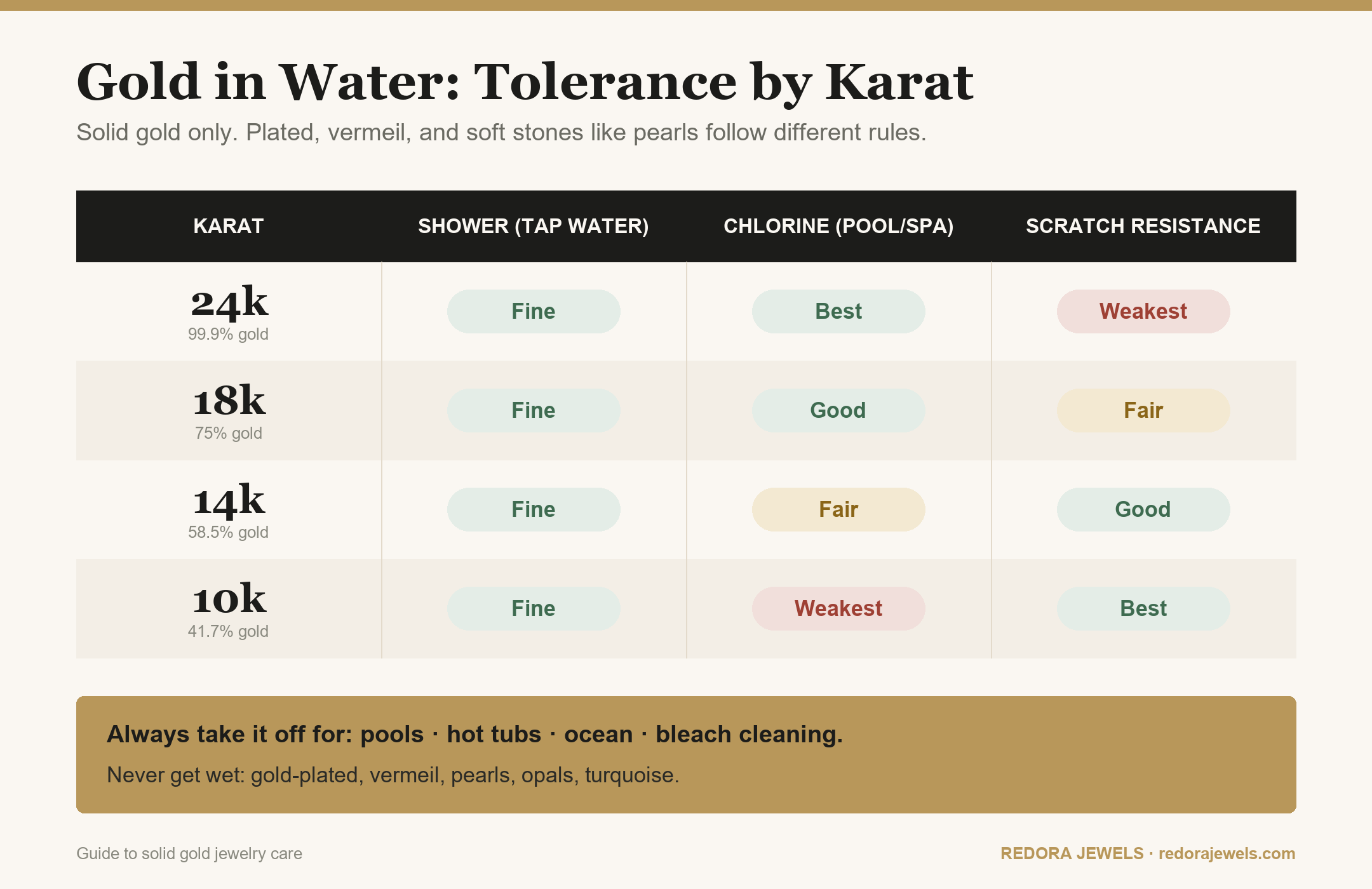
Karat also carries tradeoffs that have nothing to do with water. For the low end of the range, see whether 9k gold is worth it.
Solid gold vs gold-plated, vermeil, and gold-filled
This distinction matters more than the karat number, because it decides whether water shortens a piece’s life by years. From most water-tolerant to least:
- Solid gold: gold all the way through. An occasional splash is fine, and the surface can always be polished back.
- Gold-filled: a thick layer of gold pressure-bonded to a base metal core. It tolerates some exposure, but prolonged soaking still wears it down.
- Gold vermeil: sterling silver with a heavier gold plating. Better than standard plating, yet the plating still thins with repeated water and friction.
- Gold-plated: a very thin gold layer over base metal. Water, soap, and daily rubbing strip it quickly, exposing the base metal underneath, which tarnishes and can leave a green mark on skin.
The rule is simple. The less solid gold a piece contains, the faster water and soap will age it. Genuine solid gold fine jewelry is the only category that forgives the occasional shower, and even then it looks its best when kept dry.
The real risk is often the stones, not the metal
Many people worry about the gold and forget that the stones are usually the first casualty of water. What is set into the piece often decides the answer for you.
- Hard stones are water-safe: diamonds, including lab grown diamonds, along with sapphires and rubies, are not harmed by water. They only lose sparkle temporarily as soap film builds up.
- Soft and porous stones should never get wet: pearls and opals are the classic examples. Pearls lose their nacre and luster, and opals can craze or crack. Turquoise, coral, emeralds, and moonstone are equally vulnerable.
- Glued or hollow settings: hot water and soap can loosen adhesive and trap moisture inside, which is a problem for some earrings and lightweight pieces.
- Pavé and channel settings: soap collects under rows of small stones and dulls them faster than a single solitaire, so they need more frequent cleaning.
Pool, ocean, gym, hot spring: situation by situation
Not all water is equal. Here is the practical call for each common setting.
- Shower with plain tap water: acceptable for solid gold now and then, though removing it keeps the shine longer.
- Swimming pool or hot tub: take it off. This is the single worst place for gold because of concentrated chlorine.
- Ocean and saltwater: take it off. Salt is corrosive and abrasive, sand scratches the metal, and cold water shrinks fingers, which is how rings are lost.
- Gym and workouts: better removed. Sweat carries salts, lotions and sunscreen coat the surface, and weights knock and bend softer pieces. A gold tennis bracelet in particular takes a beating during training.
- Hot springs: take it off. Sulfur and high heat are especially aggressive.
How to care for gold jewelry so it lasts
A few simple habits keep a piece looking new for decades:
- Remove it before pools, the ocean, and any cleaning with bleach, and ideally before the shower.
- If it does get wet, rinse it in clean water and dry it with a soft, lint-free cloth.
- Clean it periodically in warm water with a drop of mild dish soap, using a soft brush, then rinse and dry.
- Store pieces separately in a soft pouch so they do not scratch one another.
- Have a jeweler check prongs and solder joints from time to time, since that is exactly where chlorine damage shows up first.
Because we run our own factory-direct production, most of the wear issues we see trace back to two things: chlorine at the joints and lost shine from soap buildup. Both are avoidable. If you are planning a piece you intend to wear every day, our custom jewelry production team can build it in a metal and setting suited to that life, with solder points made to last.
Frequently Asked Questions
Can you shower with 14k gold every day?
Occasionally is fine, but daily is not ideal. Plain water will not corrode 14k gold, yet daily soap exposure builds a dulling film, and any repeated contact with chlorinated water works against the alloy over time. Take it off when you easily can.
Does gold tarnish in water?
Pure gold does not tarnish. Lower-karat gold can discolor slowly from chemicals such as chlorine and some cosmetics, but not from plain water alone.
Can you swim with a gold chain?
No. Pool chlorine and ocean salt both damage gold, and swimming is one of the most common ways chains are lost. Remove it first.
Is gold-plated jewelry waterproof?
No. The gold layer on plated jewelry is thin, and water combined with soap and friction wears it away, exposing the base metal underneath.
Can you shower with a gold ring that has a diamond?
The gold and the diamond both tolerate water, so the piece will not be harmed, but soap film will dull the diamond’s sparkle. If the ring has soft side stones or any glued setting, keep it out of the shower.
Will hot water damage gold?
Hot water does not harm solid gold, but it can loosen stones held by adhesive and is bad for delicate gemstones, so use judgment based on what is set into the piece.
About the Author and Review Process
Edwin Lin is the founder of Redora Jewels, a factory-direct fine jewelry manufacturer based in Shenzhen with on-site production and hands-on gemology oversight. He works directly with the production team on metal selection, stone setting, and the quality standards that determine how a piece holds up to daily wear. This article was developed from Redora’s production experience, recurring questions from customers about jewelry care, and established guidance on gold alloys, chlorine exposure, and gemstone durability.
If you want a piece engineered for everyday life, from the metal to the setting, you can start a custom project with Redora’s production team.
More from Redora: all jewelry buying guides