Understanding the Custom Jewelry Process Before You Begin
The custom jewelry process works best when the buyer understands what happens before metal is cast, stones are set, and the finished piece is delivered. Most people begin with an emotional goal: a ring that feels personal, a necklace that marks a milestone, or a piece that reworks a family stone. The practical side is less obvious. Design choices, budget limits, stone sourcing, metal selection, CAD approval, production timing, and aftercare all affect the final result.
This guide walks through the process from idea to finished piece, with attention to the decisions that matter most for real buyers. The goal is not to make custom jewelry sound complicated. It is to show where thoughtful early choices prevent disappointment later.
Why the Custom Jewelry Process Rewards Early Clarity
The most important stage of a custom project often happens before production begins. A clear design brief, a realistic budget, and honest priorities make the rest of the process smoother. When those details stay vague, the project can drift into avoidable revisions, material changes, or cost surprises.
Custom jewelry is not automatically more expensive than a comparable ready-made piece. Cost depends on stone choice, metal, design complexity, setting style, and labor time. A clean solitaire with a well-chosen stone can be efficient to produce. A halo ring with micro pavé, engraving, and a shaped band takes more bench work and therefore costs more. The price difference comes from the design and production requirements, not from the word “custom” alone.
Working directly with a custom jewelry manufacturer also changes the conversation. Instead of passing a concept through several retail layers, the buyer can discuss technical feasibility, stone options, and production trade-offs with the team responsible for making the piece.
Step 1: Clarify Vision, Budget, and Real Priorities
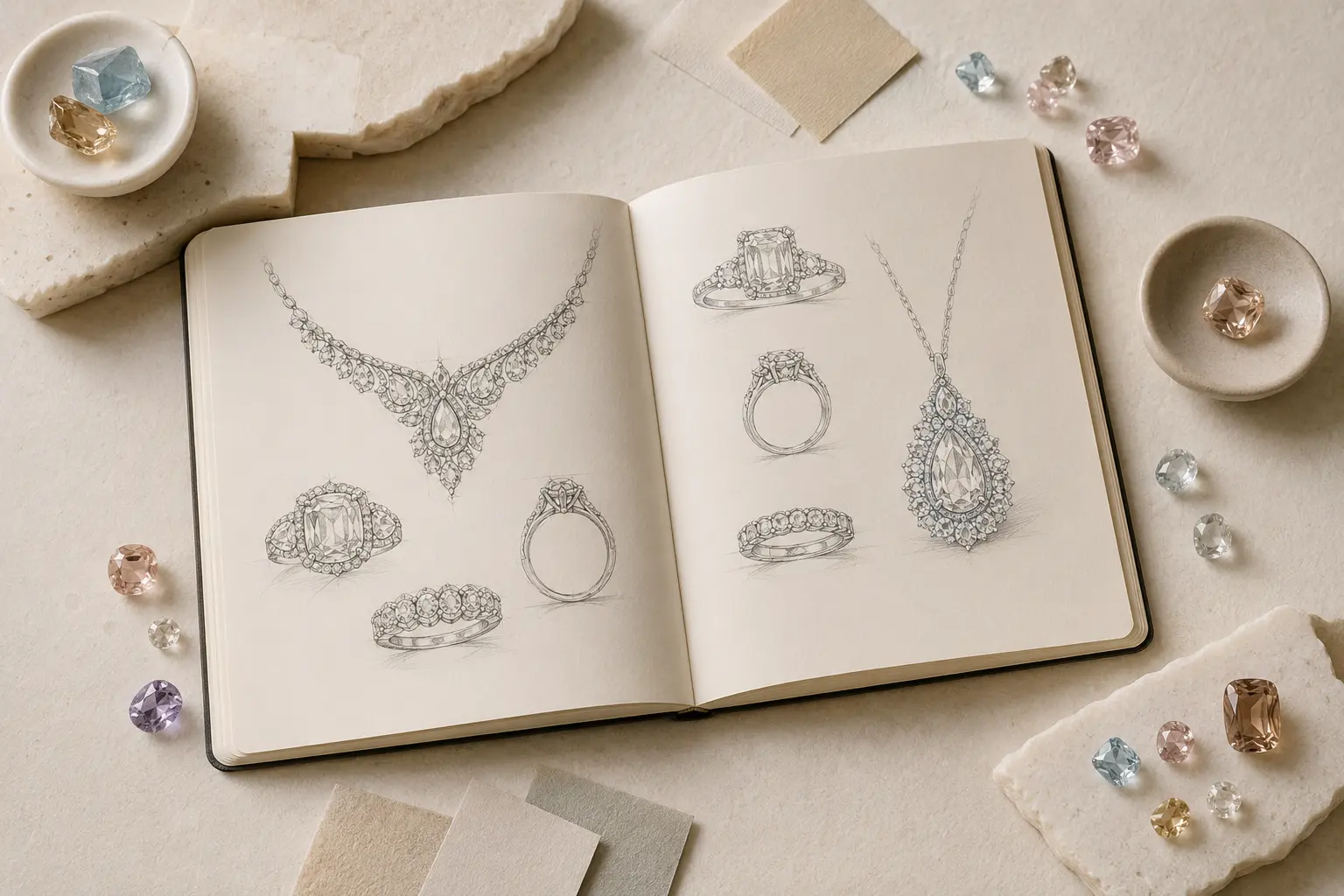
A productive first consultation should cover three questions: what should the piece feel like, what budget range should it respect, and which priorities matter most when trade-offs appear. Those priorities may include stone size, cut quality, durability, metal color, daily wear comfort, or a specific design detail.
Reference images are useful, but they do not need to be perfect. A buyer can bring photos of rings, settings, stone shapes, heirloom pieces, or even design elements they dislike. What matters is explaining why those references are useful. “I like the low profile,” “I want the band to feel delicate but durable,” or “I care more about cut quality than carat weight” gives the production team better direction than a folder of images alone.
Budget should be discussed early. A few trade-offs are worth understanding before the design is locked:
- Stone size and stone quality: A larger stone is not always the better visual choice. Cut quality, color, clarity, and proportion affect how the stone performs in the finished piece.
- Metal choice: Platinum is dense, durable, and naturally hypoallergenic. Gold offers more color flexibility. 18k gold has a richer precious metal content, while 14k gold can be practical for frequent daily wear.
- Setting complexity: Pavé, halos, split shanks, hidden accents, and detailed engraving add labor time. Simplifying the setting can sometimes protect the budget for a better center stone.
- Natural or lab-grown diamonds: Lab-grown diamonds can offer more size or quality within the same budget, but buyers should review the actual grading report and origin description rather than assuming all reports use identical language.
For neutral diamond education, buyers can also review GIA diamond education resources before comparing stone reports. The practical goal is to understand what the report says, not to chase the highest grade in every category.
Setting a budget is easier once you know what the money is going toward. We published a cost breakdown of a custom diamond ring from the production side, with the metal, stone, and labor shares laid out.
Step 2: Move From Sketch to CAD You Can Evaluate
Once the design direction and budget are aligned, the project moves into formal development. For most custom fine jewelry, this means a CAD model that shows the piece in three dimensions before metal production begins.
CAD is valuable because it lets both the buyer and the production team evaluate proportion, structure, height, stone placement, and manufacturability. Revisions at this stage are much easier than revisions after casting. A design can look elegant in a top view but sit too high on the finger, feel too thin for daily wear, or leave insufficient support around a stone. Those issues should be solved on screen, not after the piece is already in metal.
What to Check in CAD Renders
- Height and profile: A ring that sits too high may snag or feel less comfortable for daily wear.
- Band width and thickness: Very thin bands can look refined but may bend or wear faster, especially on rings worn every day.
- Prong size and placement: Prongs must secure the stone without overwhelming it visually.
- Accent stone spacing: Pavé and halo stones need enough metal support to reduce chipping and loosening risk.
At Redora, design files are reviewed for manufacturability before client approval. That step matters because a CAD image is not only a visual preview. It is also the technical plan for casting, assembly, stone setting, and finishing. Approving that file is also the point where an order stops being reversible, because materials are ordered against the approved model rather than against the original brief. There is a separate article on what a custom jewelry deposit pays for at each stage and where the full refund window closes.
Step 3: Choose Materials and Settings With Daily Wear in Mind
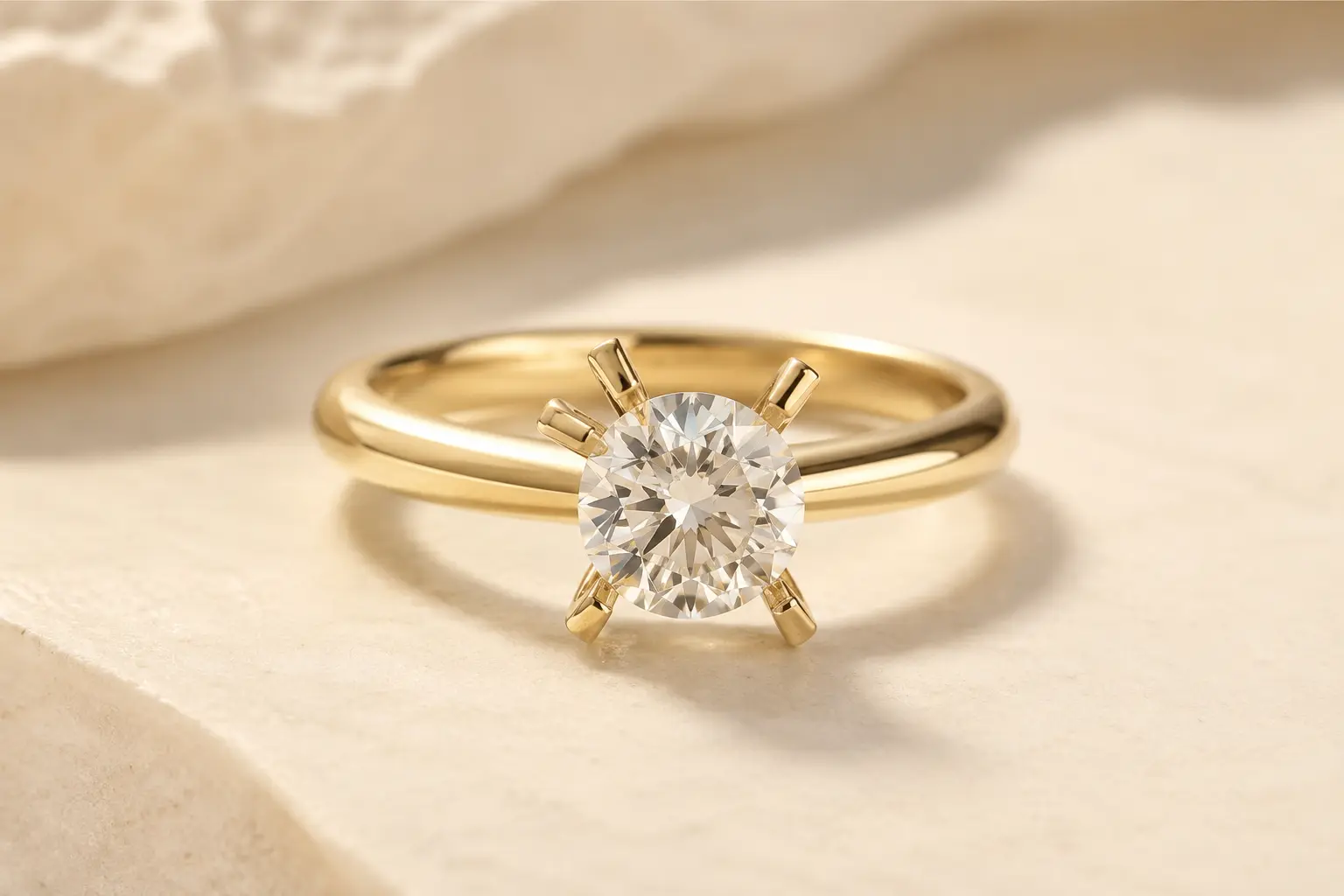
Material decisions affect appearance, durability, maintenance, and long-term comfort. Buyers often focus first on the center stone, but the metal and setting type deserve equal attention.
Metal Choice
Platinum is a strong choice for engagement rings and pieces intended for constant wear. It develops a soft patina over time and does not require rhodium plating. White gold has a bright finish but normally needs rhodium replating to maintain that look. Yellow and rose gold age differently and may be easier to maintain for buyers who prefer warmer tones. For very active wearers, 14k gold or platinum may be more practical than 18k gold depending on the design.
Setting Style
Prong settings allow more light to enter the stone and can look light and refined, but the stone remains more exposed. Bezel settings wrap the stone with a rim of metal, giving stronger edge protection and a cleaner modern profile. Channel and pavé settings can add detail and brilliance, but they require careful craftsmanship and periodic inspection because small stones depend on precise metal work.
Natural and Lab-Grown Diamonds
For buyers comparing natural and lab grown diamonds, the right choice depends on budget, origin preference, resale expectations, and the desired visual result. Lab-grown diamonds are real diamonds, but the report language, market pricing, and long-term value expectations can differ from natural diamonds. Redora’s role is to help buyers compare the stone in front of them, including cut, measurements, appearance, report details, and how it fits the design.
Step 4: Understand the Manufacturing Stage
The jewelry manufacturing process is where design decisions become physical quality. A factory-direct workflow usually includes 3D printing, casting, cleaning, assembly, stone setting, polishing, and quality control. Each stage affects durability and finish.
Casting
The approved CAD file is used to create a wax or resin model, which is then cast in the selected metal. Good casting requires controlled temperature, suitable alloy handling, clean molds, and careful inspection. Porosity, weak metal flow, or rough casting can affect the strength and polish of the final piece. These issues may not be obvious to a buyer, but they matter for long-term wear.
Stone Setting
Stone setting is skilled bench work. The setter must seat each stone correctly, shape the prongs or bezel cleanly, and confirm that the stone does not shift. With pavé or halo designs, consistency matters because each small stone depends on precise spacing and secure metal contact. This is one reason very low-cost custom quotes should be reviewed carefully. Savings often come from the labor stages that buyers cannot easily see.
Timeline
From approved CAD, simple designs are usually completed within 5 days, most orders take around 7 to 10 days in production, and complex designs may require up to 15 days. Shipping by FedEx, DHL, or UPS usually adds 2 to 5 days depending on destination and customs clearance. The timeline can extend when a stone specification is uncommon, the design requires multiple revisions, or production queues are full. A deadline should be discussed at the first consultation. Some steps, including casting, setting inspection, and final polish, should not be rushed if the piece is intended for long-term wear.
Step 5: Quality Control and Final Review
Before a finished piece leaves production, it should be inspected for stone security, prong condition, metal surface consistency, engraving accuracy, finish quality, and comfort. For diamond center stones, any independent grading report should be matched to the actual stone and reviewed carefully. It is better to say “grading report” than “certificate” unless the document itself uses that wording.
At Redora, quality control happens on-site, handled by the team involved in production. This allows issues to be reviewed with full context: the approved CAD file, chosen metal, stone dimensions, setting style, and client requirements. Minor adjustments, small sizing changes, finishing corrections, or engraving checks should be handled before final sign-off. The specific checklist we run, and the reasons pieces get sent back to the bench, are set out in our article on custom jewelry quality control.
Step 6: Delivery, Care, and Long-Term Support
Delivery should include the finished piece, relevant stone report documents, and practical care guidance. For engagement rings or other daily-wear jewelry, aftercare is not an afterthought. Buyers should know how to clean the piece safely, when to have prongs inspected, and which activities increase wear risk.
One advantage of working directly with the manufacturer is that resizing, repairs, or future adjustments can return to the team that made the piece. The original CAD file, metal specification, and stone dimensions are easier to reference than they would be in a third-party repair process.
If you are planning a custom project and want to understand what is realistic for your budget, design idea, and timeline, you can start a custom jewelry inquiry with Redora’s production team.
Common Questions Before Starting a Custom Jewelry Project
Can I change the design after approving CAD?
Small changes may still be possible before casting, but major structural changes can require new CAD work, new casting, and a reset timeline. Buyers should review side views, measurements, stone placement, and setting details carefully before approval.
Can I use heirloom stones or existing metal?
Often yes, but the materials need inspection first. Older stones may have chips, worn girdles, or proportions that affect setting options. Existing metal may not always be suitable for direct reuse without refining, especially if the alloy composition is uncertain. A careful assessment prevents problems during production.
What usually causes custom jewelry to cost more than expected?
The most common causes are design complexity, unusual stone sourcing, late-stage revisions, and underestimating labor-heavy details such as pavé or hand engraving. A transparent early discussion about priorities usually prevents these surprises.
How is factory-direct custom jewelry different from retail custom jewelry?
In many retail custom projects, the store collects the brief and sends it to a separate production partner. Factory-direct custom jewelry gives the buyer more direct access to production feedback. That can improve technical clarity, reduce communication layers, and make budget trade-offs easier to understand.
About the Author and Review Process
Edwin Lin is the founder of Redora Jewels, a factory-direct fine jewelry manufacturer based in Shenzhen with on-site production capability. He is involved in production planning, quality standards, and client consultation for custom jewelry projects.
This article was developed from Redora’s production experience, recurring questions from custom jewelry clients, and established jewelry manufacturing and gemological decision points. It is written to help buyers understand what they need to decide, what they should ask, and where quality differences become visible over time.
More from Redora: all jewelry buying guides