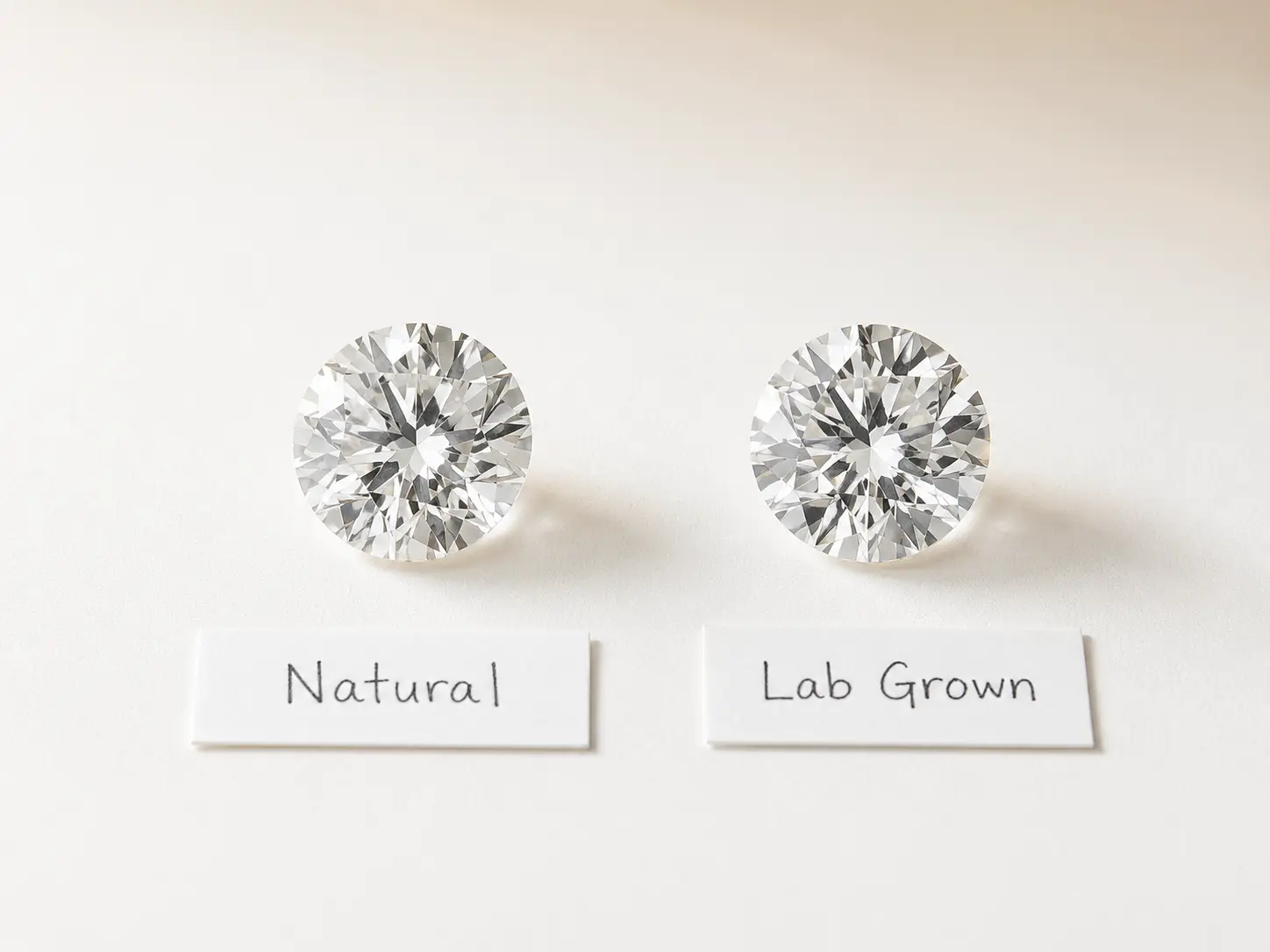
 This is the question we hear most often from buyers who are seriously considering a diamond purchase. Not from curious browsers, but from people who have already done some reading, felt confused by conflicting claims, and want a straight answer. This article is written for them.
Quick Summary
Lab grown and natural diamonds are chemically and physically identical: same carbon structure, same Mohs hardness of 10, same optical properties, graded on the same GIA and IGI scale. The real differences that matter to a buyer come down to three things: price (lab grown costs significantly less for equivalent grade), resale value (natural holds more over time), and origin meaning (geological rarity vs. production efficiency). Neither is better in absolute terms. The right choice depends on what the piece is for.
Same Material, Different Origins
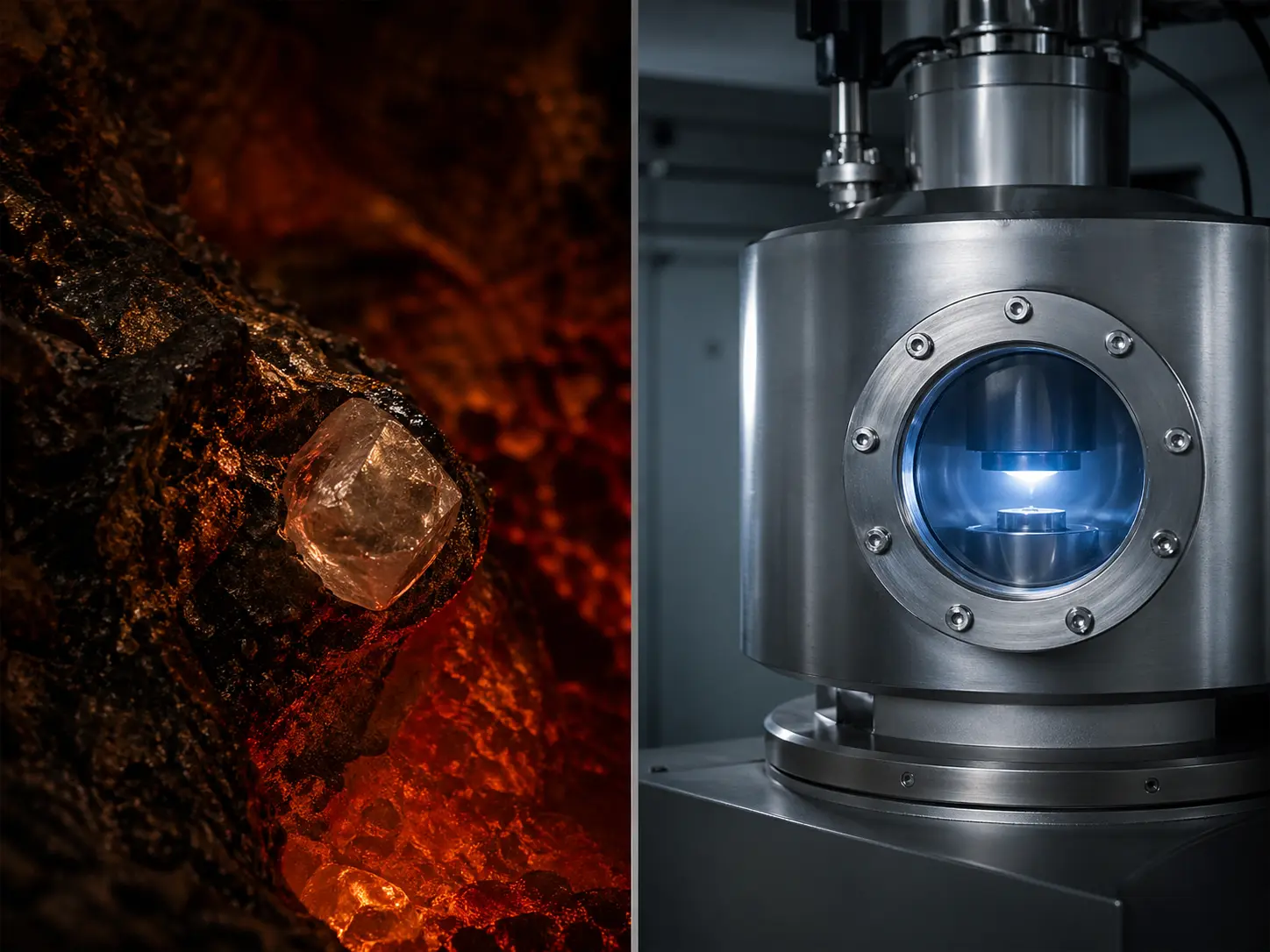 A lab grown diamond is a real diamond. It is not cubic zirconia, not moissanite, not a simulant. Both lab grown and natural diamonds are pure crystalline carbon with a Mohs hardness of 10, the same refractive index, the same thermal conductivity, and the same optical behavior. According to GIA grading standards, they are compositionally identical and graded on the same criteria.
The only difference is how they formed.
Natural diamonds crystallized under intense heat and pressure roughly 100 miles below Earth’s surface over billions of years, then were carried upward by volcanic activity. Lab grown diamonds replicate that process in a controlled environment using one of two methods. High Pressure High Temperature (HPHT) mimics the conditions of the Earth’s mantle using a metal press and a carbon source. Chemical Vapor Deposition (CVD) grows diamond layer by layer from a carbon-rich gas inside a sealed chamber. Both methods produce genuine diamond crystal, not an imitation.
The U.S. Federal Trade Commission updated its jewelry guidelines to reflect this, removing the word “synthetic” as a default descriptor for lab grown diamonds because it implies the material is artificial. It is not. The atom-by-atom structure of a lab grown diamond is the same as one pulled from a mine in Botswana.
Where buyers sometimes get confused is the language. Terms like “synthetic diamond” or “man-made diamond” have been used loosely, and they carry a connotation of inferiority that the chemistry does not support. When a jeweler says lab diamond, they mean a diamond grown above ground. Nothing more.
How Quality Actually Compares: The 4Cs and Beyond
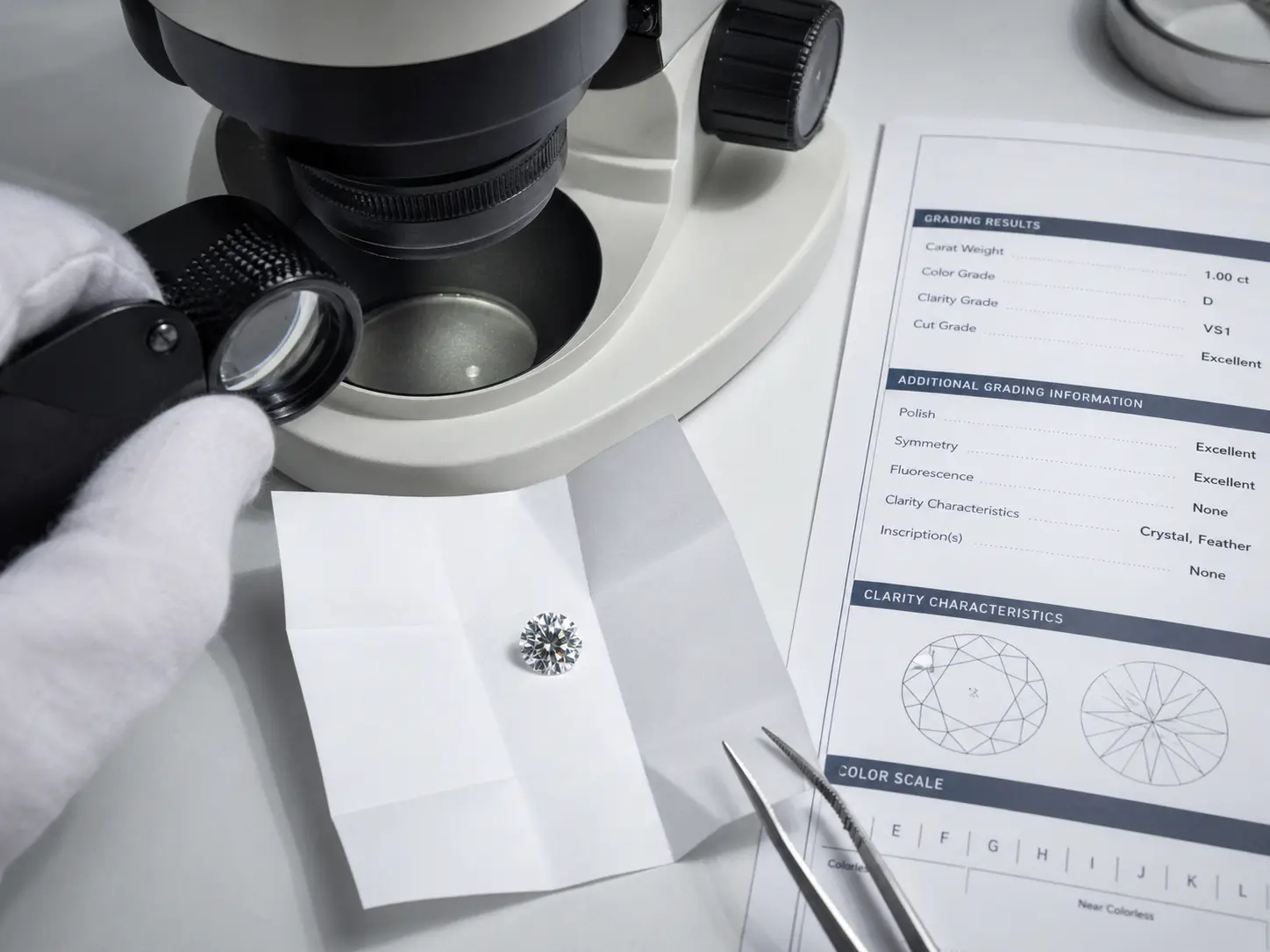 Lab grown diamonds are graded on the same 4Cs as natural diamonds, cut, color, clarity, and carat weight, by the same independent grading laboratories including GIA and IGI. A lab grown diamond with a VS1 clarity grade and an F color is not a lower standard than a natural stone with the same grades. The scale is identical.
That said, there are a few quality nuances worth understanding before you buy.
Inclusions and growth patterns
Lab grown diamonds can have inclusions, just like natural ones. A common buyer misconception is that lab diamonds are automatically flawless because they are grown in a controlled setting. That is not accurate. CVD-grown diamonds sometimes show a characteristic called graining, which appears as faint parallel lines inside the crystal and is visible under magnification. HPHT diamonds may contain tiny metallic flux inclusions. Neither affects the diamond’s durability or appearance to the naked eye at normal clarity grades, but a trained gemologist can identify them under a microscope.
These growth signatures are also how a specialist can distinguish a lab diamond from a natural one without relying on laser inscriptions. They are not defects. They are simply evidence of how the stone formed.
Color consistency
CVD-grown diamonds occasionally show a faint brown or gray undertone in lower color grades that differs slightly in character from the yellowish tint seen in natural diamonds of similar grades. At higher color grades, D through G, this distinction is largely academic. For most buyers choosing a well-cut stone in a good mounting, it will not be visible.
Cut quality still matters most
Whether the diamond is lab grown or mined, cut is the single factor that most determines how it looks. A poorly cut lab diamond will look dull. A well-cut one will have the same scintillation (the pattern of light and dark flashes when a diamond moves) and fire (the dispersion of light into spectral color) as a well-cut natural diamond of comparable grade. Buyers who focus on origin and overlook cut quality are making a real mistake, regardless of which type they choose.
For lab grown and natural diamond engagement rings, where the center stone is the focal point, prioritizing cut grade over minor color or clarity differences will give better visible results in both options.
Price Differences and What They Mean in Practice
 Lab grown diamonds are significantly less expensive than natural diamonds of equivalent grade. The price gap has widened over the past few years as production volume has increased and manufacturing efficiency has improved. For a buyer comparing two stones with the same cut, color, and clarity, the lab grown option often costs a fraction of the natural stone’s price.
This gap has a practical implication that buyers find genuinely useful: your budget goes further. If you are set on a specific carat weight but find natural stones at that size exceed your budget, a lab grown diamond gives you access to the same visual size and grade at a lower price point. That is a real, concrete benefit, not marketing language.
What the lower price reflects
The price difference does not reflect quality. It reflects scarcity. Natural diamonds are rare geological objects formed over billions of years, and mining them carries costs that are built into the retail price. Lab grown diamonds can be produced in weeks, and as production scales, prices continue to adjust downward. The material is the same. The rarity is not.
This is important to understand because it shapes the resale dynamic, which we cover in the next section.
Factory-direct pricing and what it changes
A less discussed factor in diamond pricing is the retail chain itself. When a diamond passes through a cutter, a wholesaler, an importer, and a retail jeweler before reaching the buyer, each step adds margin. Buyers working directly with a manufacturer remove most of that chain. At Redora, we source and set stones without the retail intermediaries, which means the price a buyer pays is closer to what the diamond and the craftsmanship actually cost to produce, not what a retail markup requires. This applies to both lab grown and natural diamond pieces we make.
The same arithmetic is easier to see at a fixed price point. We took one number apart in what actually fits inside a $999 diamond necklace.
Resale, Heirloom Value, and the Trade-Off Buyers Often Underestimate
Natural diamonds retain more resale value than lab grown diamonds, and this gap is likely to persist. This is a straightforward trade-off buyers should consider honestly before deciding.
Natural diamonds hold resale value because geological scarcity is not going away. A well-documented natural diamond, especially one with GIA certification, can be resold at a meaningful percentage of its original price. It is not an investment vehicle in the financial sense, but it does hold value in a way that lab grown diamonds currently do not.
Lab grown diamonds depreciate more quickly because supply is not limited by geology. As more producers enter the market and production costs fall, prices for lab grown stones tend to adjust downward. A lab diamond purchased today may be worth considerably less in secondary market terms several years from now, simply because a comparable stone can be produced for less by then.
When resale value matters and when it does not
For a buyer purchasing a diamond as a personal piece they intend to wear for decades, the resale dynamic may not be particularly relevant. Most fine jewelry pieces are not liquidated. They are worn, passed down, or kept.
For heirloom purposes, though, the choice matters more. A natural diamond carries a narrative that a lab grown stone does not, at least not yet in terms of cultural perception. It formed in the Earth over a geologically significant period of time. That story has meaning to some people and families. If the piece is intended to be passed to the next generation as a keepsake with both sentimental and material value, many buyers still prefer natural.
Lab grown diamonds are better suited for buyers who want the best possible stone at a given budget, who plan to keep the piece rather than sell it, and for whom the origin story is less central to the meaning of the gift. Neither choice is wrong. They suit different priorities.
One pattern we see regularly at Redora: buyers who regret their lab diamond purchase are almost always people who prioritized carat size for its own sake without thinking through what they actually wanted the piece to mean. The mistake is not choosing lab grown. The mistake is choosing without clarity about the purpose of the purchase.
Can Anyone Actually Tell Them Apart?
To the naked eye, a lab grown diamond and a natural diamond of the same grade are indistinguishable, and no consumer, and no experienced jeweler without equipment, can reliably tell the difference by visual inspection alone.
With specialized equipment, a trained gemologist can identify a lab grown diamond through several markers. Growth patterns like graining in CVD stones and metallic inclusions in HPHT stones are visible under high magnification. Many labs also laser-inscribe a lab grown diamond’s girdle (the narrow band around the widest point of the stone) with a notation indicating its origin and grading report number. GIA and IGI both include origin disclosure on their grading reports for lab grown stones.
This matters for buyers in a practical sense: if you purchase a certified lab grown diamond with a reputable grading report, the origin is documented. There is no ambiguity, no risk of misrepresentation, and no reason for concern about disclosure. The issue only arises when buyers purchase uncertified or inadequately documented stones, which is a risk with any diamond, lab grown or natural.
The recommendation here is consistent regardless of which type you choose: buy with a GIA or IGI grading report, and verify that the report number matches the inscription on the stone’s girdle. This protects you whether you are buying a natural diamond, a lab grown diamond, or comparing the two.
Ethics, Environment, and Insurance: The Practical Details Buyers Often Overlook
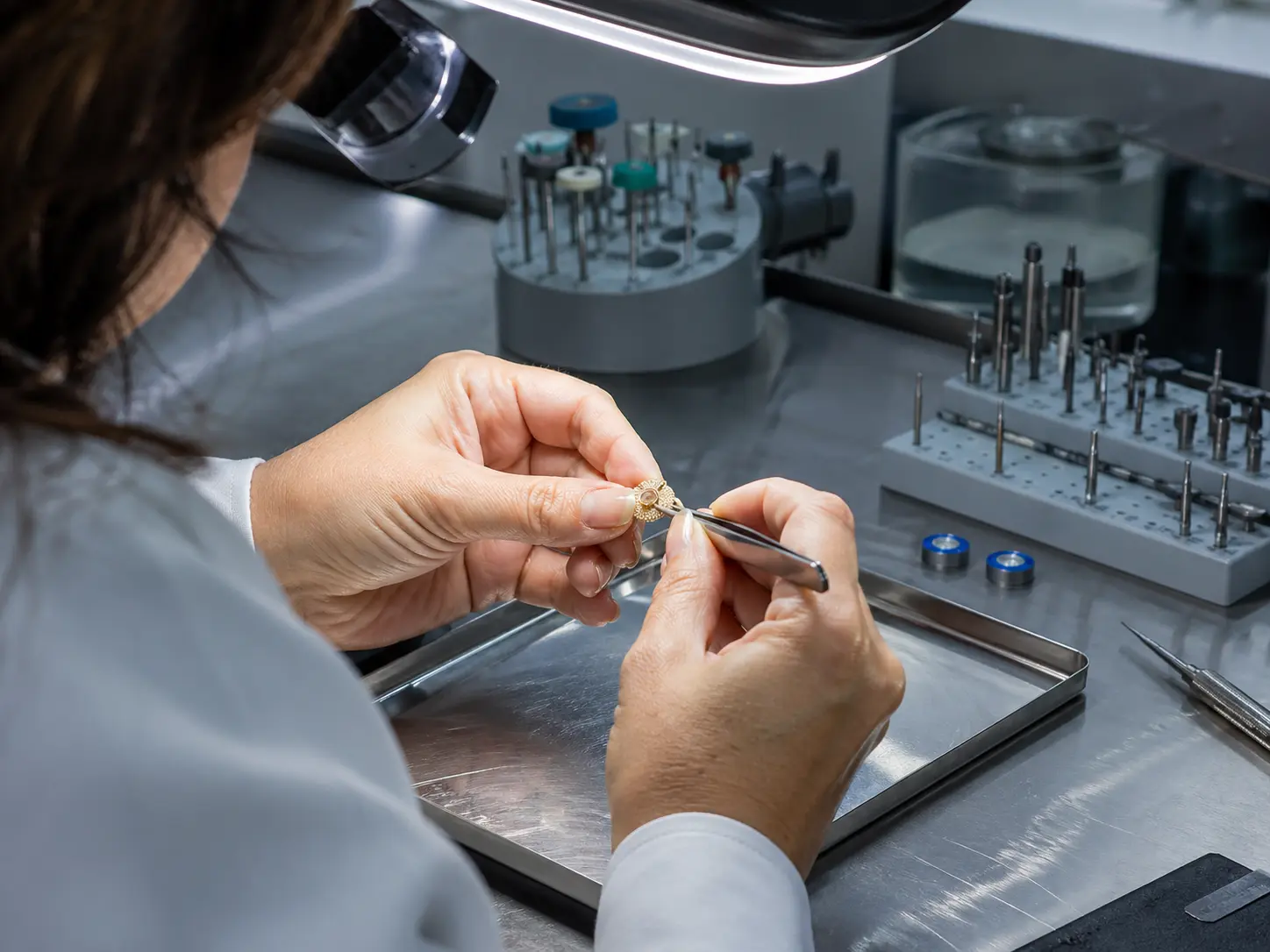 Lab grown diamonds are often marketed as the ethical or sustainable choice, and while there is genuine merit to that framing, the full picture is more nuanced than most marketing materials suggest.
Environmental considerations
Diamond mining, particularly at operations that do not adhere to responsible sourcing standards, carries real environmental and social costs: land disruption, water use, and in some regions, labor concerns. The Kimberley Process was established to reduce the trade in conflict diamonds, but it has limitations and does not address all sourcing concerns.
Lab grown diamonds avoid mining entirely. However, HPHT and CVD production are energy-intensive processes. The environmental footprint of a lab grown diamond depends significantly on the energy source used at the production facility. A facility powered by renewable energy has a materially lower impact than one running on coal-heavy grids. Some producers publish energy sourcing information; many do not. The claim that lab grown is automatically greener than mined is not universally supported.
For buyers with strong environmental priorities, the most defensible approach is to look for lab grown producers who are transparent about their energy sourcing, or to consider natural diamonds from mines with certified responsible sourcing practices.
Insurance and appraisal
Lab grown diamonds can be appraised and insured. However, because their market value has been declining as supply increases, replacement value appraisals for lab grown stones may come in differently than a buyer expects relative to original purchase price. Some insurers are becoming more precise about distinguishing lab grown from natural stones in their policies.
If you are insuring a lab grown diamond piece, confirm with your insurer that the policy specifies lab grown diamond replacement, not natural diamond replacement. This prevents coverage gaps. It is a straightforward step that most buyers skip and occasionally regret later.
For buyers considering lab grown diamonds in fine jewelry settings, getting the documentation right from the start, including the grading report and an accurate appraisal, makes everything downstream easier.
Lab Grown vs Natural Diamond: Side-by-Side Comparison
For buyers who want the key differences in one place before making a decision, the table below covers the five dimensions that matter most.
| Lab Grown Diamond | Natural Diamond | |
|---|---|---|
| Origin | Grown in a controlled facility using HPHT or CVD over weeks | Formed deep in Earth’s mantle over billions of years |
| Composition | Pure crystalline carbon, Mohs hardness 10, identical optical properties | Pure crystalline carbon, Mohs hardness 10, identical optical properties |
| Grading | Same 4Cs scale, graded by GIA and IGI with origin disclosed on report | Same 4Cs scale, graded by GIA and IGI |
| Price | Significantly lower for equivalent grade; budget reaches higher carat or clarity | Higher, reflecting geological scarcity and full supply chain costs |
| Resale Value | Depreciates faster as production costs and supply increase over time | Holds value better; GIA-certified stones resell at meaningful percentages |
| Best suited for | Buyers prioritizing grade per budget, daily wear pieces, non-heirloom gifts | Heirloom pieces, milestone jewelry, buyers for whom origin has personal meaning |
How to Make the Right Choice for Your Situation
The choice between a lab grown and natural diamond is not about which one is better in absolute terms. It comes down to what you are buying the piece for and what trade-offs you are comfortable accepting.
Choose a natural diamond if: the long-term resale or inheritance value matters to you, the piece is intended as a generational heirloom, or the geological origin carries personal or sentimental significance. Natural diamonds also tend to be the default preference for very significant milestone pieces where permanence is part of the meaning.
Choose a lab grown diamond if: your primary goal is the best possible stone at a given budget, you plan to keep the piece rather than resell it, or you prefer to avoid mining supply chains. Lab grown stones allow you to access higher clarity and color grades at a price point that would only get you a lower-graded natural stone. For everyday fine jewelry, including pieces you want to wear regularly rather than store, this is often the more practical choice.
For buyers working on a custom jewelry piece, the origin choice can usually be made after the design is set. The setting, the cut, and the overall design will matter more to how the finished piece looks than whether the stone grew underground or in a laboratory.
If you are ready to move from research to an actual quote, you can start a custom jewelry inquiry with our production team and specify whether you want a lab grown or natural center stone. We work with both and can provide pricing comparisons on request.
About the Author and Review Process
Edwin Lin is the founder of Redora Jewels and is directly involved in the day-to-day operations of our fine jewelry manufacturing facility in Shenzhen. His work involves overseeing production quality, gemstone sourcing decisions, and the hands-on customization process for client pieces. He is not a remote brand spokesperson but someone who reviews stones, approves settings, and manages client requirements at the production level.
The conclusions in this article were formed through a combination of on-site production experience working with both lab grown and natural diamond inventory, familiarity with GIA and IGI grading standards as they apply to both stone types, and observations from the buyer questions Redora receives most frequently. The environmental, insurance, and resale sections in particular reflect patterns we have seen in real client consultations, not theoretical research summaries. When clients come to us having already read several comparison articles online and still feel uncertain, the gaps they describe consistently match what this article tries to address directly.
This article was written to answer a specific question: for a buyer who is seriously considering a diamond purchase and wants a clear, honest comparison without the marketing spin that tends to favor whichever type the seller carries more of. We sell both. Our interest is in helping buyers make the choice that fits their actual situation, not in steering them toward a particular origin type.
More from Redora: all jewelry buying guides