Most “best lab grown diamond jewelry brands” lists do the same thing: rank a handful of well-known names, summarize their return policy, and call it a comparison. That approach can help you recognize brands, but it rarely tells you what you are actually paying for, or whether what you buy will still perform well five years from now.
This guide skips the brand rankings and focuses on what actually determines quality and value: certification, cut, setting construction, customization, pricing, and aftercare. Get these right and you can evaluate any brand yourself, including the ones no listicle mentions.
Why Factory-Direct Changes the Value Equation
Factory-direct means the company manufacturing your jewelry and the company selling it to you are the same entity. That single fact changes several things at once: pricing, customization flexibility, quality consistency, and how quickly problems get resolved. Most consumer lab-grown diamond brands are retailers sourcing finished pieces from third-party manufacturers, which is not a flaw in itself, but it does add layers between you and the people who made your ring.
When a brand controls its own production, there is no intermediary margin built into the price. More practically, the person answering your question about prong height or stone setting can actually go back to the bench and check. That kind of access matters if you are ordering custom sizes, unusual shapes, or mixed-metal designs.
Factory-direct also changes turnaround times and warranty handling. A retailer relying on a third-party manufacturer has to route repairs and adjustments back through that supply chain. A direct manufacturer handles it on-site.
For buyers comparing lab-grown diamonds across multiple brands, working out whether you are dealing with a retailer or a manufacturer is one of the first questions worth asking. Many brands do not make this clear upfront.
How to Compare Lab-Grown Diamond Jewelry Brands: A Quick Checklist
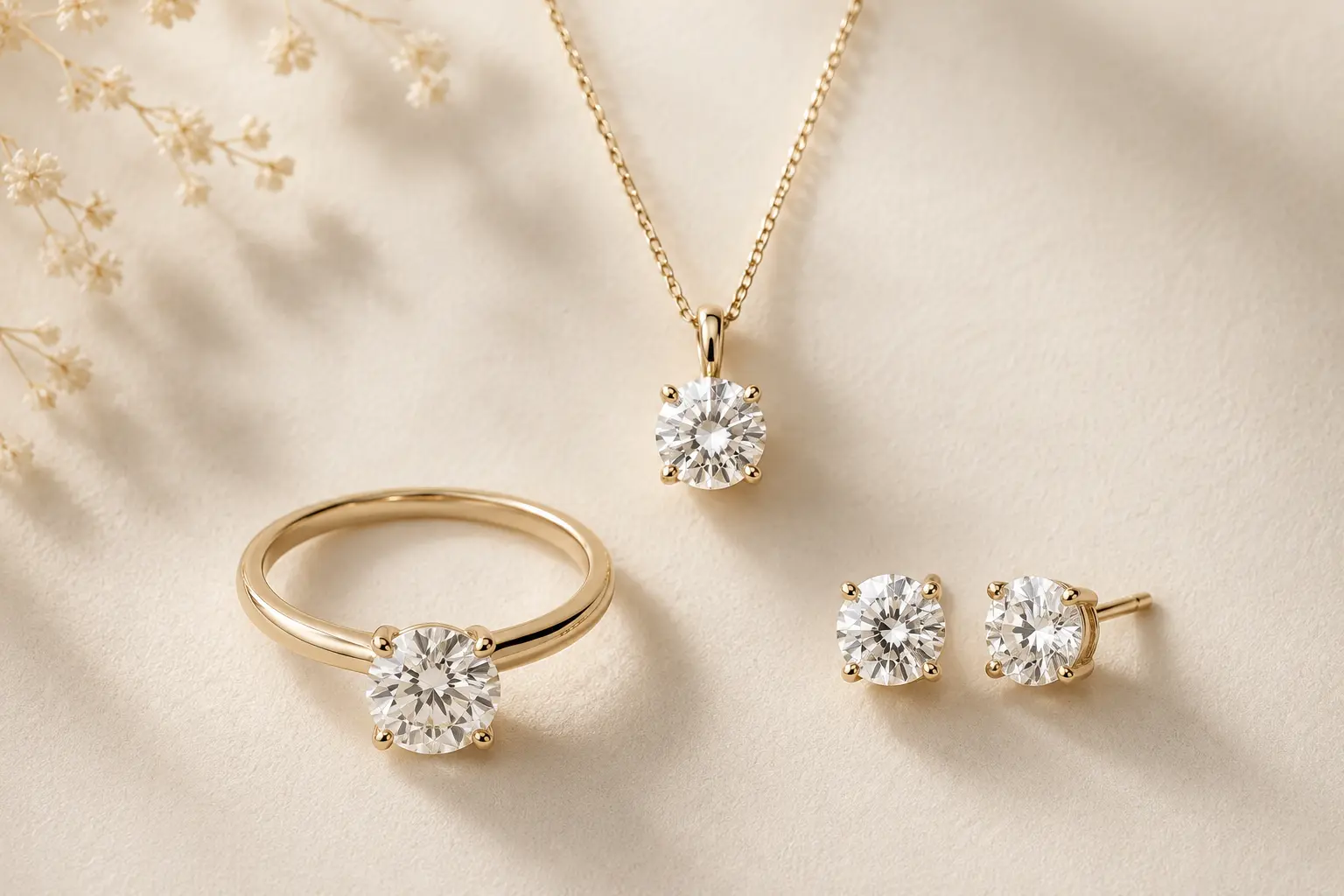
Before comparing any brand, weigh the seven factors below. Each one separates a piece that performs for decades from one that disappoints within a few years. The sections that follow go deeper on each.
| Factor | Why it matters | What to ask the brand |
|---|---|---|
| Certification | Confirms the stone’s actual quality instead of a claim. | Is every stone graded by IGI, GIA, or GCAL? |
| Cut quality | The biggest driver of how lively a diamond looks. | What is the cut grade, and can I see video of the stone? |
| Setting & prong construction | Determines whether the stone stays secure over years. | What is the prong thickness, and is the band cast or fabricated? |
| Metal choice | Affects durability and long-term wear. | Platinum or gold? What karat, and how is wear handled? |
| Customization depth | Whether the design can actually fit your needs. | Can you build from scratch and share a CAD model before casting? |
| Price transparency | Shows what you pay for stone vs. setting vs. margin. | Can you break down the stone, metalwork, and markup? |
| Aftercare & warranty | Whether problems get fixed without a third party. | Do you handle resizing, prong re-tipping, and stone replacement directly? |
Diamond Quality: Cut, Color, Clarity, Carat, and Certification
Independent grading from a recognized laboratory is the baseline for any lab-grown diamond purchase. IGI is the most widely used grading lab for lab-grown stones, with GIA and GCAL also recognized. A grading report confirms cut grade, color, clarity, carat weight, and other optical characteristics. Without it, you are taking the seller’s word on every quality claim.
Of the four Cs, defined consistently across the industry by GIA’s 4Cs standard, cut quality has the largest effect on how a diamond looks in person. A well-cut stone returns light efficiently across its crown facets, creating the brightness and scintillation (the play of light and dark as the stone moves) that makes a diamond visually alive. A poorly cut stone in the same color and clarity grade will look noticeably duller. This matters especially with lab-grown diamonds, where buyers sometimes prioritize carat size and accept a lower cut grade to stay within budget. That trade-off usually shows.
Color and clarity matter too, but their impact depends heavily on shape. Step-cut shapes like the emerald and asscher have large open facets that show inclusions and color more visibly than brilliant cuts. If you are choosing an emerald-cut stone, a higher clarity grade matters more than it would for a round or cushion. The 4Cs also interact differently depending on the diamond shape and setting you choose, which is worth understanding before you set a budget.
Carat weight is where buyers most often make a trade-off they later regret. A heavier stone with a mediocre cut will often look smaller face-up than a lighter stone with excellent cut proportions. This is not theory; it is basic optics. The table diameter determines how large a stone appears once set, and a well-cut stone maximizes that diameter relative to its weight.
A note on elongated shapes and the bow-tie effect
Fancy shapes including oval, pear, and marquise can carry a dark shadow across the center of the stone, known as the bow-tie effect. It appears in varying degrees depending on how the stone was cut, particularly the depth and pavilion angle. A mild bow-tie is acceptable to many buyers and can even add character. A severe one visibly darkens the center of the diamond and detracts from its brightness.
You cannot reliably assess a bow-tie from a grading report alone. Video footage or in-person viewing under different lighting is the practical standard. When buying remotely, ask for video of the stone in natural light, not just a still photograph under controlled lighting.
Recommended length-to-width ratios for elongated shapes:
- Oval: 1.35 to 1.50
- Pear: 1.45 to 1.75
- Marquise: 1.85 to 2.10
These ranges reflect the proportions most buyers find visually balanced, though personal preference should always be the final guide.
Setting Quality and Daily Wear: What Most Comparisons Skip
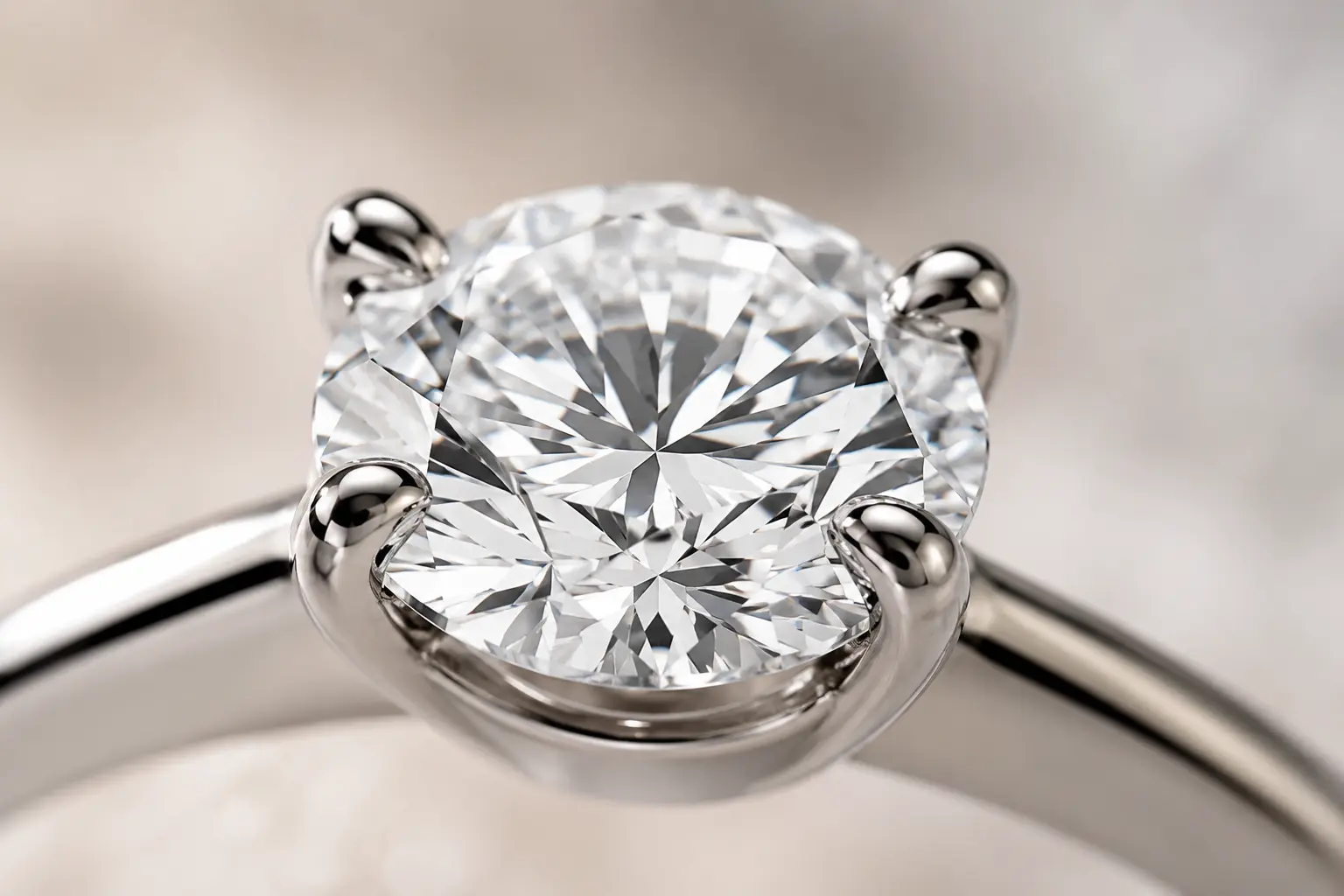
A graded stone in a poorly constructed setting is still a poorly made piece of jewelry. Setting quality is one of the most under-discussed variables in brand comparisons, and it is often the difference between a ring that wears well for decades and one that develops problems within a few years.
Prong construction deserves specific attention. Prongs hold the stone; if they are thin, poorly seated, or cast in soft metal, they bend with daily wear and eventually let the stone move. A stone that moves in its setting will eventually chip or loosen. This is not a rare failure mode; it is the most common reason engagement rings come in for repair.
Metal choice also matters beyond aesthetics. Platinum is denser and more wear-resistant than white gold, which makes it the stronger long-term choice for solitaire settings where the prongs take direct contact. White gold at 14k offers a harder surface than 18k and holds its rhodium plating longer under daily conditions. These are practical distinctions, not just price tiers.
When evaluating any brand, ask these questions about the setting: What alloy is used? What is the prong thickness? Is the band cast or hand-fabricated? Does the brand offer resizing and prong re-tipping as part of aftercare? A brand that cannot answer these directly probably does not control its own manufacturing.
Customization: What You Can Actually Change
Most jewelry brands describe themselves as offering “custom” options. In practice, customization exists on a spectrum. At one end, some brands let you choose a stone and drop it into a pre-made setting from a limited catalog. At the other end, a factory-direct manufacturer can build a piece from scratch: adjusting the band profile, prong style, metal alloy, stone orientation, and even engraving in a single production run.
The difference matters if you have specific requirements. Buyers with unusual ring sizes, finger proportions that make standard taper bands uncomfortable, or design preferences that do not fit a retailer’s catalog will see that true factory-direct customization solves problems a retail “custom” offering cannot.
When evaluating customization claims, ask whether the brand produces the piece on-site or sends it to a contract manufacturer. Ask whether you can see a CAD or wax model before production begins. Ask whether revisions are possible before casting. A genuine manufacturing operation will say yes to all three. A retail brand sourcing from external suppliers will often redirect you to a limited set of pre-approved modifications.
Redora handles custom lab-grown diamond jewelry with full on-site production in Shenzhen, which means design changes, material selections, and quality checks happen within the same facility. For buyers who want something specific rather than something available, that distinction is material.
Price Transparency: Where the Difference Actually Comes From
Lab-grown diamonds are priced well below mined diamonds of equivalent size and quality, and that gap has widened in recent years as production volume has increased. But price differences between lab-grown diamond brands are not purely a function of stone quality. They also reflect brand overhead, retail markup, marketing spend, and logistics layers.
A useful way to evaluate price is to separate it into components: what you are paying for the stone, what you are paying for the setting and metalwork, and what margin the brand is taking above direct cost. Transparent brands can usually answer at least the first two. Brands that deflect pricing questions with vague statements about quality or craftsmanship are often protecting a margin, not a secret process.
For a grounded comparison of how sourcing and pricing differ by stone type, the lab-grown vs natural diamonds breakdown is worth reading before you finalize a budget. Understanding where the price difference comes from helps you allocate more deliberately between stone quality and setting investment.
One practical note on certification and price: a stone without grading documentation should be priced accordingly, and any brand presenting ungraded stones at premium pricing should raise a flag.
Red Flags to Watch For Before You Buy
A few patterns appear consistently in buyer complaints about lab-grown diamond purchases, and most are avoidable with early due diligence.
Vague sustainability claims are common. “Lab-grown” does not automatically mean low environmental impact. Energy use varies by production method (HPHT versus CVD) and power source. A brand making broad eco claims without disclosing production method or energy sourcing is relying on buyer assumptions, not transparency.
Return policies that sound generous often contain narrow definitions of acceptable condition. Some brands require the original packaging, an unaltered stone, and the grading certificate to be returned within a specific window. Custom orders are frequently excluded entirely. Read the return and exchange terms before purchasing, not after.
Size-over-cut prioritization is the single most common reason buyers feel underwhelmed by their purchase. A 2-carat stone with a good cut will almost always look better than a 2.5-carat stone with a poor cut, and will often appear larger face-up because the well-cut stone reflects light rather than absorbing it. If a brand consistently pushes toward larger stones without discussing cut grade, that is a commercial incentive, not a quality recommendation.
Finally, brands that cannot clearly answer questions about aftercare, resizing, and warranty scope usually do not control their own supply chain well enough to stand behind those commitments. A manufacturer that made your piece can re-tip a prong, resize a band, or replace a lost stone with a matched replacement. A retailer often cannot make those commitments with confidence.
If you are still building baseline knowledge, it helps to know that lab-grown diamonds are chemically and physically identical to mined diamonds. That identity is exactly why brand claims, grading, and setting quality, rather than the “lab-grown” label itself, should drive your comparison.
If you are ready to build something specific rather than choose from a catalog, you can start a custom jewelry project directly with our production team and get a clear breakdown of stone options, setting specs, and pricing before anything goes into production.
About the Author and Review Process
Edwin Lin is the founder of Redora Jewels, a factory-direct fine jewelry manufacturer operating in Shenzhen with full on-site production capability. His involvement spans sourcing and gemology oversight through to finished-piece quality review, which means the perspective in this article comes from direct manufacturing experience rather than retail observation.
The conclusions here were informed by a combination of on-site production knowledge, IGI and GIA grading standards, and the specific questions Redora receives from buyers comparing lab-grown diamond brands before purchase. Those questions consistently fall into a few categories: how to evaluate cut quality without being a gemologist, what factory-direct actually means in practice, and how to avoid common mistakes that only become visible after the piece arrives.
This article exists to answer a straightforward buyer question: if you are trying to compare lab-grown diamond jewelry brands, what should you actually be comparing? Most available resources either list brand names or summarize marketing claims. This guide gives buyers the framework to evaluate those claims themselves, regardless of which brand they ultimately choose.
More from Redora: all jewelry buying guides