Diamond Buying Guide: How the 4Cs Should Shape Your Decision
A useful diamond buying guide should do more than define cut, color, clarity, and carat. It should help you decide where your money is visible, where it is mostly technical, and which trade-offs make sense for the ring or jewelry piece you actually want to wear.
Most first-time buyers start with a budget and a carat target. That is understandable, but it can push attention toward size or high certificate grades before the most important visual question has been answered: will this diamond look bright, balanced, and appropriate in its setting?
The 4Cs are the shared grading language used across the diamond industry. They are valuable, but they do not all affect beauty in the same way. The strongest buying decisions come from reading the certificate, checking the stone visually, and matching the grades to the design, metal, daily use, and buyer priorities.
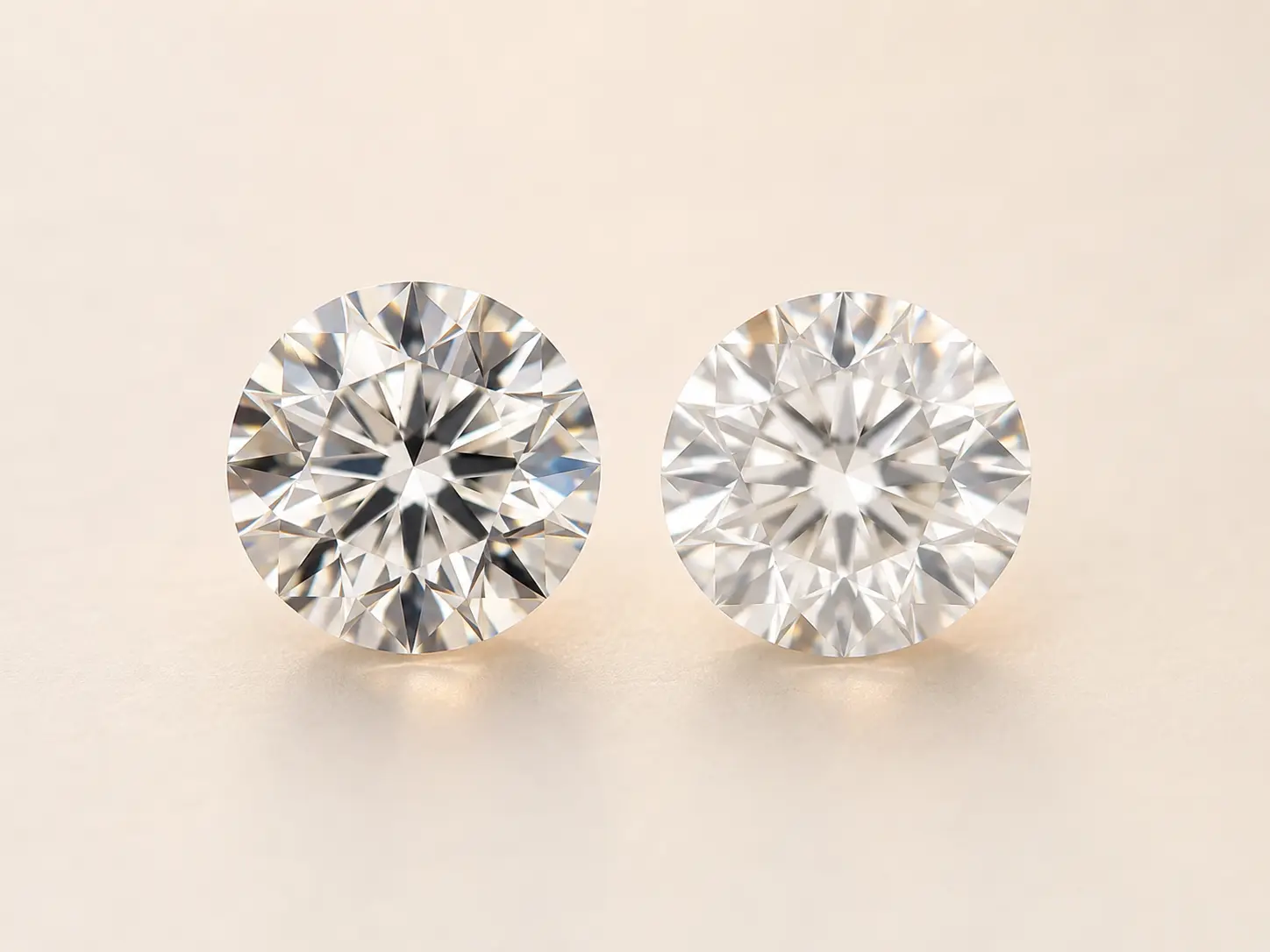
What Are the 4Cs of a Diamond?
The 4Cs are cut, color, clarity, and carat weight. They describe how a diamond is shaped for light performance, how much body color it shows, how visible its internal characteristics are, and how much it weighs. Together, they give buyers a common framework for comparing diamonds, but they do not replace visual evaluation.
The Gemological Institute of America helped standardize the modern 4Cs system. For a neutral explanation of the grading framework, see GIA’s 4Cs of diamond quality. A grading report is useful because it gives structure to the comparison, but it should be treated as a starting point, not the final buying decision.
For Redora clients, the practical question is usually not “Which diamond has the highest grades?” It is “Which diamond gives the best visible result for the design, budget, and wearing context?” That is where the 4Cs become more useful.
Cut Quality: The First C to Prioritize
Cut is the 4C most closely tied to visible beauty. A well-cut diamond returns light through the crown, creating brilliance, fire, and scintillation. A poorly cut diamond can look flat even if it has strong color and clarity grades.
This is where many buyers overspend in the wrong place. A higher clarity grade will not make a diamond sparkle more. A larger carat weight will not help if too much weight is hidden in the depth of the stone. Cut controls whether the diamond looks lively in normal lighting, not only under showroom lights.
Cut grade and diamond shape are different
Shape is the outline of the diamond: round, oval, pear, emerald, cushion, radiant, marquise, and so on. Cut quality is about proportions, symmetry, polish, and light behavior. A round brilliant may have a formal cut grade on a report. Fancy shapes often require more judgment because certificates do not fully show bow-tie strength, light leakage, or face-up balance.
If you are still deciding which shape fits your hand and setting style, Redora’s diamond shapes guide is a better next step than comparing grade charts alone.
What Redora checks before recommending a stone
In a custom jewelry project, the diamond is not selected in isolation. We consider how the stone will sit in the setting, whether the prongs need to protect pointed ends, whether an elongated shape has a balanced length-to-width ratio, and whether the diamond still looks bright when viewed in motion.
For round brilliant diamonds, an Excellent cut grade from a respected lab is a sensible starting point. For fancy shapes, request clear video, inspect the center area for strong bow-tie shadow, and avoid relying only on a still photo or certificate table.
Color: Choose What Looks White in the Setting
Diamond color is graded from D to Z, with D being colorless. In practical buying, the goal is not always to buy the highest color grade. The goal is to choose a grade that looks appropriately white once the diamond is set in the metal and worn in real life.
For many buyers, G to I color can offer strong value because these stones often face up white in normal conditions, especially when the cut is strong. D to F color can be worth considering for buyers who are highly color-sensitive, choosing a large stone, or setting the diamond in platinum or white gold where warmth may be easier to notice.
Yellow gold and rose gold can make near-colorless stones feel warmer and more harmonious. White metals are less forgiving. That is why color should be reviewed together with metal choice, not as an isolated grade.
Clarity: Eye-Clean Matters More Than Perfection
Clarity describes internal inclusions and surface blemishes, usually assessed under 10x magnification. In normal wear, most buyers care less about what a gemologist can see under magnification and more about whether the diamond is eye-clean.
An eye-clean diamond has no distracting inclusions visible to the naked eye at normal viewing distance. Many VS2 diamonds, and some carefully selected SI1 diamonds, can meet this standard. Paying for VVS clarity may make sense for a collector, a very large stone, or a step cut where inclusions are easier to see. For many engagement ring buyers, it is often money that could be better used on cut quality or size.
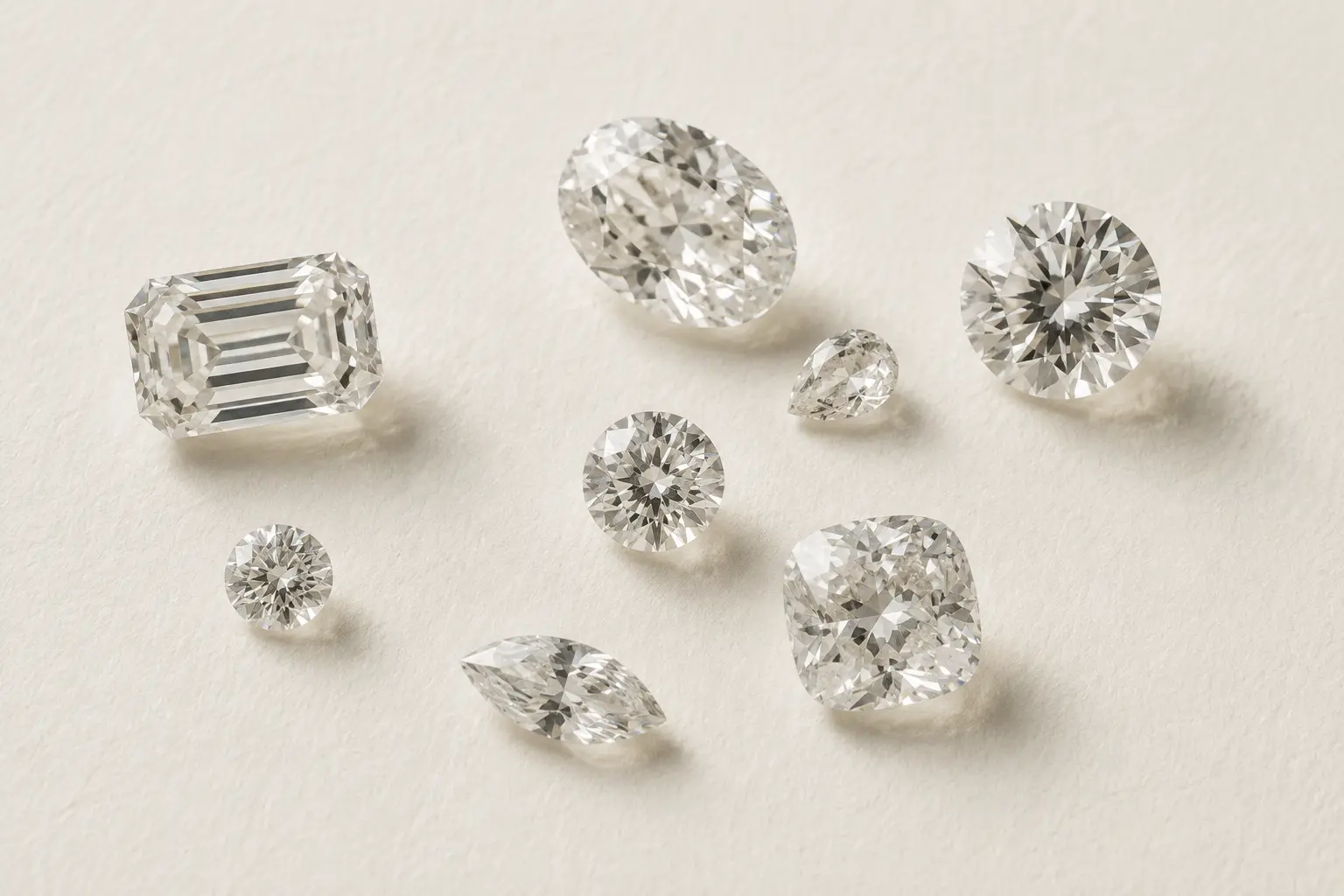
Step cuts need stricter clarity review
Emerald and Asscher cuts have broad, open facets. They show a calm hall-of-mirrors effect, but they can also reveal inclusions more easily than brilliant cuts. For these shapes, buyers should usually be more conservative with clarity than they would be for round, oval, pear, cushion, or radiant diamonds.
Brilliant-cut stones break light into smaller flashes, which can help hide minor inclusions. That gives buyers more room to optimize budget without sacrificing visible beauty.
Carat Weight: Size on Paper Is Not Always Size on the Hand
Carat is a measure of weight, not diameter. Two diamonds with the same carat weight can look different in face-up size depending on depth, spread, and shape. A diamond that carries too much weight below the girdle may look smaller than another diamond of the same weight with better proportions.
This is one reason cut quality and shape matter so much. A well-proportioned diamond can look larger and brighter than a heavier stone with less efficient weight distribution.
Be careful around magic sizes
Diamond prices often rise around common thresholds such as 1.00 ct, 1.50 ct, and 2.00 ct. A 0.90 or 0.95 ct diamond may look almost the same as a 1.00 ct diamond once set, while avoiding part of the price jump. This is not a rule for every buyer, but it is a useful option when value matters.
Shape can change perceived size
Oval, pear, and marquise diamonds often appear larger face-up than round diamonds of the same carat weight because their outlines cover more visual area. Ovals commonly look balanced around a 1.35 to 1.50 length-to-width ratio, pears often work well around 1.45 to 1.75, and marquise shapes are often assessed around 1.85 to 2.10.
These ranges are guidelines, not guarantees. The actual stone still needs to be reviewed for symmetry, bow-tie strength, and whether the shape suits the wearer’s hand.
That gap between paper weight and visible size widens at the top of the range. We looked at it closely in how big a 20 carat diamond actually is.
How to Balance the 4Cs for Real Buying Decisions
The best 4C combination depends on what the buyer wants to see every day. A certificate can narrow the shortlist, but the final choice should reflect sparkle, face-up size, setting style, maintenance expectations, and budget.
If your priority is maximum sparkle
Start with cut quality. For a round brilliant, look for a strong cut grade from a respected lab. Then consider G to H color and VS2 or eye-clean SI1 clarity if the stone looks clean in video or in person. This keeps more of the budget focused on visible performance.
If your priority is a larger look
Consider an oval, pear, or marquise with a balanced outline and good light return. Do not chase spread alone. A larger-looking diamond still needs brightness, symmetry, and a setting that protects vulnerable points.
If your priority is a classic engagement ring
A round brilliant in the near-colorless range, with eye-clean clarity and excellent light performance, is still one of the most reliable routes. If you are comparing settings at the same time, review Redora’s engagement ring options to see how stone choice and setting style work together.
Natural vs Lab-Grown Diamonds in a 4C Comparison
The 4Cs apply to both natural and lab-grown diamonds. Lab-grown diamonds have the same crystal structure and are graded using familiar quality factors, but their origin and market pricing are different. For buyers who want a larger or higher-grade stone within a defined budget, lab-grown can be a practical option.
The important point is not to treat “lab-grown” as a shortcut around quality review. Cut, color, clarity, carat, proportions, and visual inspection still matter. If you are considering this route, Redora’s lab-grown diamonds page explains the category in more detail.
Why Manufacturing Perspective Matters
A diamond does not become jewelry until it is matched with a setting, metal, prong structure, and finishing standard. A stone that looks strong on a report can still be a poor fit for a specific design if the proportions, shape, or durability concerns are ignored.
Redora’s factory-direct model gives buyers a more connected review process: stone selection, setting design, production feasibility, and quality control can be considered together. That does not mean every diamond is automatically better or cheaper. It means the buying advice can be tied to the finished piece rather than only to inventory labels.
For buyers who want to understand how Redora handles production, our manufacturing process page gives more context on how custom fine jewelry moves from design to finished piece.
Before You Choose: A Practical Diamond Buying Checklist
- Prioritize cut quality before paying for higher clarity or color grades that may not be visible.
- Compare color in the metal you plan to use, not only against a white background.
- Ask whether the diamond is eye-clean in normal viewing, not only what the clarity grade says.
- Check face-up size and proportions, especially if you are comparing carat weights.
- For fancy shapes, review video for bow-tie strength, symmetry, and light return.
- Use the grading report to narrow choices, then use visual review to make the decision.
If you already have a diamond, a target budget, or a setting style in mind, you can submit a custom jewelry inquiry and Redora’s team can help evaluate which 4C trade-offs make sense for your piece.
About the Author and Review Process
Edwin Lin is the founder of Redora Jewels and is directly involved in custom fine jewelry sourcing, production oversight, and quality review at Redora’s Shenzhen manufacturing facility.
This article was revised from an internal draft using Google Search Central people-first content principles, GIA’s public 4Cs education, and Redora’s manufacturing-side experience with diamond selection and custom jewelry production. The goal is to help buyers understand how to use the 4Cs as a practical decision framework, not as a checklist for buying the highest grades on paper.
Before publication, Redora should confirm that any stone-specific recommendations, internal links, image alt text, and Rank Math fields match the final WordPress page and current site structure.
More from Redora: all jewelry buying guides