

Emerald Solitaire Ring with Side Diamonds in 18K White Gold
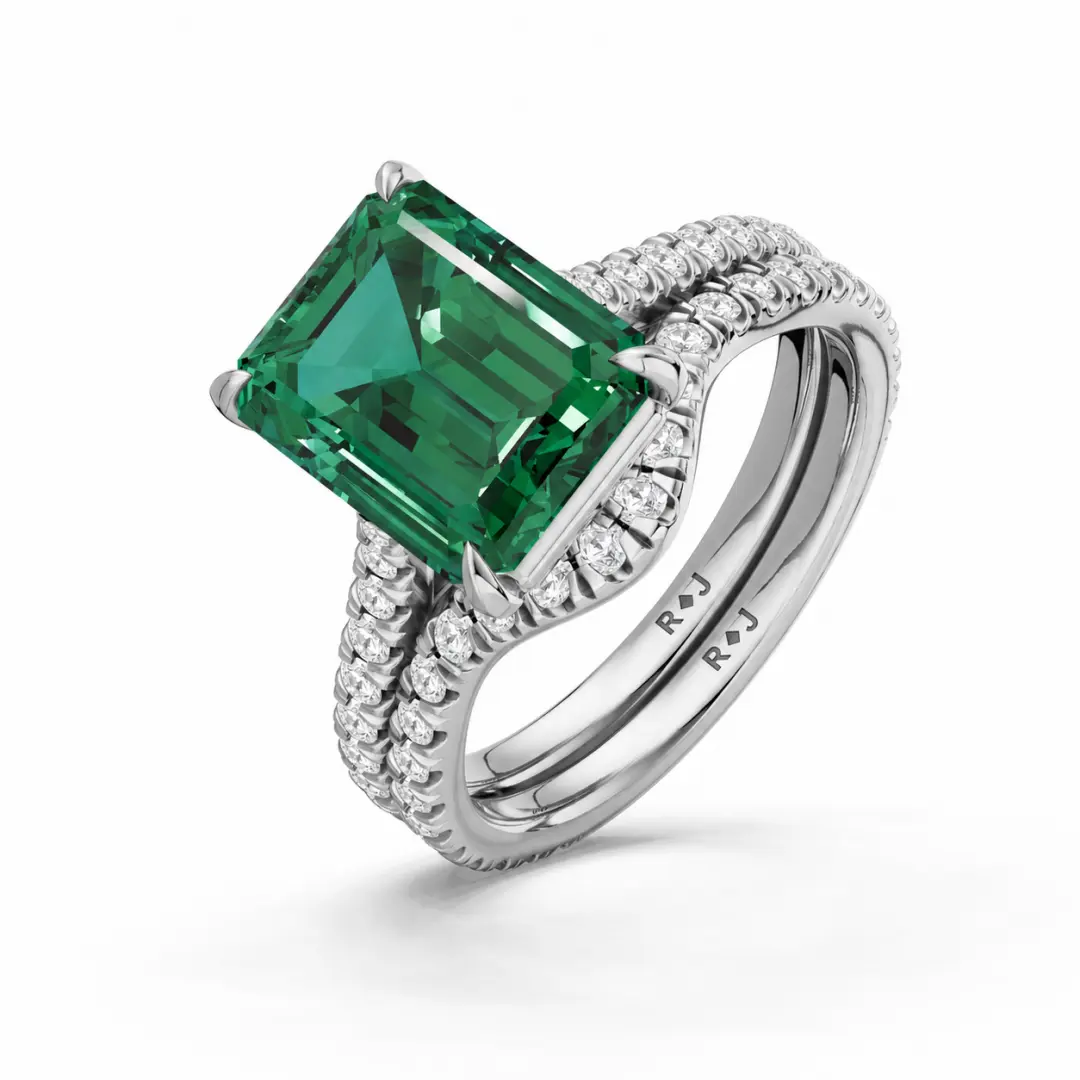
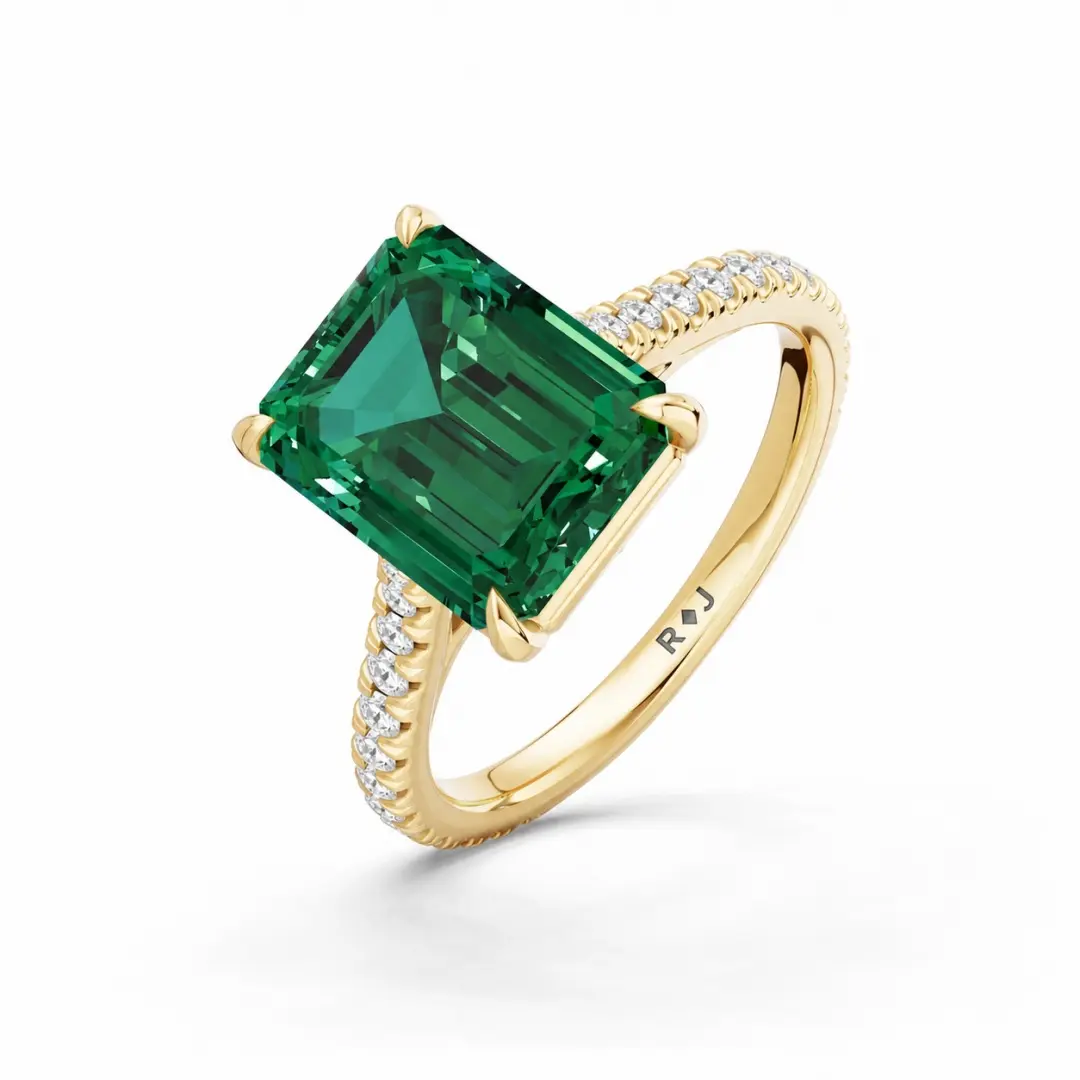
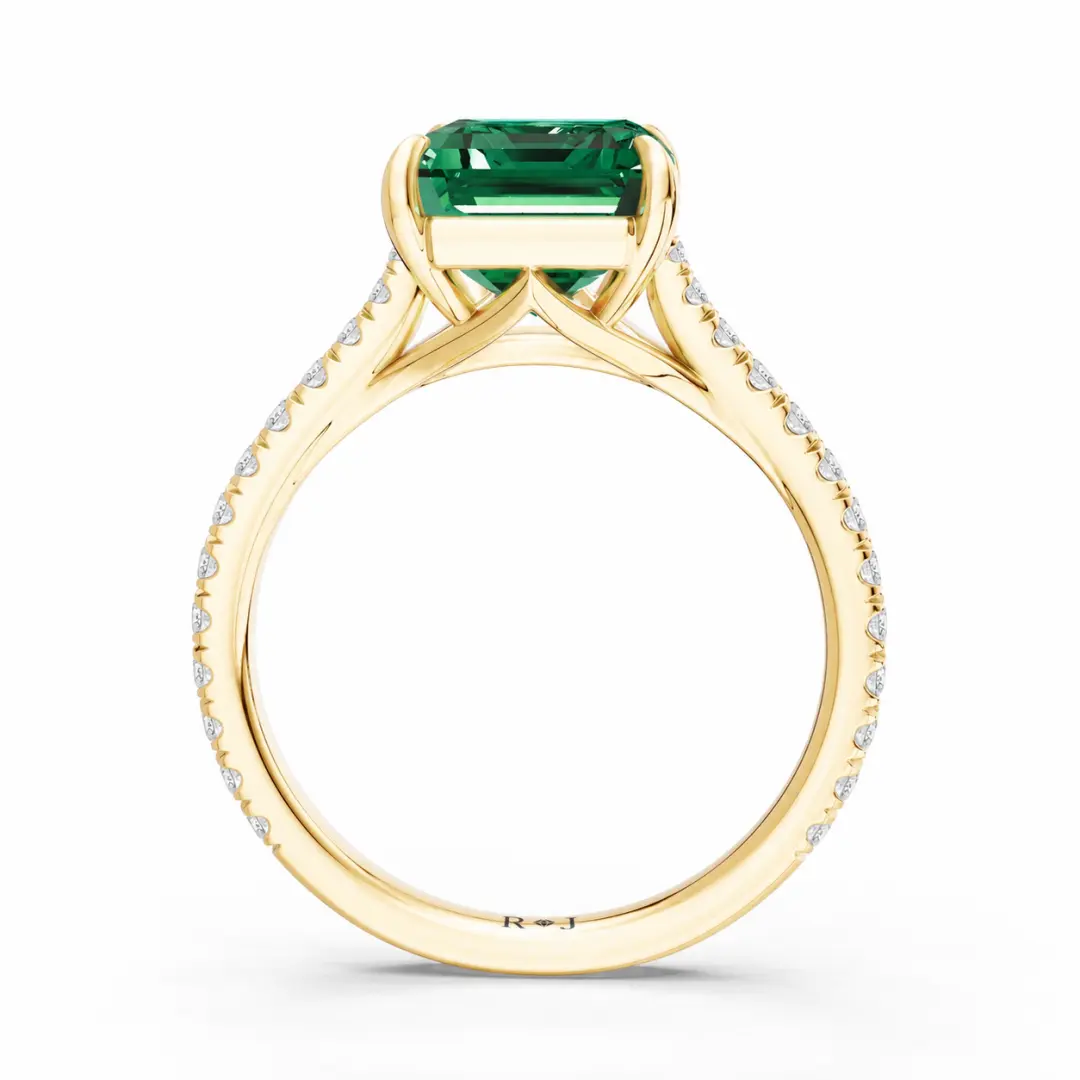
A 10x8mm step-cut emerald lifted on a fava prong V-bridge, with tapered diamond pavé that draws the eye back to the green every time.
18K white gold solitaire ring with a 10x8mm lab-created emerald in a fava prong V-bridge setting and 28 round lab diamonds in tapered micro pavé, 1.8 mm shank, approximately 1/3 ct side stones.
10x8mm Created Emerald
Fava Prong V-Bridge
28 Lab Diamonds
Tapered Pavé Shank
~1/3 ct Side Stones
Available in 14K or 18K gold, white, yellow, or rose. Ring size, center stone size, stone type (created or natural emerald), and side diamond carat weight can be specified before production.
The Fava Prong Exists Because a Step-Cut Emerald’s Corners Are Its Weakest Point
An emerald cut stone has four right-angle corners where the step facets meet. These corners chip more readily under pressure than rounded cuts do. Standard four-prong settings press square metal tips directly onto those corners, which works for diamonds because of their hardness but is a risk for emerald, which rates at 7.5 to 8 on Mohs. The fava prong is a curved, rounded tip that wraps the corner rather than pressing into it, distributing contact across a wider surface. This emerald solitaire ring with diamonds is built around that prong choice first, the V-bridge and the tapered pavé shank both follow from the decision to protect and elevate a specific stone.
- Product type
- Emerald center stone solitaire ring with diamond pavé shank
- Metal
- Solid 18K white gold with rhodium plating
- Center stone
- 10x8mm lab-created emerald, step-cut, in fava prong V-bridge setting
- Side stones
- 28 round lab grown diamonds, tapered micro pavé, approximately 1/3 ct total
- Shank width
- 1.8 mm average, tapering toward the center stone
- V-bridge function
- Transfers weight of the 10x8mm center into the shank without bulking the gallery
- Pavé taper
- Diamonds narrow as they move away from center, directing the eye toward the emerald
- Customization
- Ring size, center stone size, stone type, gold karat and color, side diamond carat weight
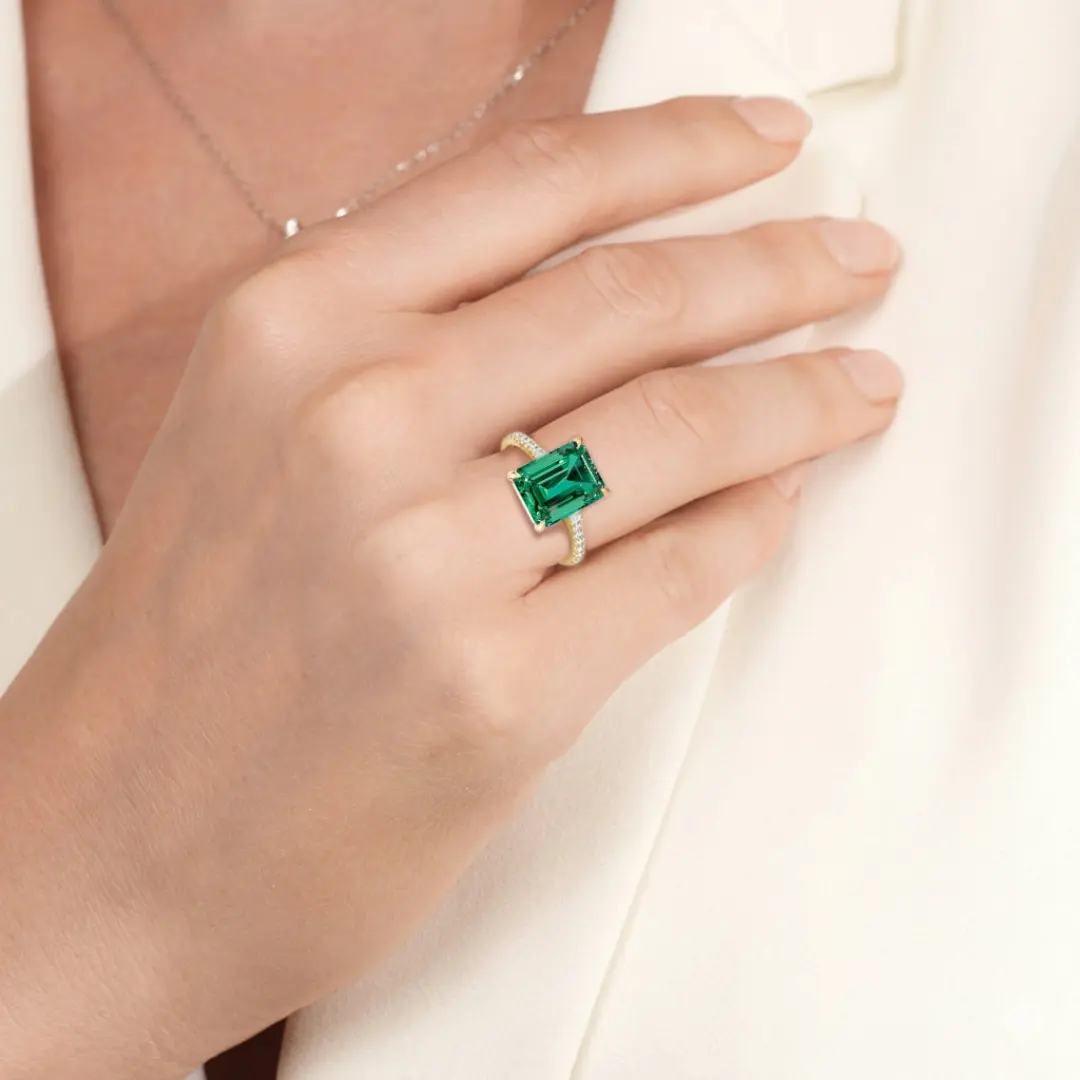
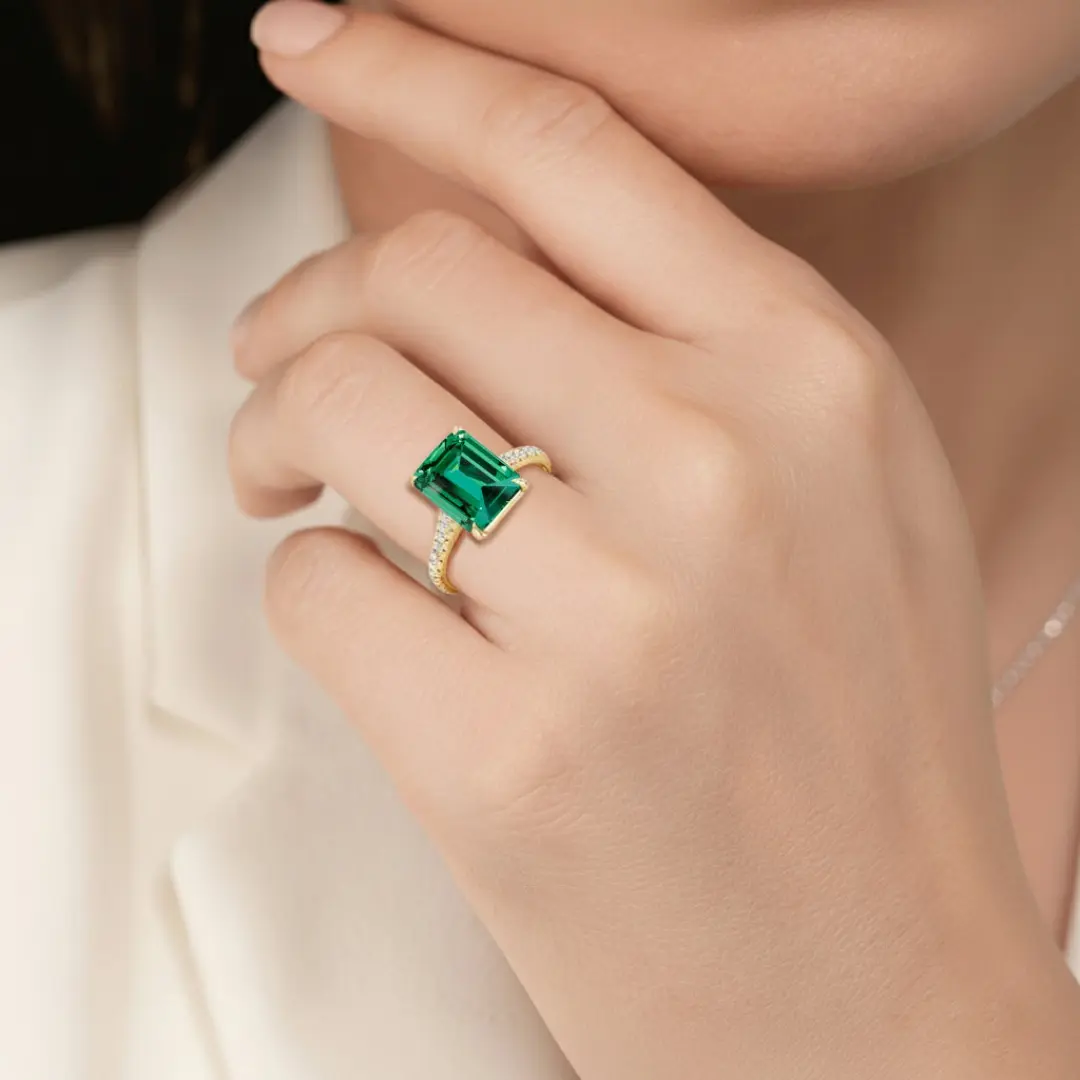
On the hand, the green of the emerald reads as the destination and the diamond shank as the path toward it. Within our rings collection, this is the design built for buyers who have chosen a step-cut colored center stone and want the setting to protect and frame it rather than compete with it.
Why the Bridge Is V-Shaped and Why the Pavé Tapers
A 10x8mm emerald is large relative to a 1.8 mm shank. A box-type gallery beneath a stone this size would need substantial metal height to support it, which creates a bulky gallery that closes off light from the pavilion and makes the stone look mounted rather than floating. The V-bridge solves both problems: the angled V transfers the stone’s load into the shank through two descending lines rather than a flat wall, which requires far less metal, and the open center of the V allows light to enter the pavilion from the underside, which improves the emerald’s depth of color.
The pavé taper is the second decision. If the shank diamonds ran at uniform density from center to back of the ring, the diamond line would compete with the emerald at the viewer’s eye distance. By starting wide at the emerald base and narrowing as the shank curves away, the diamond line physically draws the eye toward the center. The taper stops before the shank passes under the finger, so the underside remains a clean gold surface.
18K White Gold, Lab-Created Emerald Selected for Step-Cut Clarity, and Lab Grown Side Diamonds
The band and gallery are solid 18K white gold, rhodium-plated, with sufficient wall thickness at the V-bridge to carry the center stone without flex. The center stone is a lab-created emerald, which in practice means significantly higher clarity than most natural emeralds at the same price point, an important property for step-cut stones where every inclusion is visible through the open facets. The fava prongs are individually shaped to match the corners of the specific 10x8mm stone before setting begins, not cast to a generic emerald template. The 28 side stones are lab grown diamonds, covered by a diamond test certificate, matched in size and color before the pavé seats are cut. Each seat is hand-cut individually and checked under magnification to confirm uniform height across the taper.
- ◆ 18K white gold with rhodium plating, V-bridge cast as a single structural piece
- ◆ Lab-created emerald selected for step-cut clarity before setting, fava prongs fitted to the specific stone’s corner geometry
- ◆ 28 lab diamond side stones matched in size and color, pavé seats hand-cut individually
- ◆ Pavé stone height checked under magnification: no proud or sunken diamonds across the tapered line
- ◆ Interior shank comfort-polished, final inspection covers prong security, stone seating, and rhodium coverage
Center Stone Size, Gold Color, Ring Size, and Pavé Weight
This ring is built to order. The center stone size is the decision that changes this design most, because the V-bridge proportions and the pavé taper length both scale with the emerald dimensions.
- ◆ Ring size: produced to your exact size in US, UK, or EU sizing
- ◆ Center stone size: 10x8mm as shown, 8x6mm and 9x7mm also available as standard sizes, larger sizes on request; size changes the gallery scale and shank taper length
- ◆ Stone type: lab-created emerald as standard, natural emerald available on request with longer sourcing lead time and separate price quote
- ◆ Gold karat: 14K or 18K, with 18K offering denser material for the fava prongs under long-term wear
- ◆ Gold color: white as shown with rhodium plating, yellow or rose available (yellow gold with an emerald center stone is a classic pairing that warms the green)
- ◆ Side diamond carat weight: 1/3 ct total as standard, increase for a heavier diamond line or reduce for a more minimal shank
The center stone size is the decision that anchors everything else in this ring, send that first (10x8mm as shown, or a different dimension), along with your ring size, preferred gold karat and color, and whether you want the standard lab-created emerald or would like a quote for a natural stone. The production team will confirm stone availability and lead time before any order is placed.
Made to order
This design is a starting point
Every piece is produced to order at our Shenzhen manufacturing facility, so the version you receive can differ from the one on this page.
Change the specifications
Metal and karat, stone type, carat weight, setting style, and finished dimensions.
Or send your own design
A sketch, a reference photo, or an AI generated image. Our team builds the CAD from it and tells you what has to change to make it wearable.
Free engraving
Included on every piece. Your own text and your choice of font, at no added cost.
Send your image, preferred metal, size, and any changes. You receive a CAD render to approve before production starts. Production runs 5 to 15 days depending on complexity, then 2 to 5 days in transit with FedEx, DHL, or UPS.
Send your design