What Hand Does an Engagement Ring Go On?
What hand does an engagement ring go on? In the United States, the United Kingdom, Canada, Australia, and many Western traditions, the engagement ring is usually worn on the left hand, fourth finger. This finger is commonly called the ring finger.
If you are asking what hand does an engagement ring go on because you are planning a proposal or choosing a wedding band, the practical answer depends on both tradition and daily wear.
That is the simple answer, but it is not the only answer. Engagement ring traditions vary by country, religion, family background, and personal preference. The practical side also matters: comfort, dominant-hand wear, wedding band stacking, ring size, and whether the engagement ring and wedding band are designed to sit together.
This guide explains the common tradition, the global variations, and the practical decisions buyers should think through before choosing how to wear an engagement ring every day.
The Common Western Tradition: Left Hand, Fourth Finger
In many Western countries, the engagement ring is worn on the left hand, fourth finger. After the wedding ceremony, the wedding band is usually worn on that same finger, closest to the palm, with the engagement ring above it.
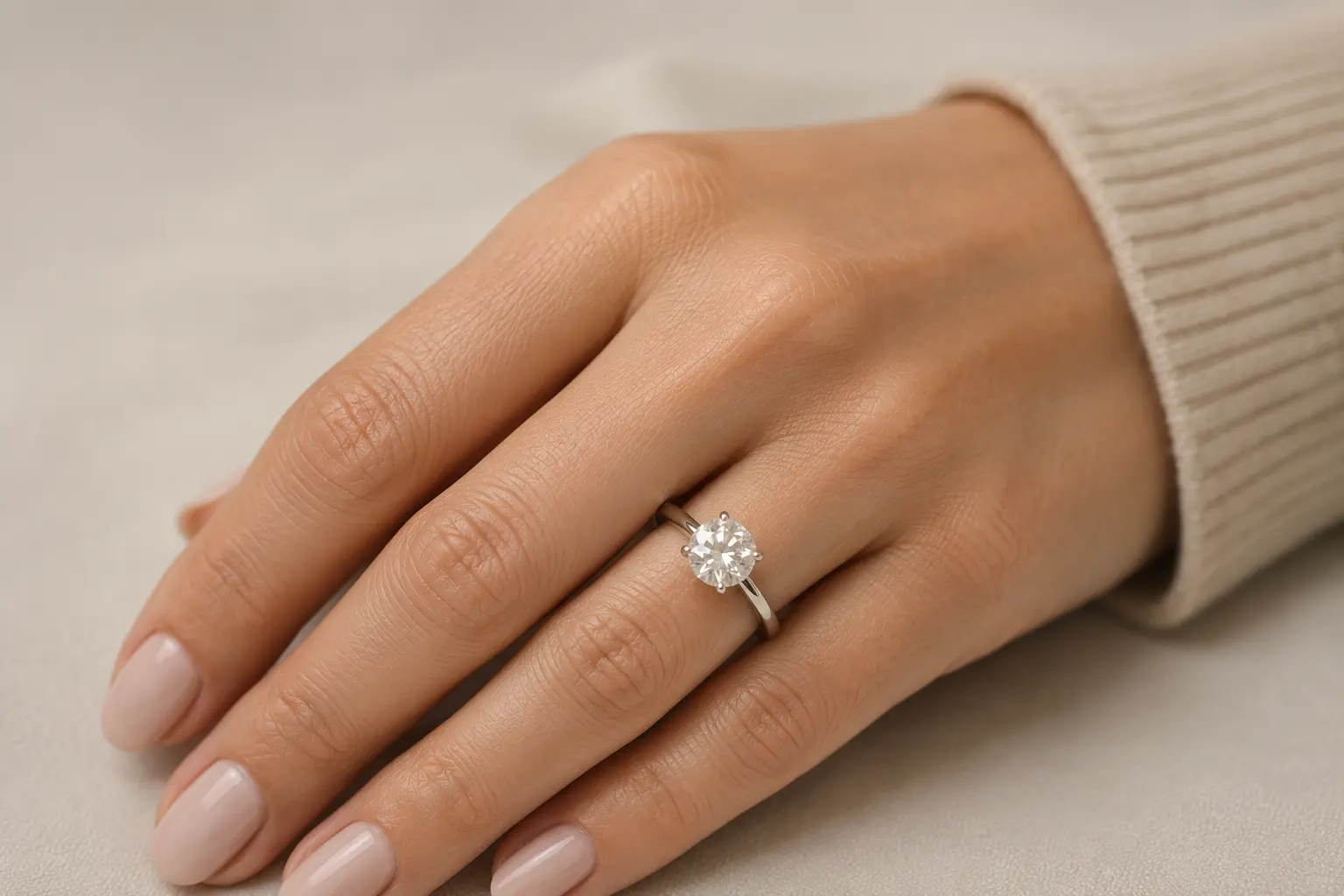
This tradition is often linked to the old idea of the vena amoris, or “vein of love,” which was believed to connect the fourth finger directly to the heart. That belief is not anatomically accurate, but it became a lasting romantic symbol.
For readers who want more historical background, Britannica’s overview of how wedding ring traditions started is a useful external reference.
Right Hand or Left Hand? Traditions Vary
There is no single global rule for engagement ring placement. In some countries and communities, engagement rings or wedding rings may be worn on the right hand. In some traditions, the ring may move from one hand to the other during or after the wedding ceremony.
This matters for couples with different cultural backgrounds. If one partner expects the ring on the left hand and the other comes from a right-hand tradition, the best answer is not about which tradition is “correct.” It is about what feels meaningful, respectful, and practical for the person wearing the ring.
For modern couples, personal preference is also valid. Some people wear the engagement ring on the right hand, on a different finger, or on a chain because of work, comfort, hand shape, or lifestyle. The ring’s meaning does not depend on one universal placement.
Engagement Ring and Wedding Band Order
The most common stacking order places the wedding band closest to the palm, with the engagement ring above it. The usual symbolism is that the wedding band, exchanged during the ceremony, sits closest to the heart.
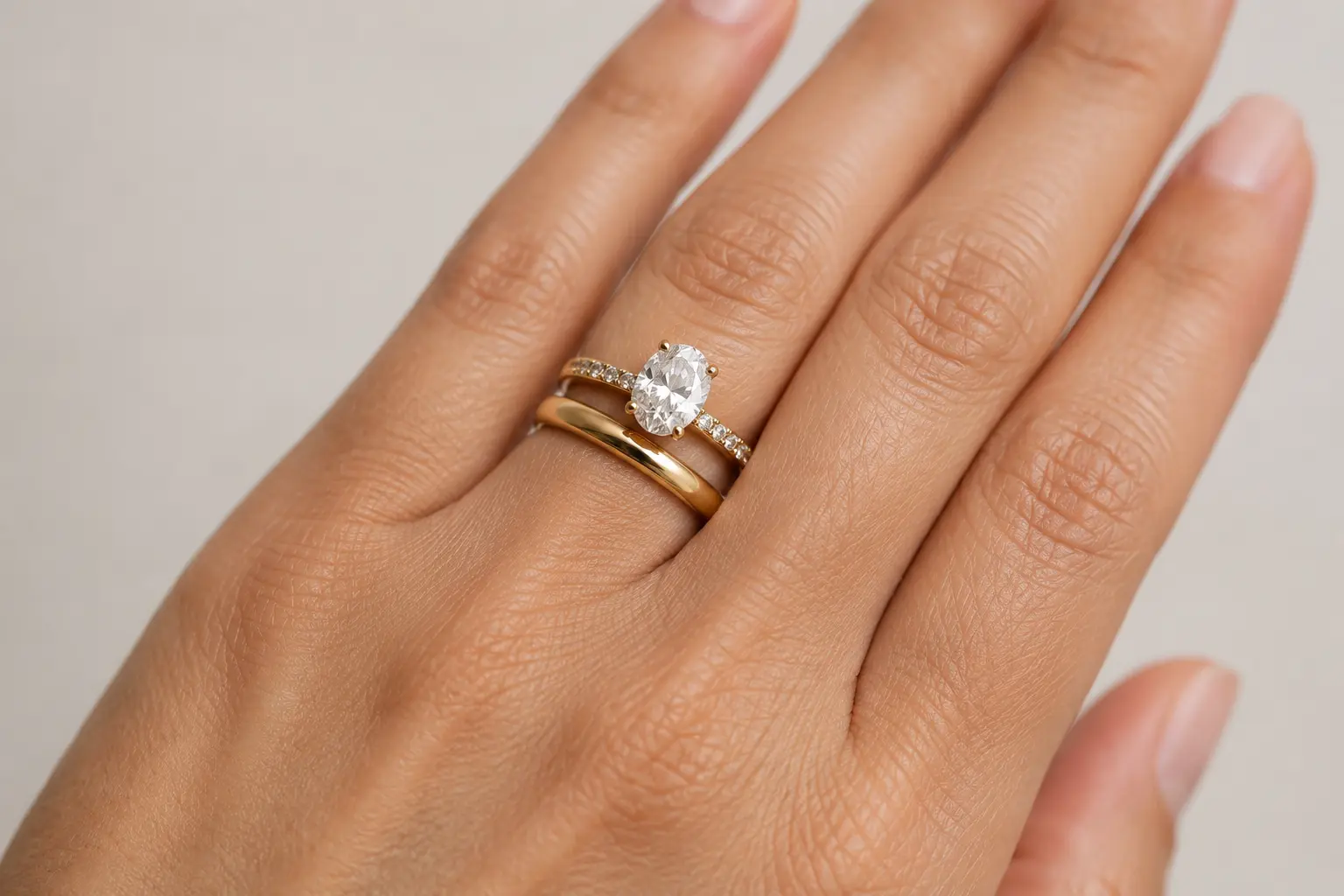
During the ceremony, many people temporarily move the engagement ring to the right hand so the wedding band can be placed on the left ring finger first. After the ceremony, the engagement ring is moved back above the wedding band.
A later anniversary or eternity ring is often worn outside the engagement ring and wedding band stack, though this is a preference rather than a rule.
Why Ring Fit Matters More Than Most Buyers Expect
Ring placement is not only symbolic. It affects comfort and daily wear. The same ring can fit differently on the left and right hand, and finger size can change with temperature, time of day, activity, and life changes.
If you are considering switching hands, measure both ring fingers before ordering. A ring made for the left ring finger may not fit the right ring finger comfortably.
If you are unsure about sizing, use a detailed ring size chart before approving production or resizing.
Dominant Hand, Daily Wear, and Setting Protection
The hand you use more often usually takes more impact. If you wear fine jewelry on your dominant hand, the ring may experience more knocks, friction, water exposure, and contact with hard surfaces.
This does not mean you cannot wear an engagement ring on your dominant hand. It means the setting should match your lifestyle. A high prong setting may feel elegant, but it can catch more easily. A low-profile setting or bezel setting can offer more protection for active daily wear.
If you work with your hands, use gloves frequently, cook professionally, lift weights, or handle tools, you may prefer wearing the engagement ring on the non-dominant hand or wearing only a wedding band during certain activities.
How to Stack an Engagement Ring With a Wedding Band
One of the most common mistakes is choosing an engagement ring first and a wedding band later without checking how they sit together. Two beautiful rings can still make an awkward stack if the profiles do not match.
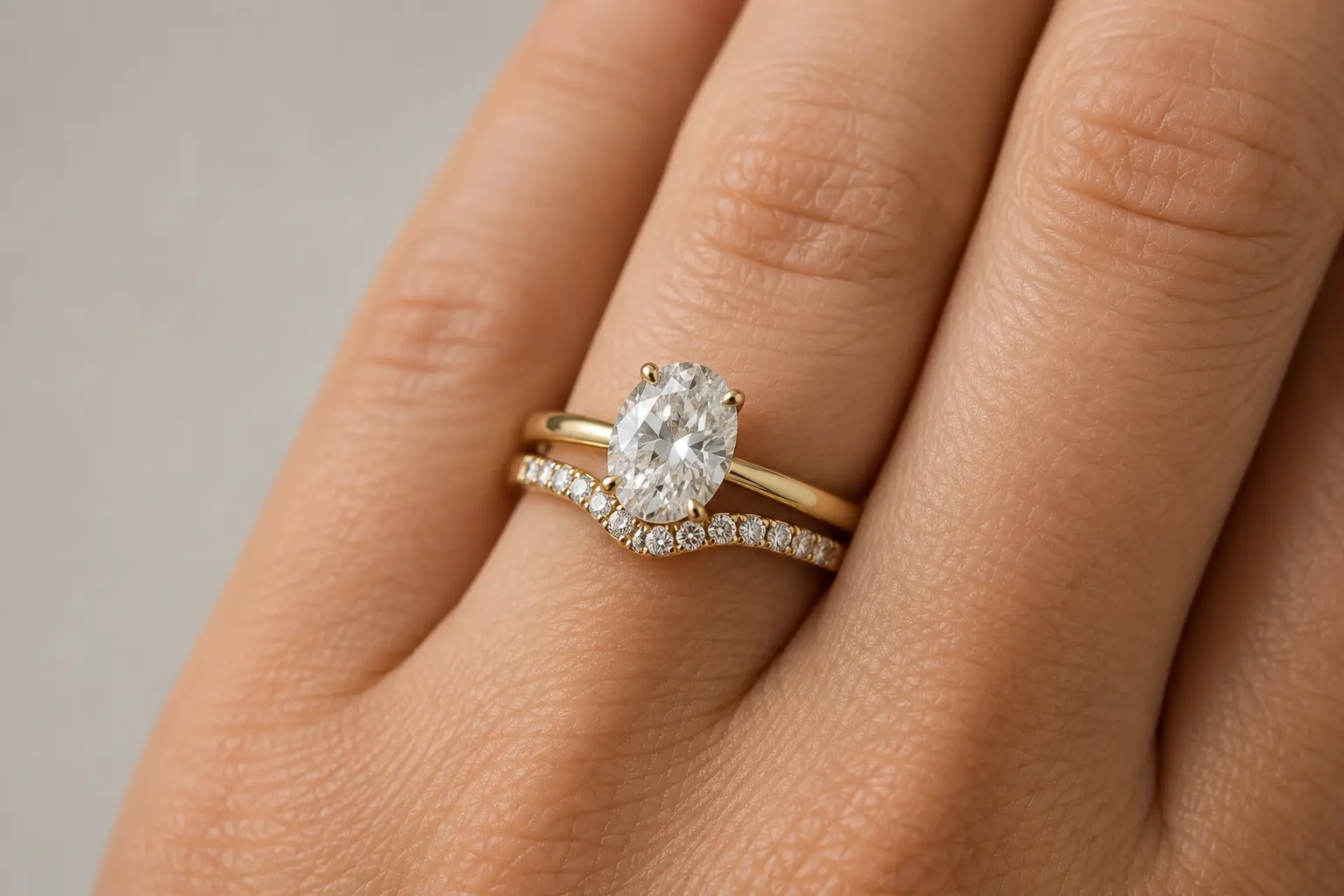
A straight wedding band works well with many solitaire and low-profile settings. A curved or contoured wedding band may be better if the engagement ring has a larger center stone, a low basket, or a setting shape that prevents a straight band from sitting flush.
If you are shopping for engagement rings, think about the future wedding band early. The side profile, setting height, and stone placement will affect how the full stack feels on the finger.
If you already know you want a paired set, choosing the engagement ring and wedding band together can prevent fit problems later.
What About Eternity Rings?
Eternity rings add another layer to the stack. They are often given for an anniversary, milestone, or major life event. Many people wear the eternity ring outside the engagement ring and wedding band, but comfort should guide the final arrangement.
Full eternity rings, with stones all the way around the band, are harder to resize than plain bands or partial eternity styles. If your finger size changes seasonally, or if you want more future flexibility, a half or three-quarter eternity band may be more practical.
Stack height also matters. Three rings on one finger can feel bulky, especially if the engagement ring has a tall setting. Some people wear the full stack for special occasions and wear only the wedding band or engagement ring for daily life.
When Custom Design Helps
Custom design is especially useful when the engagement ring and wedding band need to work together. A custom band can be shaped around the exact profile of the engagement ring, which helps avoid gaps, rubbing, or an uncomfortable stack.
For custom jewelry, the goal is not only to make the ring look beautiful in isolation. The ring should sit well on the hand, match the wearer’s lifestyle, and work with any other ring it will be worn beside.
At the design stage, ask these questions:
- Will the wedding band sit flush against the engagement ring?
- Does the engagement ring setting sit too high for daily comfort?
- Will the full stack press against neighboring fingers?
- Can the wedding band be resized later?
- Does the ring work on the hand where it will actually be worn?
If you want to design a ring set around a specific stone, hand, or stacking preference, you can start a custom jewelry inquiry and ask Redora’s team to review the fit before production begins.
The Honest Takeaway
In many Western traditions, an engagement ring goes on the left hand, fourth finger. But that is a tradition, not a universal requirement.
The better choice is the one that respects your culture, feels comfortable on your hand, works with your wedding band, and suits your daily life. If you are having the rings made, decide the stack early so the engagement ring and wedding band can be designed as a pair rather than forced together later.
About the Author and Review Process
This guide is written for buyers choosing an engagement ring, wedding band, or full ring stack. The recommendations focus on practical decisions that affect daily wear: hand placement, stacking order, ring size, setting height, wedding band profile, and long-term comfort.
Traditions vary by culture and community, so this article avoids treating one placement as a universal rule. For custom ring projects, the most important step is to confirm how the ring will be worn before the final design is approved.
More from Redora: all jewelry buying guides