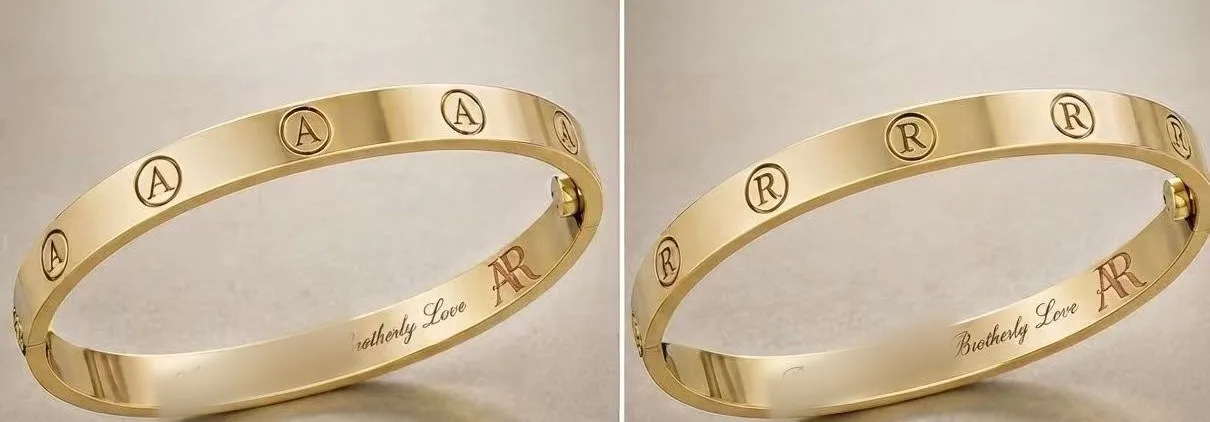
More of our inquiries now open with a picture no camera took. This one showed two flat gold bangles side by side, letter roundels running around the outside, a line of script on the inside, captioned like a catalogue page: 14K yellow gold, 4.8 mm wide, hinged. The client wanted a pair for two brothers, one with the letter A and one with R. The image looked finished. It answered almost every question except the one that decides how a bangle feels on the wrist, and the one this article is about: how thick should a bangle be. For this pair the answer took three CAD drawings, moving from 1.7 mm to 2.0 mm to 2.2 mm before any gold was cast.
Most answers to that question come from catalogues and size charts. This one comes from a single order on our production floor, with the model weights, the finished weights and the reason the band got heavier.
The short version
| Band thickness | Model estimate, 14K | Finished weight | What happened |
|---|---|---|---|
| 1.7 mm | About 20 g | Not made | First CAD, as light as the client first asked |
| 2.0 mm | About 24.5 g | Not made | Second CAD, after the client chose the hinge and screw lock over the lighter weight |
| 2.2 mm | Not recorded | 23.16 g (A) and 23.51 g (R) | Produced. Both bangles 4.8 mm wide, inner oval 53 by 63 mm |
For a flat hinged bangle around 4 to 5 mm wide, those three numbers are a fair map of the range: 1.7 mm is the light end, 2.0 mm reads as solid, and 2.2 mm is a bangle you notice when you put it on. Width, karat, wrist size and engraving all move the answer, and the sections below show how.
What the image showed, and what it could not
An AI image is a mood board with perfect lighting. It has no scale. The caption under this one did carry real numbers: the karat, the gold color, a 4.8 mm width, a hinge and a twist lock, and a wrist size given in centimeters. That is more than most clients send. A bangle still needs more numbers than that before a model can be built.
- Thickness. Nothing in a picture says whether the band is 1.5 mm or 3 mm. Lighting and angle make both look plausible.
- The inner shape. A size in centimeters is a length. A hinged bangle is an oval, and the oval has to clear the hand when open and sit close when shut. Our designer set it at 53 by 63 mm.
- Where the hinge and the screw lock sit, and how many roundels fit between them without one landing on a seam.
- The lettering as a file. The image showed letters. Engraving needs outlines a machine can cut.
This matches what we see on most bangle inquiries. Clients usually give one or two parameters, we draw a first render from those, and the rest gets settled over a round or two of changes: bigger, smaller, wider, heavier. Nobody on the retail side sees that loop, because by the time a bangle reaches a display case every number in it was fixed long ago.
Three thicknesses before a gram of gold
The client first asked for a light bangle, and the first CAD went out at 1.7 mm with a model weight of about 20 g in 14K. A cast band could have kept that weight, but not the hinge and screw lock the client wanted. Those had to be machined, and the machined construction is heavier. We set out both options before production, and the client kept the screw lock and accepted the added weight and labor. The second CAD went out at 2.0 mm, about 24.5 g, and production ran at 2.2 mm.
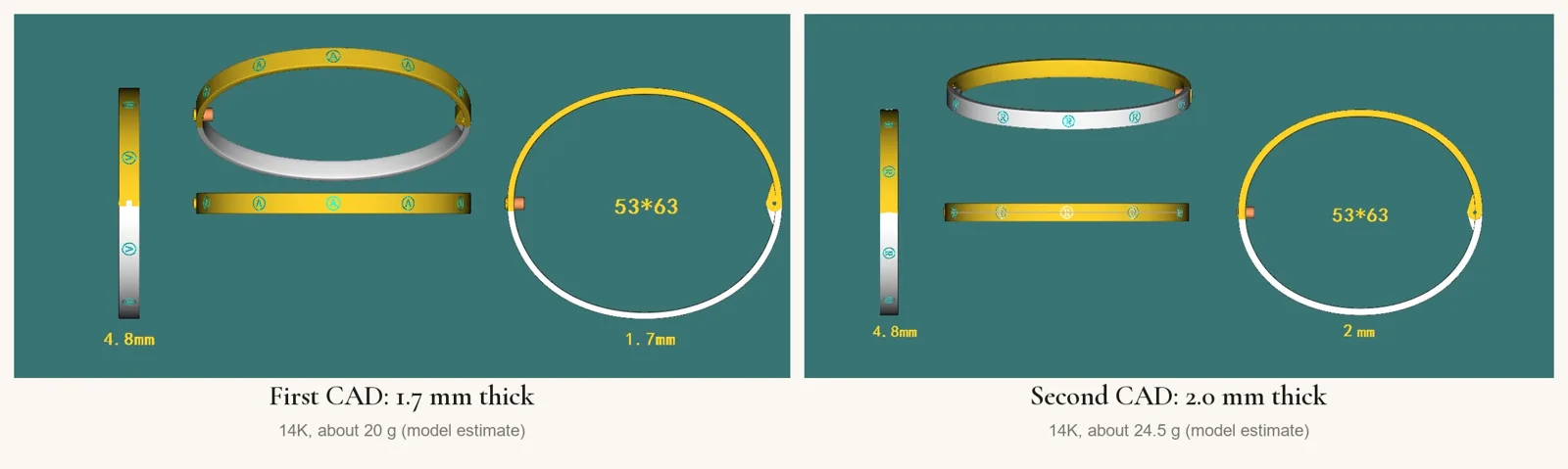
The weights need one note, because they look backwards at first glance. The 2.0 mm model says 24.5 g, yet the 2.2 mm bangles came off the scale at 23.16 g and 23.51 g. A model weight is an estimate of the cast, not the finished piece. It does not subtract the metal removed when the band is engraved, filed and polished. Across our production, a finished piece weighs about 90 percent of its model estimate. On that rule the 2.0 mm bangle would have finished near 22 g, and the extra 0.2 mm added a little over a gram to each.
The two finished bangles are 0.35 g apart. They share one model, one size and one karat. Two pieces finished by hand rarely match to the gram, which is why our quotes work from the scale weight and not from the drawing.
So how thick should a bangle be
There is no single right number, but there is a right way to choose one. These are the things that moved it on this order, and that move it on most.
- Width and thickness work as a pair. On this design, 4.8 mm wide, each extra 0.1 mm of thickness added about 1.5 g to the model weight. The band also reads heavier from the side than from above.
- Karat changes the weight, not the look. The same design in 14K weighs about 90 percent of the 18K version. In 18K, this 2.2 mm bangle would come to roughly 26 g. That is an estimate from our karat rule, not a weighed piece.
- Engraving takes metal away from the surface. Every roundel is cut into the outer face, so the band has to stay solid enough under the letters. This pair is solid gold through the full section. An engraved surface counts as textured under our own rule for hollow and semi-hollow gold, so a design like this could go semi-hollow at most, never fully hollow.
- The number is final once it is made. A finished bangle cannot be thickened, and it cannot be resized either, which is covered in why some rings and bangles cannot be resized. Thickness and the inner oval are both settled at the CAD stage, which is the cheapest place to change your mind.
A practical way in: if you own a bangle whose weight you like, weigh it and measure its width and thickness, then send us those three numbers. That tells us more than any description of how heavy you want it to feel.
The letters were the harder part
The client sent the fonts as pictures, one sheet for each position. A classic serif capital for the roundels. A flowing script for the inside line. A monogram that joins A and R with a looping crossbar, shown in copper on black. A separate serif for a karat mark and a short number.
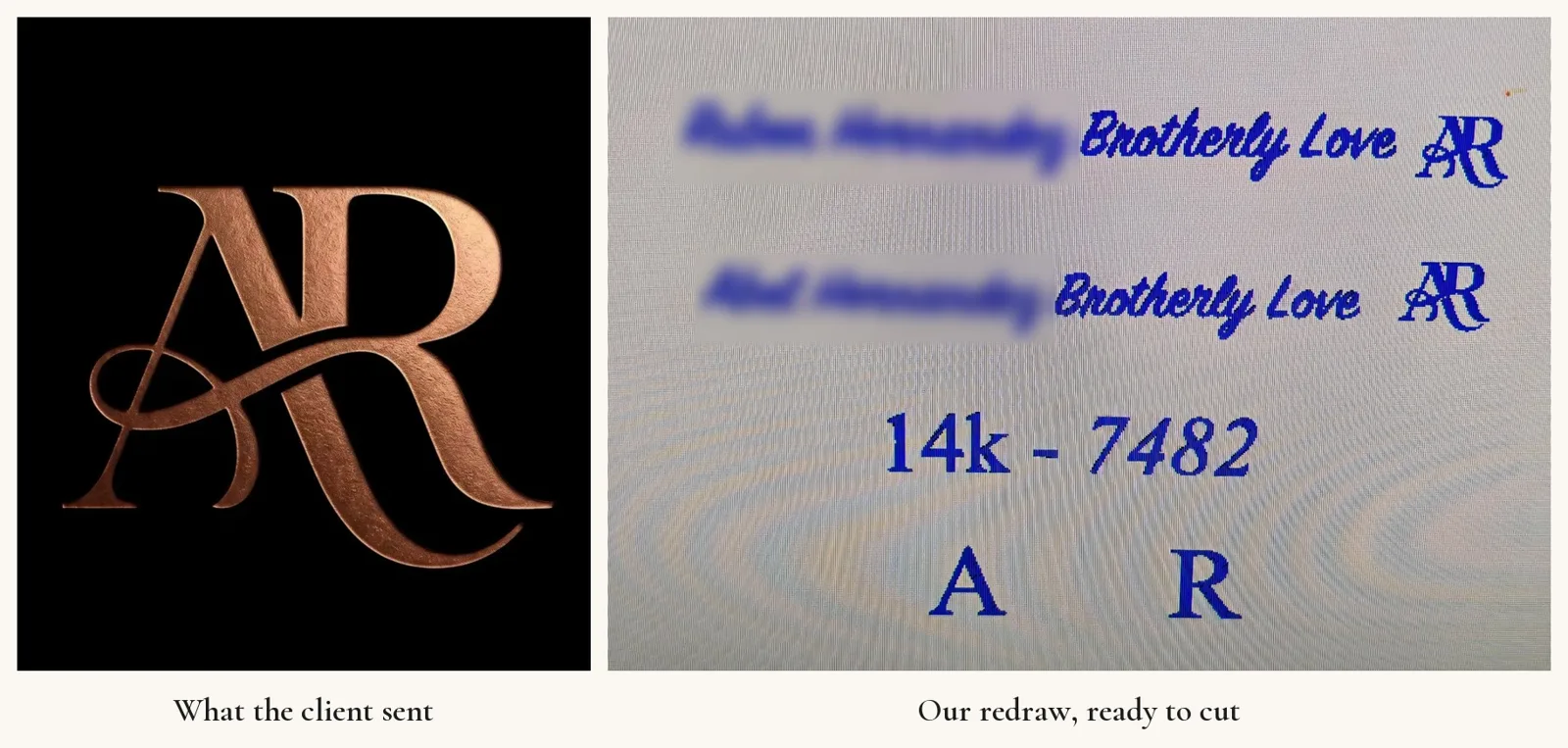
None of these existed as a font file we could cut at roundel size. So our designer redrew each one from the client’s images, matching the stroke weight, the serifs and the slant of the script, and sent the result back as a screen image to compare against the originals. Only after the client approved the lettering did the roundels go into the model. The roundels were then cut by CNC engraving from that approved drawing, so every A matches every other A in depth and outline, and the same for every R.
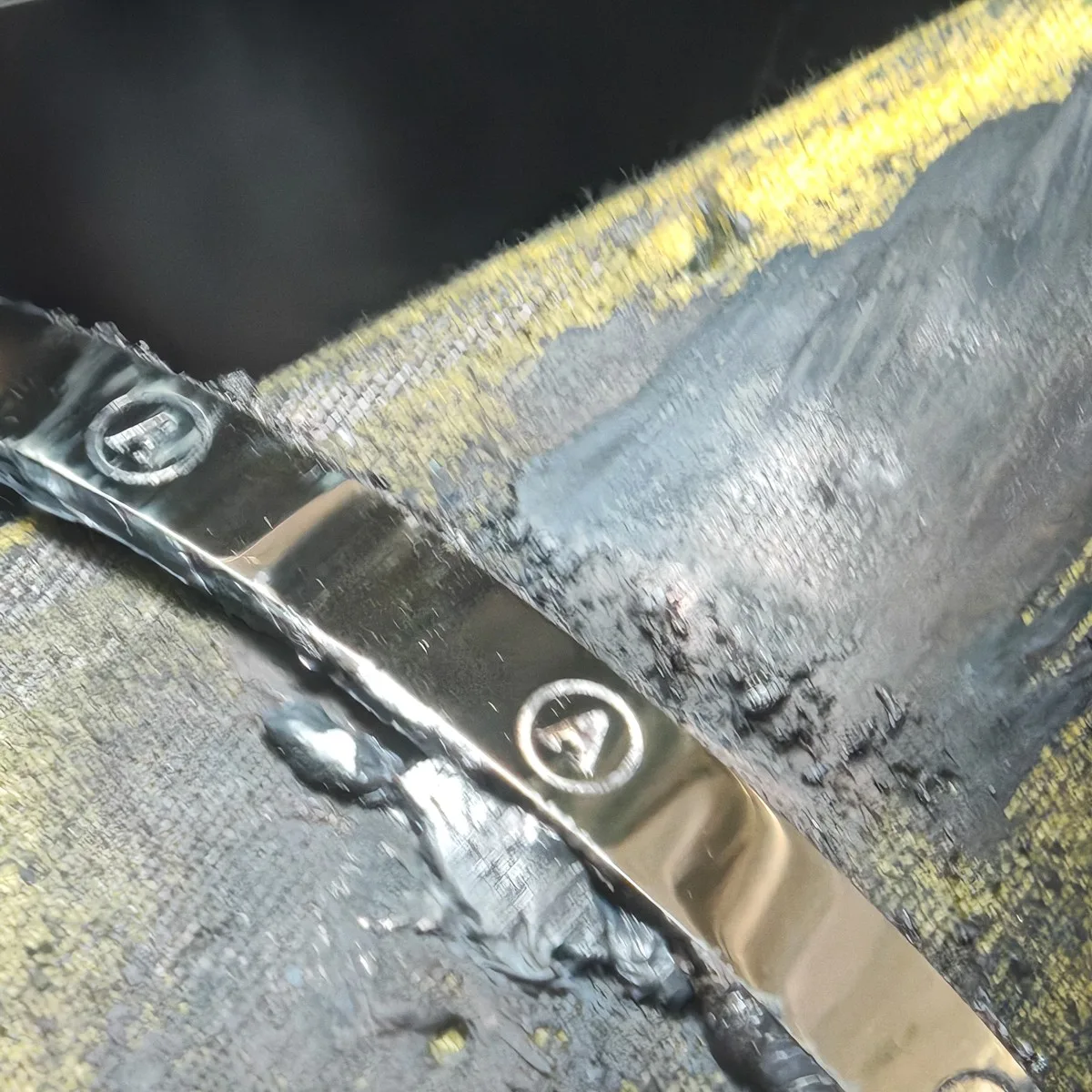
Engraving is free on everything we make, in the wording and the font you choose. The work that takes time is not the cutting. It is turning a picture of a font into an outline that holds its shape at a few millimeters tall on a curved band.
Two things push back the other way
Thicker is not automatically better. Gold is priced by the gram, so the move from 1.7 mm to 2.2 mm put close to 30 percent more gold into each bangle, and the price followed. For a pair, that difference doubles.
A thicker band also stands further off the wrist. On a flat profile, that height is the part that meets a desk edge, a laptop or a shirt cuff first. For someone who types all day, 2.0 mm may be the better everyday choice even if 2.2 mm looks better in a photo. This client put the hinge and screw lock first and accepted the weight that came with them. That is not the right call for everyone.
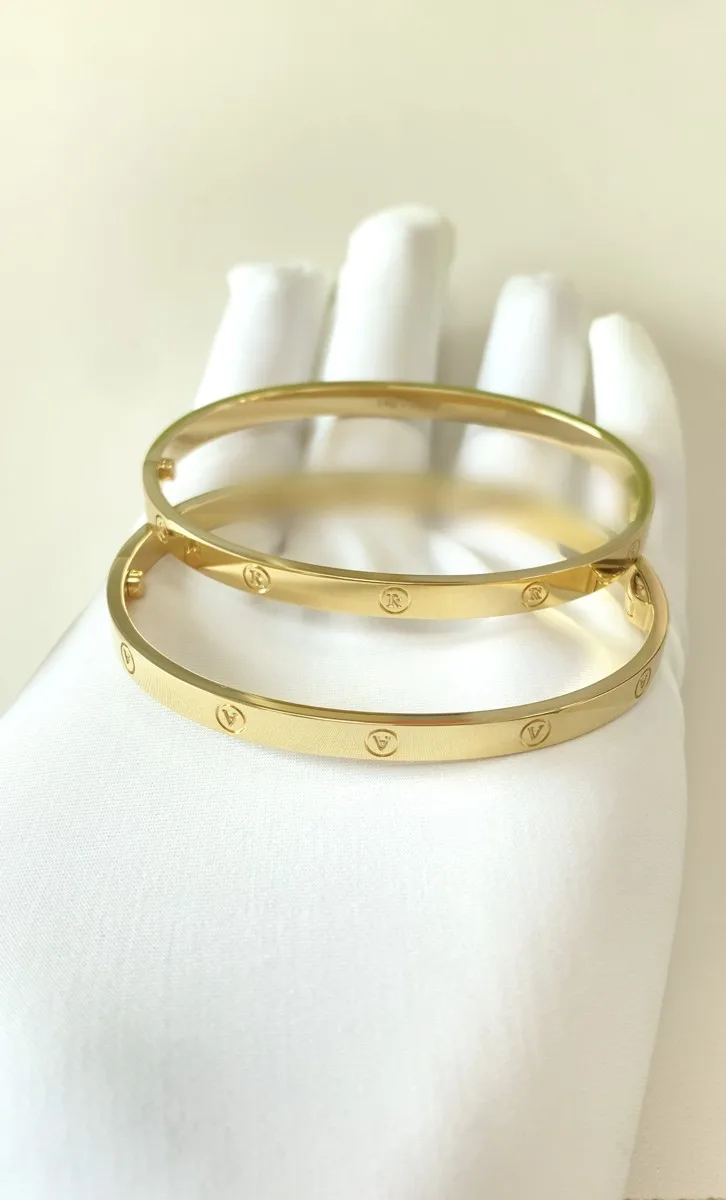
Both designs are now made to order with any initial: the engraved gold bangle with the letter A and the custom gold bangle with the letter R. Our other gold bracelets follow the same CAD first process.
What to send if you are starting from an AI image
- The image itself, and any notes that came with it
- Your wrist measurement, or the inner size of a bangle that fits you
- A width and a thickness if you know them, or the weight and size of a bangle you already like
- Karat and gold color: 9K, 10K, 14K, 18K or 22K, in yellow, white or rose, or platinum
- The engraving text, and the font as a file or as a clear image
A project that starts from an idea, a sketch or an AI image carries a $40 CAD design fee before modelling, with revisions included until you are happy with the rendering. If you go ahead, the fee is credited in full against the order and the normal 30 percent deposit follows. If you decide not to, the fee is not refunded, because the design work is done, and you keep the rendered images. The full sequence is set out in how the deposit and the CAD fee work.
Production usually takes 7 to 10 days after design details are confirmed. Personalized pieces may require additional layout time. We ship by FedEx, DHL or UPS, and delivery usually takes 2 to 5 days, depending on destination and customs clearance.
Common questions
How much does a gold bangle weigh?
It depends on width, thickness, inner size and karat, in that order of influence for most designs. A flat 14K bangle 4.8 mm wide and 2.2 mm thick, with a 53 by 63 mm inner oval and engraved roundels, weighs 23.2 to 23.5 g finished. The same design at 1.7 mm would come in under 20 g, made with a screw lock on both sides instead of a hinge.
Can a jeweler make a bangle from an AI image?
Yes, as a starting point. The image fixes the look. The numbers that make it wearable, thickness, inner shape, hinge position and the lettering as cuttable outlines, are fixed in CAD, usually over one or two rounds of changes.
Can a bangle be made thicker after it is finished?
No. A finished bangle cannot be thickened or resized. If the thickness is wrong, the bangle is remade, so the CAD stage is where to settle it.
Will the finished weight match the CAD?
Not exactly. A model weight is an estimate before engraving, filing and polishing. A finished piece usually weighs about 90 percent of it, and the final figure is the one on the scale.
Can I use my own font for the engraving?
Yes. Send the font file, or a clear image of the lettering if there is no file. We redraw it at the size it will be cut and send it back for approval. Engraving is free.
About the Author and Review Process
Edwin Lin is the founder of Redora Jewels, a factory-direct fine jewelry manufacturer based in Shenzhen with on-site production. The thicknesses, model weights and finished weights in this article come from the CAD files and the scale for this order. The clients are described without their names, which are blurred in every image.
Redora Jewels has run as a manufacturing facility since 2011 and makes custom jewelry in solid gold and platinum, one piece at a time. If you have an image, a sketch or a bangle you want made heavier, lighter or in your own lettering, start a project with Redora’s production team.