Are Lab Grown Diamonds Real? The Short Answer
Are lab grown diamonds real? Yes. Lab grown diamonds are diamonds, not diamond simulants. They have essentially the same chemical composition and crystal structure as natural diamonds, but they are grown in a controlled laboratory environment rather than formed underground.
That short answer is useful, but it is not enough for a good purchase decision. Buyers also need to understand what differs between lab grown and natural diamonds, how lab grown diamonds compare with simulants, how certification works, and when a lab grown diamond makes sense for an engagement ring or custom jewelry piece.
This guide explains those differences clearly, without treating lab grown diamonds as either a miracle bargain or a second-class stone.
Why Lab Grown Diamonds Are Real Diamonds
A diamond is defined by its material structure. Lab grown diamonds and natural diamonds are both made of carbon arranged in a diamond crystal structure. This is why a lab grown diamond has the hardness, brilliance, and durability buyers expect from diamond jewelry.

The difference is origin. Natural diamonds form deep within the earth over geological time. Lab grown diamonds are created using advanced growth methods in a controlled environment. Origin matters for value, rarity, and personal meaning, but it does not make a lab grown diamond fake.
GIA’s educational guide to simulants, moissanite, and lab-grown diamonds is a useful neutral reference for understanding this distinction.
Lab Grown Diamonds vs. Diamond Simulants
One of the most common buyer mistakes is confusing lab grown diamonds with diamond simulants. These are not the same thing.

Lab grown diamonds are diamonds. They are grown by technology such as Chemical Vapor Deposition (CVD) or High Pressure High Temperature (HPHT), and they share the core properties that make diamond a diamond.
Diamond simulants are materials that look similar to diamonds but are not diamonds. Common examples include cubic zirconia and moissanite. They can be beautiful in their own way, but they have different chemical compositions, optical behavior, and long-term wear characteristics.
If a listing says “diamond alternative,” “simulated diamond,” or “diamond-like,” do not assume it is a lab grown diamond. Ask for the grading report and read the wording carefully.
Lab Grown vs. Natural Diamonds: What Actually Differs
Lab grown and natural diamonds can look the same to the naked eye, especially when they are well cut and properly graded. The meaningful differences are not about whether one is “real.” They are about origin, price, resale, rarity, and buyer preference.
Origin and personal meaning
Some buyers value the geological story of a natural diamond. Others care more about the beauty, size, and specification of the finished piece. Neither priority is wrong. A good diamond decision should match the wearer’s values, not just a marketing argument.
Price and size options
Lab grown diamonds often cost less than natural diamonds with comparable visible specifications. This can allow buyers to choose a larger stone, a higher color or clarity range, or a more detailed setting within the same budget.
That price advantage is one reason lab grown diamonds are popular for engagement rings and other daily-wear fine jewelry.
Resale value
Lab grown diamonds should not be purchased as resale investments. Their secondary market is more limited than the market for natural diamonds, and new lab grown diamond prices can shift as production technology and supply change.
Natural diamonds may retain value better in some situations, but most jewelry should still be bought primarily for wear, meaning, and craftsmanship rather than as a liquid financial asset.
Identification
A trained professional may need specialized equipment or laboratory analysis to confirm whether a diamond is natural or lab grown. The grading report should clearly identify the stone’s origin. Buyers should rely on documentation, not appearance alone.
Certification: What Buyers Should Check
A grading report is one of the most important documents when buying a lab grown diamond. It should identify the stone as laboratory-grown and describe the quality factors relevant to the specific report format.
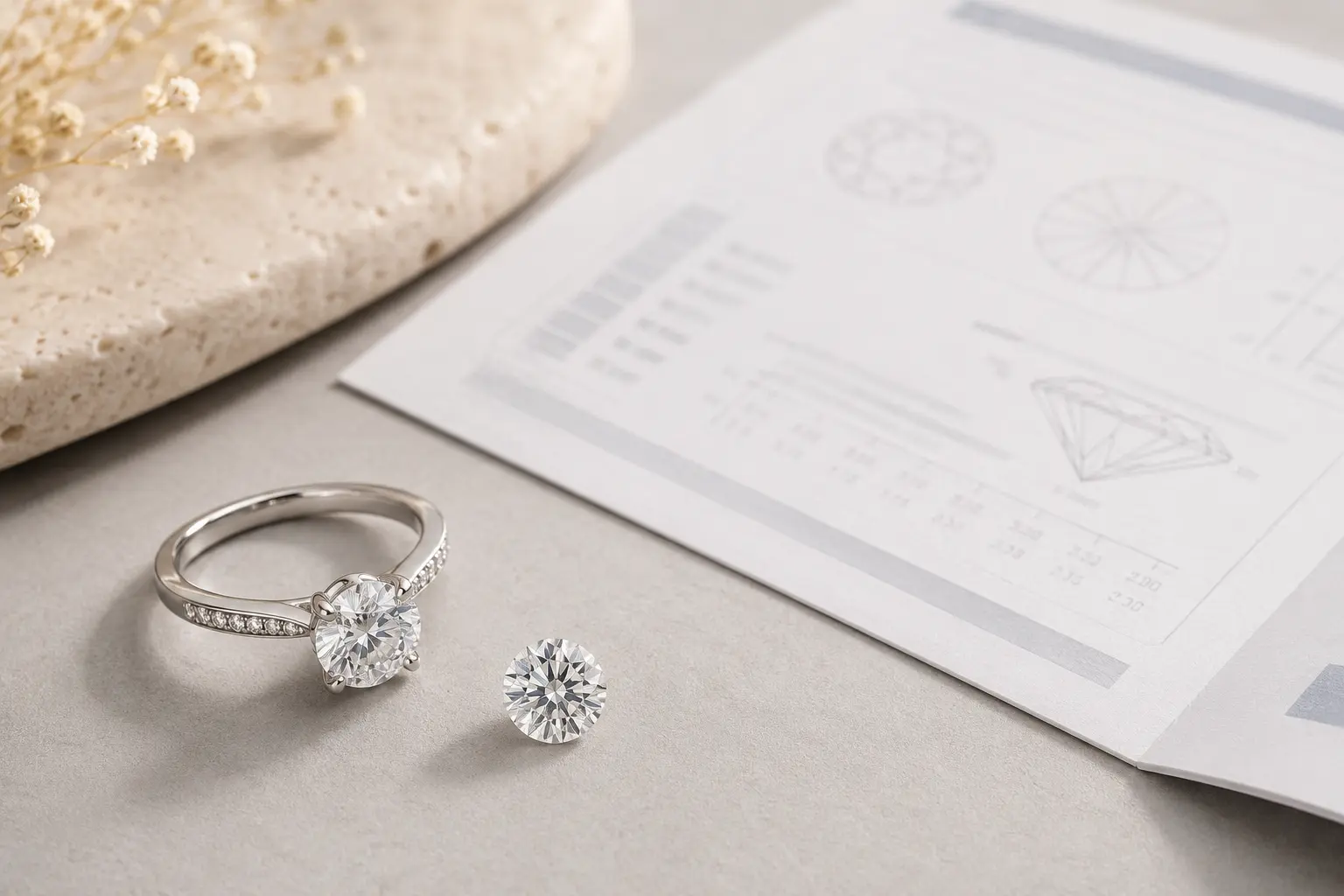
Do not assume every laboratory report includes the same details in the same way. Some reports may include CVD or HPHT growth method, post-growth treatment comments, measurements, color, clarity, cut information, or other identifying details. Read the actual report rather than relying only on a seller’s summary.
For buyers considering lab grown diamonds for a custom piece, this step matters because the setting should be designed around the actual stone measurements, not only the carat weight.
How the 4Cs Apply to Lab Grown Diamonds
The 4Cs still matter when buying a lab grown diamond, but they should not be treated as a checklist divorced from the actual appearance of the stone.
Cut
Cut quality has the strongest effect on how lively the diamond looks. A poorly cut lab grown diamond can look dull even if its color and clarity grades look strong on paper. Prioritize cut and proportions before chasing the highest grade in every category.
Color
Lab grown diamonds are available across a range of color grades. Many buyers prefer the D to F colorless range, but G to I can still look bright and attractive in many settings, especially when the cut is strong and the metal choice supports the look.
Clarity
Clarity should be judged by whether the diamond is eye-clean and appropriate for the design. Paying for a flawless or near-flawless grade may not improve the visible result in everyday wear.
Carat weight
Carat weight affects size, but shape and measurements affect how large the diamond appears. An oval, pear, emerald, cushion, or round diamond can each sit differently on the finger. If you are comparing shapes, Redora’s diamond shapes guide can help you understand the visual trade-offs.
Ethical and Environmental Claims Need Care
Lab grown diamonds are often described as more ethical or more sustainable than mined diamonds. That may be part of why some buyers prefer them, but broad claims should be handled carefully.
Mining can involve environmental and sourcing concerns. Lab grown diamond production also requires energy, and its footprint depends on how and where the diamond is grown. A responsible buyer should ask specific questions rather than rely on broad labels.
Useful questions include:
- Does the seller clearly identify the stone as lab grown?
- Is there a grading report or reliable documentation?
- Does the seller explain the growth method or treatment if the report includes it?
- Are sustainability claims supported by specific information?
When a Lab Grown Diamond Makes Sense
A lab grown diamond can be a strong choice if your priority is visual quality, size, and budget control. It is especially practical when the piece is being made to wear and enjoy rather than to resell later.
Lab grown diamonds often make sense for:
- Engagement rings where the buyer wants a larger or higher-grade center stone within budget.
- Custom rings where the setting needs a specific shape or measurement.
- Diamond pendants, bracelets, or earrings where total diamond size affects the look.
- Buyers who want a real diamond but do not place high value on geological origin.
A natural diamond may be a better fit if rarity, long-term market recognition, or the natural origin story is central to the purchase. If you are undecided, a detailed lab-grown vs natural diamond comparison can help clarify the trade-off.
How Redora Approaches Lab Grown Diamonds in Custom Jewelry
For custom jewelry, Redora looks at more than whether a diamond is lab grown or natural. The finished piece depends on the stone’s proportions, cut quality, setting design, metal choice, and how the jewelry will be worn.
A good custom process should help you compare the real trade-offs before production begins. That includes reviewing stone documentation, checking measurements, matching the setting to the stone, and deciding where the budget should go.
If you are considering a lab grown diamond for a custom ring, pendant, bracelet, or other fine jewelry piece, you can start a custom jewelry inquiry and ask Redora’s team to review the options for your design.
The Honest Takeaway
Lab grown diamonds are real diamonds. They are not cubic zirconia, moissanite, or imitation diamonds. Their main difference from natural diamonds is origin, not whether they qualify as diamond material.
The right choice depends on what you value most. Choose lab grown if you want a real diamond with strong visual impact and more budget flexibility. Choose natural if geological origin, rarity, or long-term market recognition matters more to you.
The best purchase is the one made with clear expectations, reliable documentation, and a design that fits the wearer’s real life.
About the Author and Review Process
This guide is written for buyers comparing lab grown and natural diamonds before choosing a finished piece or starting a custom jewelry project. The article focuses on practical buying decisions: origin, documentation, visible quality, resale expectations, setting design, and long-term wear.
Where laboratory grading or diamond identification is discussed, buyers should review the actual grading report for the specific stone. Report formats and terminology can differ by laboratory and may change over time, so the document itself matters.
More from Redora: all jewelry buying guides