How Much Should You Spend on an Engagement Ring?
There is no single right number. How much you should spend on an engagement ring depends on your financial situation, your partner’s actual preferences, and the trade-offs you are comfortable making. A thoughtful budget is not a salary formula. It is the amount you can spend without taking on unhealthy debt, delaying more important goals, or choosing a ring for outside approval instead of real meaning.
This guide is designed to help you set that number clearly. It explains where engagement ring prices come from, which choices change cost the most, and how to spend in ways that improve the ring instead of simply increasing the price.
Forget the Salary Rules
The old idea that you should spend two or three months’ salary on an engagement ring is not a financial rule. It became popular through diamond advertising and social repetition, not through personal finance logic. For many couples, it creates pressure without improving the decision.
A better starting question is simple: what can you spend comfortably without high-interest debt, without draining your emergency savings, and without creating resentment later? That answer will be different for every couple. It may be under $2,000, it may be $5,000, or it may be much higher. The number matters less than whether it fits your real life.
If you are planning a wedding, a move, a home purchase, or other shared expenses, include those in the conversation. An engagement ring should feel meaningful, but it should not make the first stage of marriage financially tighter than it needs to be.
Where Engagement Ring Prices Actually Come From
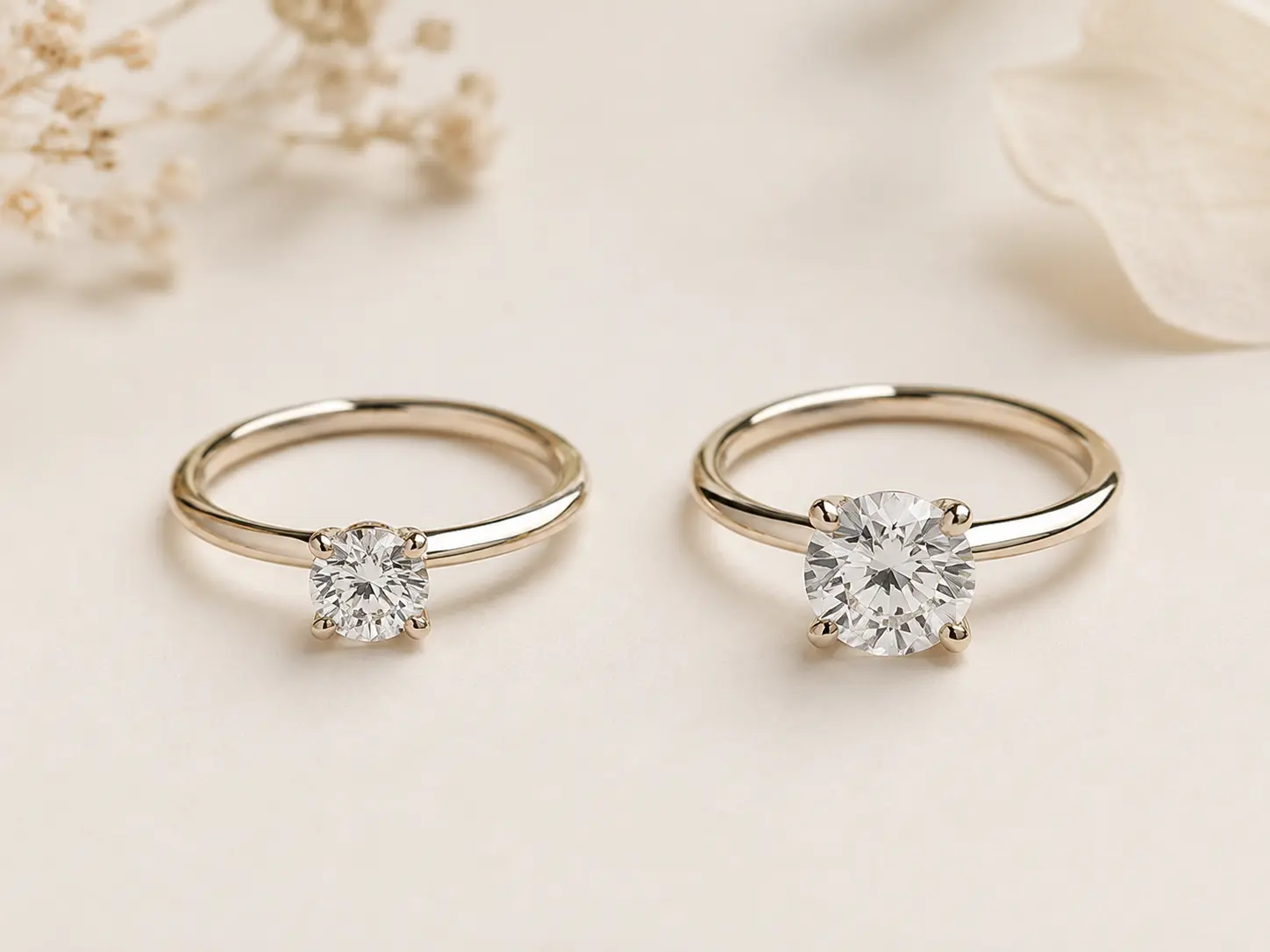
Engagement ring prices vary widely because several separate cost drivers are working at the same time: center stone, metal, setting labor, design complexity, brand markup, and service model.
The center stone is usually the biggest variable
For most diamond engagement rings, the center stone is the largest part of the cost. Carat weight often moves the price most visibly, but it should not be judged alone. Cut quality, shape, color, clarity, and whether the diamond is natural or lab-grown can all change the final price.
One of the most useful budget moves is to prioritize cut over size. A well-cut diamond can look brighter and more lively than a larger diamond with weaker proportions. In real wear, brilliance and face-up beauty usually matter more than a number on a certificate.
Retail markup and supply chain structure matter
Traditional jewelry retail prices include store overhead, advertising, sales teams, inventory risk, and multiple supply-chain layers. Those costs are not automatically bad, but they do affect what your budget buys.
Redora’s factory-direct model is built differently: more of the conversation happens around material, production, stone selection, and customization rather than retail display. For buyers comparing options, that difference can help the same budget reach a better stone, a stronger setting, or a more personal design.
Setting and metal usually move cost gradually
Metal and setting design matter, but for many rings they change the price more gradually than the center stone. Platinum costs more than 14k gold. Pavé work costs more than a simple solitaire. Custom engraving, hidden halos, side stones, and intricate galleries add labor and inspection time.
The key is not to avoid these details. It is to ask whether each detail improves the ring for your partner, or whether it simply makes the quote higher.
A Practical Engagement Ring Budget Framework
Use budget ranges as planning tools, not promises. Actual pricing depends on diamond type, stone shape, grading, metal market movement, ring size, setting complexity, and the final design brief.
| Budget range | What to prioritize | Likely trade-off |
|---|---|---|
| Under $2,000 | Simple setting, smaller center stone, lab-grown diamond, or colored gemstone | Less room for large natural diamonds or complex pavé work |
| $2,000-$5,000 | Strong everyday designs, better cut quality, lab-grown center stones, clean solitaires | Natural diamond size may still require compromise |
| $5,000-$10,000 | Higher center-stone quality, platinum, refined custom settings, stronger diamond options | You still need to choose between size, origin, and setting detail |
| $10,000+ | Larger natural diamonds, premium lab-grown options, detailed custom design, more selective specs | Higher spend should still be tied to visible beauty and personal value |
Start with available money, not monthly income
Income is only one part of the picture. Savings, existing debt, wedding plans, housing goals, and household stability matter more. A high earner with major obligations may reasonably spend less than a lower earner with strong savings and fewer near-term expenses.
A practical budget should pass three tests: you can pay for it without high-interest debt, you still have cash reserved after purchase, and the amount feels acceptable when discussed honestly with your partner.
Think in a range
A fixed number can make ring shopping unnecessarily rigid. A range works better. For example: “We are comfortable between $3,000 and $5,000, but we would rather stay near the lower end if the ring is beautiful.” That approach gives room for real comparisons without letting the search drift upward without control.
Be careful with financing
Short, genuinely interest-free financing can be useful for some buyers, but high-interest revolving credit is a different matter. An engagement ring is emotionally important, but it is not a financial investment that reliably appreciates. Paying heavy interest on top of the ring price usually weakens the purchase rather than improving it.
The Trade-Offs That Actually Change Value
Once you know your comfortable range, the real question becomes allocation. The strongest ring is rarely the one with the highest spec in every category. It is the one where the trade-offs fit your partner’s priorities.
Lab-grown versus natural diamond
A lab-grown diamond has the same core optical and physical diamond properties as a mined diamond, but the origin is different. Lab-grown diamonds are usually priced lower than comparable natural diamonds, which can let the same budget reach a larger stone, a better cut, or a more detailed custom setting.
A natural diamond may carry sentimental value for buyers who care about geological origin, rarity, or tradition. That is a valid personal preference. It should be treated as a value choice, not as proof that the ring is automatically more beautiful.
If you are unsure which direction fits your partner, read Redora’s guide to lab-grown vs natural diamonds before comparing quotes.
Cut quality versus carat size
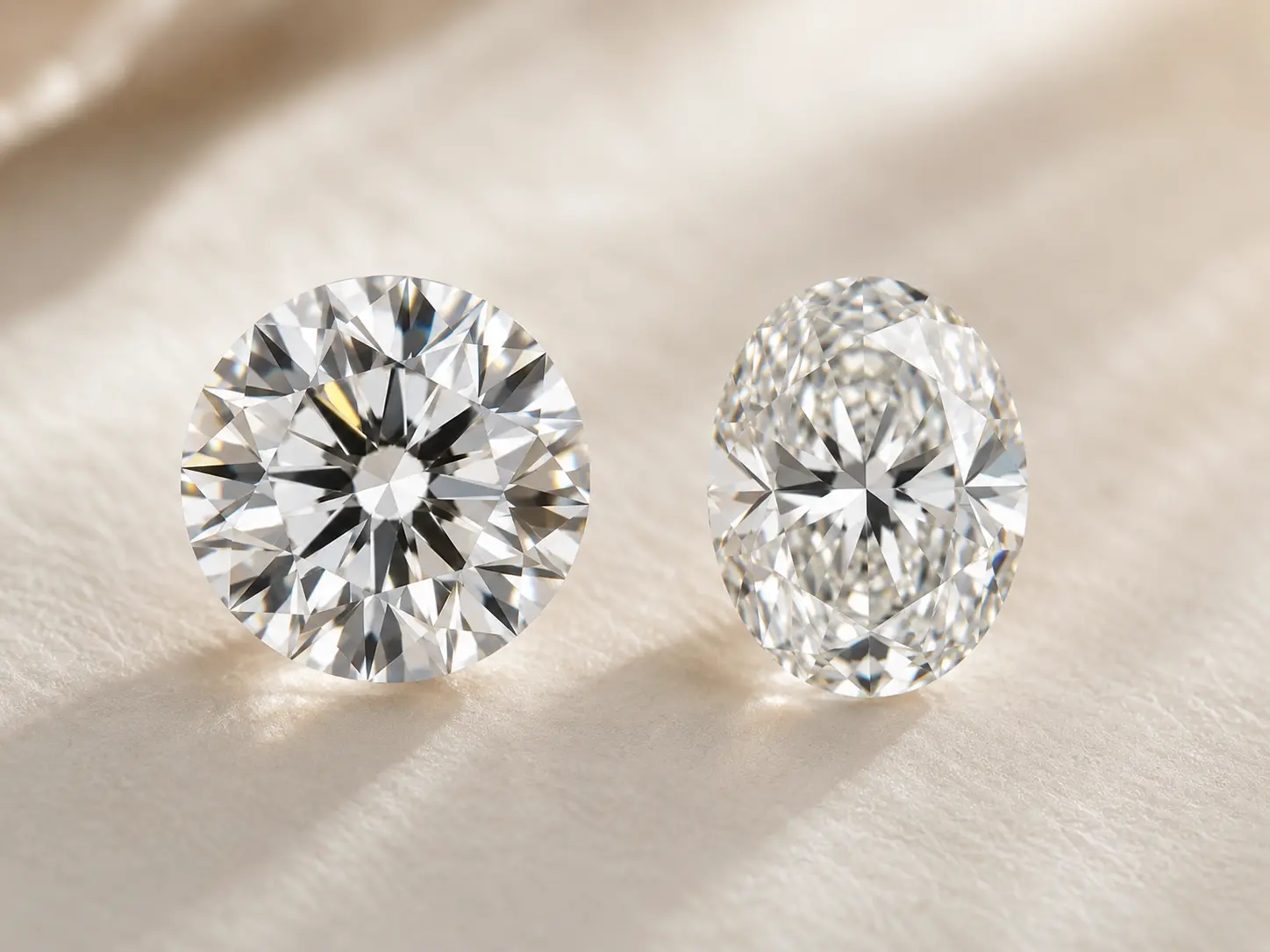
Carat weight is easy to understand, which is why many buyers focus on it first. But cut quality controls how well a diamond handles light. A smaller diamond with excellent cut can look more alive than a larger stone that leaks light.
This is especially important if your partner prefers classic shapes like round brilliant, oval, emerald, cushion, or pear. Shape affects face-up size, sparkle pattern, and price. If you are still comparing shapes, Redora’s diamond shapes guide can help you understand how each one changes the look and budget.
Simple setting versus elaborate setting
A complex setting with pavé, hidden halos, and detailed metalwork can be beautiful. It can also absorb budget that might otherwise improve the center stone. If the total budget is fixed, a clean solitaire with a better-cut diamond often ages better than a complicated setting built around a weaker stone.
That does not mean simple is always better. If your partner loves detail, the setting may be part of the meaning. The practical point is to spend on details your partner will actually notice and enjoy. A two stone design such as our emerald and round toi et moi engagement ring puts that budget into a second center stone rather than into a halo.
Design, Metal, and Long-Term Durability
An engagement ring is worn daily. Budget decisions should include durability, maintenance, and lifestyle fit, not only the first impression.
Platinum is dense, naturally white, and hypoallergenic. It costs more than many gold alloys, but it can be a strong choice for buyers who want a durable white metal without rhodium plating. White gold can offer a similar look at a lower price, but it usually needs rhodium replating over time. Yellow gold and rose gold have warmer tones and can be excellent daily-wear choices when alloy and setting quality are appropriate.
Setting style also matters. Prong settings show more of the diamond and allow more light exposure, but prongs should be inspected over time. Bezel settings protect the stone’s edge better and may suit an active lifestyle. Pavé settings add sparkle, but small stones and small prongs require precise setting and periodic checks.
For custom engagement rings, Redora can help compare these choices around the actual wearer: hand use, style preferences, ring size, stone shape, and maintenance expectations.
Common Spending Mistakes That Lead to Regret
Most regrets come from pressure, not from thoughtful restraint. These are the patterns worth avoiding.
- Spending to impress other people: Social comparison can push the budget upward without making the ring more meaningful to your partner.
- Choosing size before beauty: A large diamond with weak cut can look dull next to a smaller, better-cut stone.
- Ignoring daily wear: A delicate pavé design may not suit someone who works with their hands every day.
- Assuming brand name equals quality: A famous retail name can include significant overhead. Compare specifications, craftsmanship, and service model, not only logo recognition.
- Skipping insurance planning: A valuable ring should be insured against loss, theft, and damage soon after purchase.
How to Talk About Budget With Your Partner
More couples now choose the ring together, and that is often the most practical path. It reduces guesswork and lets both people decide how ring spending fits the wedding, honeymoon, housing, savings, and shared financial goals.
If the proposal will still be a surprise, you can still talk about values. Ask whether your partner cares more about size, origin, design detail, metal choice, or keeping the budget modest. These conversations are not unromantic. They help the final ring feel more personal and less performative.
If you already have a budget range, Redora can translate that range into realistic options for stone size, diamond origin, metal, and setting complexity. You can start a custom ring inquiry with the production team to see what is possible before committing to a design.
About the Author and Review Process
Edwin Lin is the founder of Redora Jewels, a factory-direct fine jewelry manufacturer based in Shenzhen. He is involved in production operations, gemstone sourcing, quality control, and client consultations for custom pieces across different budgets and requirements.
This guide is based on recurring buyer conversations Redora sees in custom jewelry work: clients uncertain about a comfortable budget, couples comparing lab-grown and natural diamonds, and buyers deciding whether to spend more on stone size, cut quality, setting detail, or metal. The goal is not to push one correct amount. The goal is to help buyers make a clear, financially comfortable decision that still feels meaningful.
For more on how Redora approaches production and quality control, visit our manufacturing page.
More from Redora: all jewelry buying guides