Wedding Band Buying Guide: Start With Daily Wear, Not a Style Trend
A good wedding band should look right on the wedding day and still feel right years later. The most useful wedding band buying guide is not only about style. It should help you choose a metal, width, profile, setting, and construction quality that fit your daily life.
Before comparing finishes or diamond layouts, ask one practical question: how do you use your hands? Office work, gym training, hands-on hobbies, frequent travel, and active work all affect which wedding band will age well. A ring that photographs beautifully can still become uncomfortable or high-maintenance if it was chosen for looks alone.
Choose the metal around your lifestyle
14k gold is harder and more scratch-resistant than 18k gold because it contains more reinforcing alloy. For physically active buyers, frequent gym use, or hands-on hobbies, 14k yellow, white, or rose gold usually handles daily wear better.
18k gold has a richer color and a more luxurious feel, especially in yellow gold, but it shows surface scratches sooner. That is not a flaw; it is part of how higher-purity gold wears. It is a strong choice for buyers who prioritize color depth and are comfortable with a softer metal.
Platinum is heavier than gold, naturally white, hypoallergenic, and highly durable. When platinum scratches, the metal tends to displace rather than wear away, creating a soft patina over time. It costs more in many cases, but it is a strong long-term option for buyers who want a dense, low-plating metal.
One important note on white gold: the bright white finish most people associate with white gold usually comes from rhodium plating. That plating wears over time and may reveal a warmer tone underneath. Replating is normal maintenance, not a defect. Buyers with metal sensitivities should also ask whether the white gold alloy is nickel-based or palladium-based.
Width and profile affect comfort more than most buyers expect
Width is one of the easiest details to misjudge from product photos. A 7 or 8 mm band can look balanced on a display but feel stiff when you close your hand. A high-profile band can also catch more easily on fabric, gloves, or gym equipment.
As a practical starting point, many women find 2 to 4 mm comfortable for daily wear, while many men find 4 to 6 mm proportionate. Wider bands can work beautifully, but they should be tried on in the real width before ordering.
For bands 4 mm or wider, a comfort-fit interior is worth considering. The inside of the band is gently rounded, which helps the ring slide on and off more easily and reduces edge pressure during long wear.
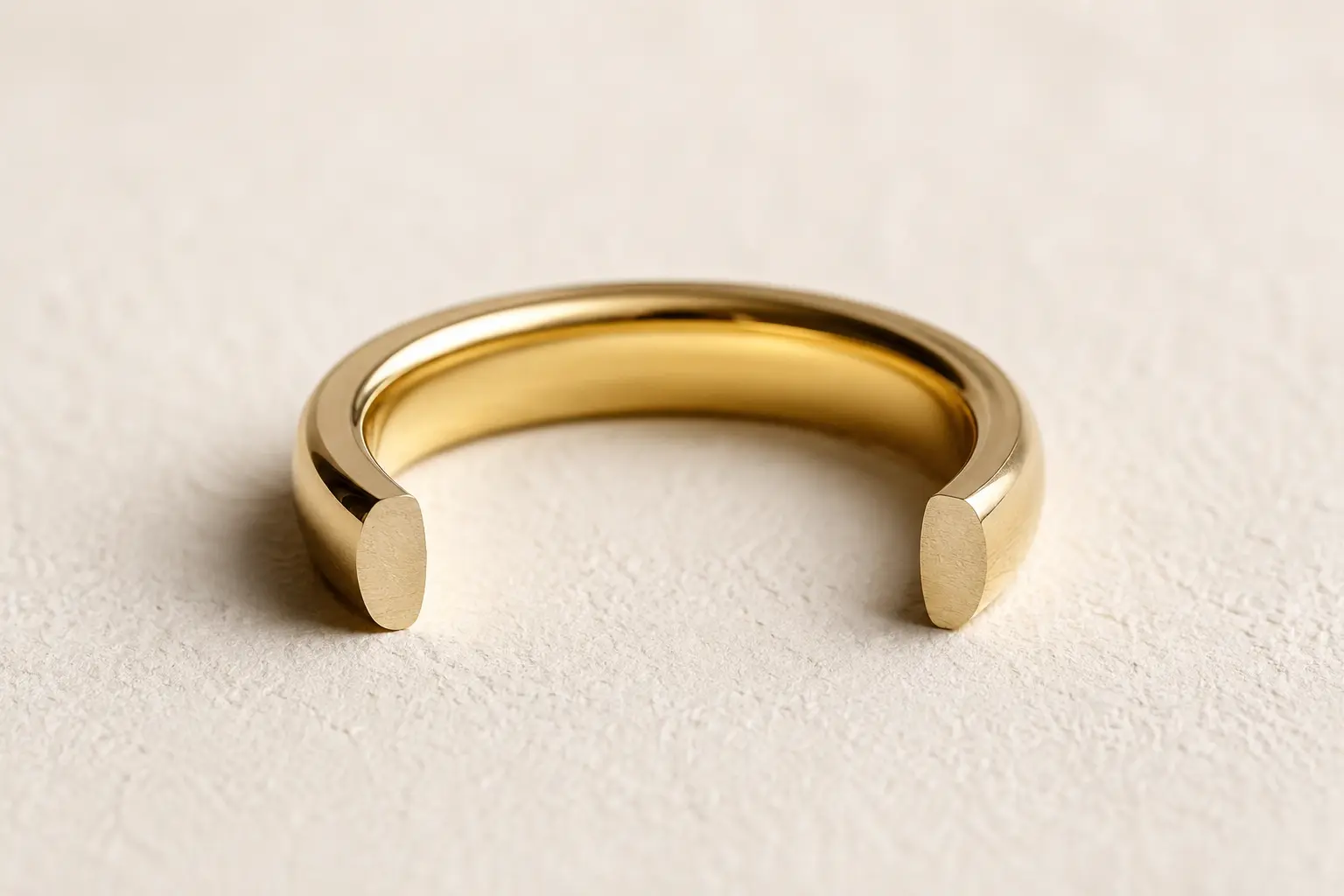
Compare Wedding Band Styles by How They Age
Wedding band style is not only a visual choice. It also affects maintenance, resizing, stone security, and how the ring changes over time.
| Style | Best for | Long-term consideration |
|---|---|---|
| Plain metal band | Low maintenance, easy refinishing, classic wear | Surface scratches are normal and can usually be polished or refinished |
| Pavé diamond band | Fine sparkle with a delicate look | Small prongs should be checked periodically, especially for active wearers |
| Channel-set band | Diamond sparkle with more protected stones | Less exposed than pavé, but still needs clean finishing and secure setting |
| Half-eternity band | Diamonds across the visible top of the finger | Usually easier to resize than full eternity styles |
| Full eternity band | Continuous diamonds all around the ring | Often difficult or impossible to resize cleanly |
| Contour or curved band | Pairing closely with a specific engagement ring | Less versatile if worn alone or paired with a different engagement ring later |
Classic plain bands
A plain metal band is the lowest-maintenance option. There are no stones to inspect, no prongs to tighten, and fewer design details that can complicate resizing. Polished, brushed, hammered, and matte finishes all develop wear differently, but most can be refreshed by a jeweler.
For buyers who want a ring that requires very little upkeep and ages gracefully, a plain band is not a compromise. It is often the most practical long-term choice, and a brushed surface on a hard metal, as on our brushed Pt950 platinum plain band, disguises daily marks better than a high polish.
Diamond bands: pavé, channel, and eternity
Pavé bands use small diamonds set close together with tiny prongs or beads. They offer strong sparkle relative to size, but the setting quality matters. Prongs that are too small, uneven, or under-finished can loosen over time. Our W pavé diamond wedding band shows what even bead work looks like, with 28 micro-set stones holding a single line along the contour.
Channel-set bands place diamonds between two metal rails. This protects the stones better than many prong settings and can be a strong option for buyers who want diamond detail with lower exposure to impact.
Half-eternity bands place diamonds across the visible top of the band, leaving plain metal at the back. That makes future resizing easier than with a full eternity band. Full eternity bands create a continuous diamond look, but they are much harder to resize and may not be adjustable at all depending on stone size and setting design.
Contour and stackable bands
A contour band is shaped to sit against a specific engagement ring. It can solve the visible gap that appears when a straight band meets a high-set solitaire, halo, or side-stone ring. The trade-off is long-term flexibility. If the engagement ring is changed later, the contour may no longer fit as cleanly.
Stackable bands offer flexibility because you can wear one, two, or several rings depending on the occasion. The practical issue is friction. Bands worn together rub against each other, and softer metals can show contact wear faster when stacked against harder pieces.
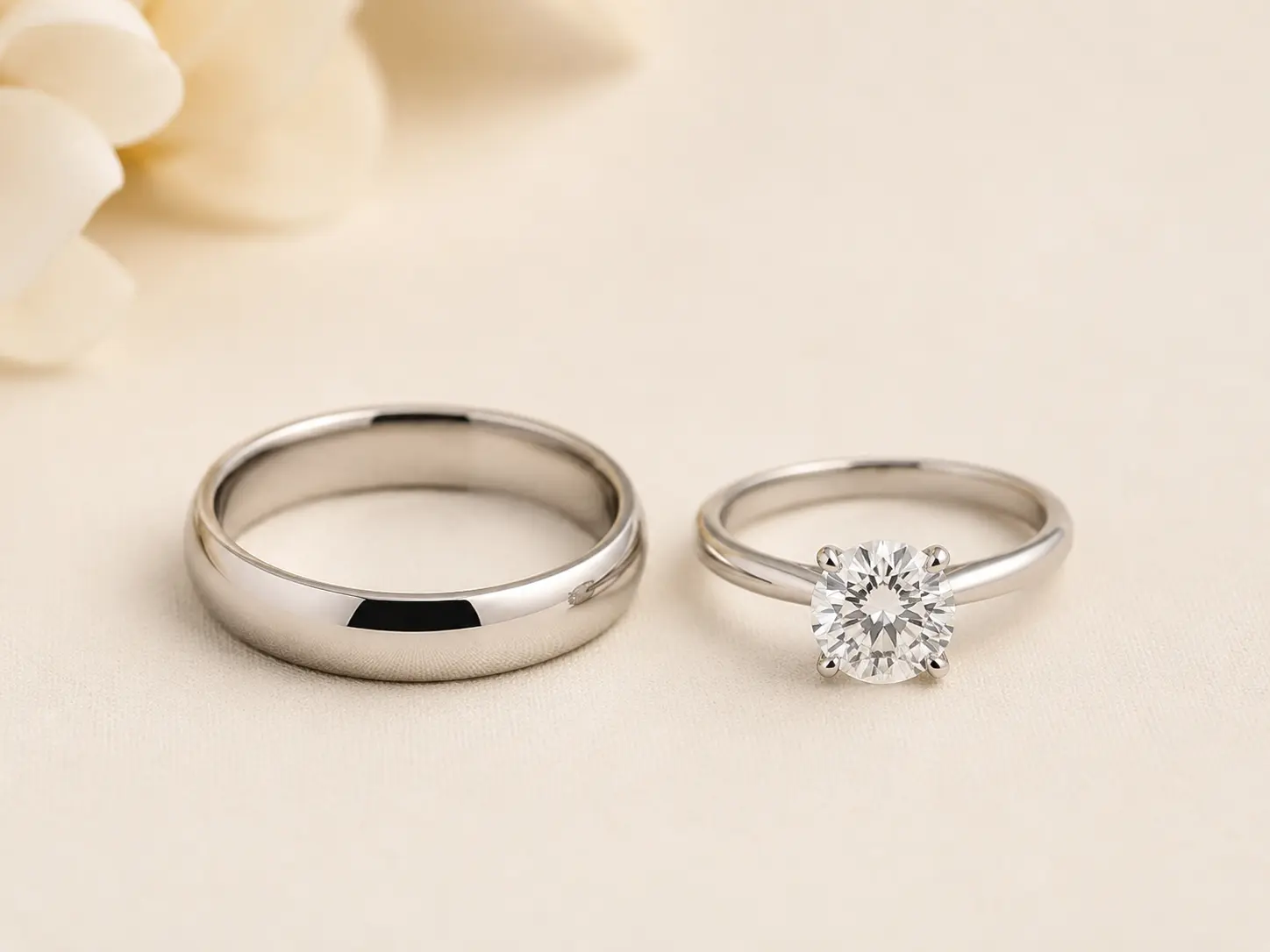
How to Match a Wedding Band With an Engagement Ring
Your wedding band does not need to perfectly match your engagement ring. It needs to sit comfortably beside it and make visual sense in proportion, profile, and metal tone.
Flush fit versus a visible gap
A straight band often sits neatly beside a classic solitaire with enough clearance under the center stone. A halo, low basket, or side-stone setting may leave a gap. Some buyers solve this with a contour band, while others keep the gap and treat the two rings as separate pieces. Neither approach is wrong.
If you want a flush fit, ask whether the band is designed from the exact measurements of your ring or from a standard template. For custom contour work, Redora can use production-side measurements and design references through its custom jewelry process.
Metal matching is optional
Matching yellow gold with yellow gold, white gold with white gold, or platinum with platinum is still the most common approach. Mixed metals can also look intentional when the proportions are controlled. A yellow gold band beside a platinum engagement ring, for example, can work well if one metal is clearly dominant and the other acts as contrast.
Visual weight matters more than identical details
A heavily diamond-set wedding band can compete with a delicate engagement ring. As a general reference, the wedding band should usually be close to the engagement ring shank in visual weight unless you intentionally want the band to be the dominant piece. If your engagement ring is slim and refined, a very wide pavé band may feel unbalanced.
Manufacturing Quality: The Part Most Buying Guides Skip
Two wedding bands can look almost identical in a product photo and perform very differently after years of wear. The difference is often construction quality.
Solid versus hollow construction
A solid band uses metal throughout its cross-section. A hollow band uses a thinner outer shell, which lowers weight and cost but makes the ring easier to dent or deform. For jewelry worn every day for decades, solid construction is usually worth confirming before purchase.
Casting, finishing, and interior comfort
Most fine jewelry bands are made through precision casting and then finished by hand or machine. Casting quality affects the consistency of the metal; finishing affects how smooth the edges feel, how clean the surface looks, and how comfortable the interior is during long wear.
A well-finished band should not feel sharp at the edges or rough inside. This is especially important for wider rings, where more metal touches the finger throughout the day.
Stone setting quality in diamond bands
For any diamond band, setting security matters as much as diamond quality. Stones should sit level, prongs should be consistent, and the setting should not look thin or uneven under close inspection. When buying online, request clear close-up images or video of the actual piece whenever possible.
Redora’s wedding bands are produced through our Shenzhen manufacturing facility, where casting, finishing, and stone setting can be inspected directly. That control matters because a wedding band is not only a design object; it is a daily-wear piece that must survive contact, resizing needs, and years of routine use.
Sizing, Resizing, and Long-Term Planning
Ring sizing is practical, but it is often underplanned. A band that is slightly wrong in size can become distracting very quickly, especially if the design is wide or not easy to resize.
How to measure more realistically
Finger size changes throughout the day and across seasons. Heat, cold, salt intake, exercise, and travel can all affect fit. Measuring in the afternoon, when your hands are at a moderate temperature, usually gives a more useful result than measuring first thing in the morning.
For wider bands, many buyers need to go up by about half a size compared with a narrow ring, because the wider surface area creates more contact with the finger. If you are unsure, use a reliable ring size chart as a starting point, then confirm with a physical sizer for the exact width you plan to order.
Know whether your design can be resized
Plain gold and platinum bands are usually straightforward to resize within a limited range. Half-eternity bands are more complex but often still manageable. Full eternity bands, tungsten bands, titanium bands, and heavily patterned designs may be difficult or impossible to resize cleanly.
Life changes should be part of the decision. Weight fluctuation, pregnancy, joint changes, and climate can all affect ring fit over time. If future resizing is likely, choose a design that leaves room for adjustment.
Questions to Ask Before You Order
Before placing an order, use these questions to separate a durable wedding band from a ring that only looks good in a product photo:
- Is the band solid or hollow?
- What is the exact metal and alloy composition?
- If it is white gold, is the alloy nickel-based or palladium-based?
- Is the inside flat or comfort-fit?
- How wide and high is the band in millimeters?
- For diamond bands, how are the stones set and inspected before shipping?
- Can the design be resized later? If yes, by how much?
- Will the band sit flush with your engagement ring, or will there be a gap?
- Can you review close-up images or video of the actual piece before approval?
For buyers who want a more personal design, Redora can help plan a custom wedding band around width, metal, finish, diamond layout, and engagement-ring pairing. You can start from Redora’s custom jewelry inquiry page and request a quote based on your actual requirements rather than a preset catalog style.
About the Author and Review Process
Edwin Lin is the founder of Redora Jewels, a factory-direct fine jewelry manufacturer with a production facility in Shenzhen. Edwin is involved in manufacturing operations, including materials sourcing, quality control protocols, and client consultations for custom orders. His perspective on wedding bands comes from the physical production side of fine jewelry rather than from retail display alone.
This guide was shaped by practical production experience: how different band constructions perform during manufacturing, the recurring questions buyers ask when comparing metals and styles, and the decisions that tend to affect comfort, maintenance, and long-term satisfaction. The goal is simple: help you choose a wedding band you will still be comfortable wearing, and still be glad you chose, years from now.
For a closer look at Redora’s production approach, see our manufacturing page.
More from Redora: all jewelry buying guides